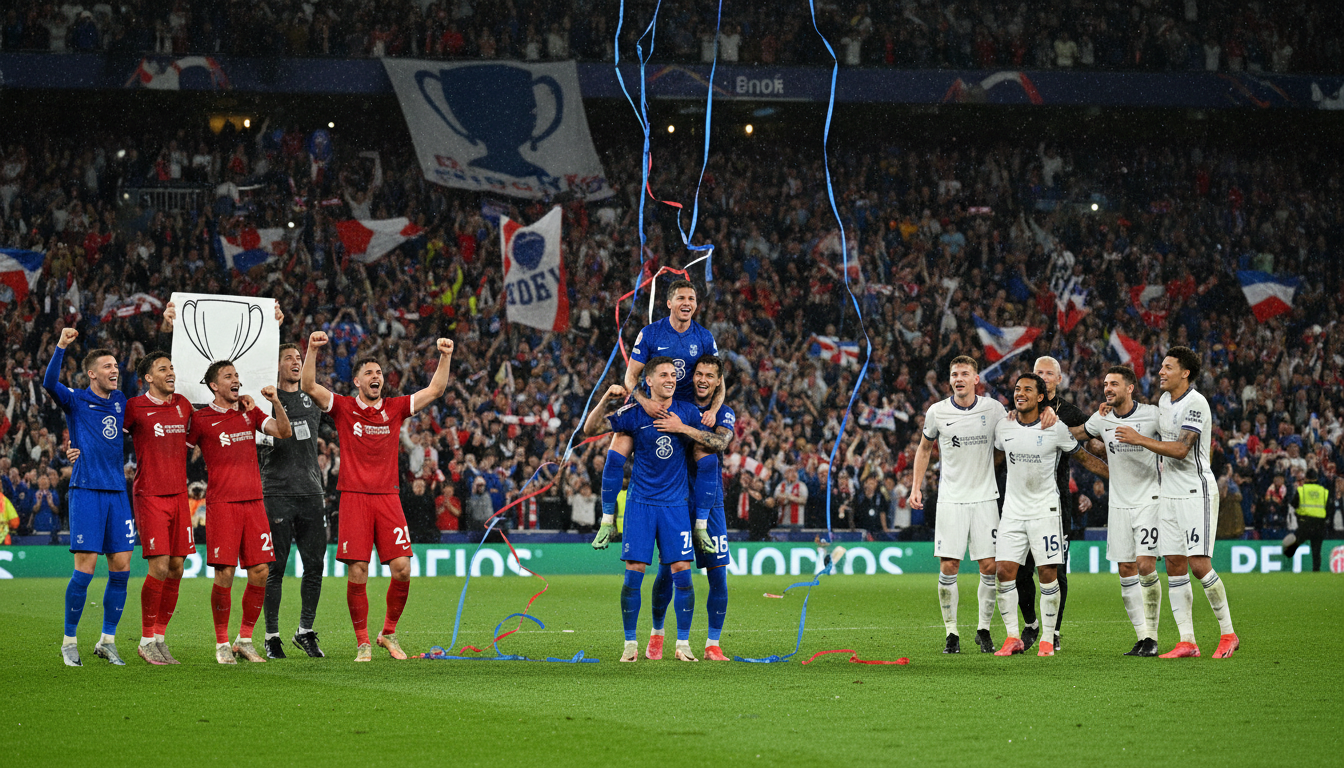
English clubs in European finals: near-miss, history and what it reveals about Premier League strength
English clubs in European finals remain a dominant topic as domestic teams continue to contest multiple UEFA competition deciders across recent seasons, highlighting both depth and occasional near-misses on a historic scale.


Near-miss for an unprecedented English treble
Last season brought English clubs to the brink of occupying all three major European finals, a rare feat that would have underscored the Premier League’s continental breadth. Chelsea secured the Conference League title and Tottenham prevailed in the Europa League final against Manchester United, while Arsenal stood as the last domestic representative in the Champions League before being eliminated by Paris St-Germain in the semi-finals.
Those results left English football tantalizingly close to placing finalists in the Champions League, Europa League and Conference League simultaneously, a configuration that has never been completed in modern European competition. The combination of continental success and narrow escapes illustrates both the strength and unpredictability of English clubs on the European stage.
Recent seasons: concentrated success and recurring patterns
English teams have frequently supplied two or more finalists across UEFA competitions in recent years, reflecting sustained competitiveness across different tournament tiers. In 2021, for example, an all-Premier League Champions League final between Chelsea and Manchester City ended with Kai Havertz’s decisive goal, while Manchester United reached the Europa League final but fell short.
The 2019 season also saw multiple English finalists within a single European cup cycle, with Liverpool defeating Tottenham in the Champions League and Chelsea overcoming Arsenal in the Europa League final staged in Baku. These recurrent appearances demonstrate how clubs from the same domestic league can dominate disparate European competitions in the same season.
Winners and losers in headline finals
The outcomes of those finals capture the fine margins that separate continental triumph from defeat. Chelsea’s victory in the Champions League highlighted how a single breakthrough moment can decide the continent’s premier club prize, while other English contenders in the same seasons suffered narrow or emphatic reversals in their respective finals.
Conversely, seasons such as 2006 serve as reminders that domestic representation across finals does not guarantee victory; that year English sides lost both the Champions League and Uefa Cup finals, with Arsenal succumbing to Barcelona and Middlesbrough beaten soundly by Sevilla 4-0. The contrast between seasons of double triumph and double disappointment underscores the volatility inherent in knockout football.
Looking back to the 1980s: the last time multiple English wins were recorded
To find the most recent season in which English clubs won two of the three major European competitions, the record goes back more than two decades from the mid-2000s. In 1984 Liverpool secured their fourth European Cup by defeating Roma, while Tottenham Hotspur captured the Uefa Cup with a victory over Anderlecht.
That period marked an era when English clubs repeatedly reached the latter stages of continental tournaments, and it was not an isolated moment. Earlier in the decade, 1981 saw Liverpool lift the European Cup against Real Madrid in Paris, with Ipswich Town also claiming Uefa Cup success over AZ Alkmaar within the same cycle. Those achievements provide historical context for contemporary ambitions and remind observers that English clubs have long been fixtures in Europe.
Implications for the Premier League and squad depth
The regular presence of English clubs in multiple European finals signals a domestic league with considerable top-to-bottom quality and depth. Having several teams capable of navigating distinct European pathways suggests robust competitive standards, squad investment, and tactical adaptability across different managerial approaches.
At the same time, the pattern raises questions about fixture congestion, rotation policies and resource allocation, as clubs balance domestic priorities with continental ambitions. For managers and sporting directors, the challenge is to sustain league form while ensuring squads are equipped to compete in successive knockout rounds and high-stakes finals.
What to watch in future European finals involving English clubs
When English clubs reach continental finals, fine details often determine the outcome: set-piece discipline, in-game management, and the ability to absorb pressure in pivotal moments. Observers should watch how managers approach substitutions and tactical tweaks during the final third of matches, as those decisions can swing tightly contested deciders.
Player fitness and squad rotation will also be critical, particularly for teams juggling Premier League demands alongside European finals. The method by which clubs prepare mentally for a final — whether by leaning on experienced leaders or integrating in-form youngsters — frequently separates winners from runners-up in tournament football.
The ongoing presence of English clubs in European finals, combined with periodic historical precedents of both success and failure, paints a picture of a domestic game that is simultaneously deep and imperfect. Recent near-misses for a clean sweep of continental finals highlight the fine margins at play, while the return to multiple English winners remains an achievement that recalls the strong continental runs of the 1980s.
For stakeholders from boardrooms to supporters, the recurring pattern of English finalists offers reason for optimism about the Premier League’s standing in Europe, but it also serves as a reminder that securing trophies requires a blend of investment, planning and in-match acumen.