Liverpool transfer targets Yan Diomande, Bradley Barcola and Antonio Nusa eyed as Salah replacement
Liverpool transfer targets include Yan Diomande, Bradley Barcola and Antonio Nusa as the club prepares for Mohamed Salah’s summer exit and a wider attacking rebuild.


Opening summary of reported recruitment plans
Liverpool transfer targets have reportedly been narrowed to a trio of wide forwards as the club plans for Mohamed Salah’s departure and seeks to strengthen its attack for next season. Sources indicate RB Leipzig’s Yan Diomande sits near the top of the shortlist, with PSG’s Bradley Barcola and RB Leipzig’s Antonio Nusa also under consideration. The recruitment drive is framed by concerns over form and injuries within Liverpool’s current front line and by the need to adapt to a post‑Salah era.
Why Liverpool are prioritising a new winger
Mohamed Salah’s announced decision to leave at the end of the season has forced Liverpool to identify immediate replacements for a player who has been central to their attack for nine years. The club’s hierarchy sees adding a right‑sided attacker as a priority to cover the goals, creativity and tactical balance that Salah supplied. Concerns about Cody Gakpo’s recent dip in form and the broader inconsistency across the front three have accelerated interest in high‑quality wide options.
Yan Diomande profile and reported valuation
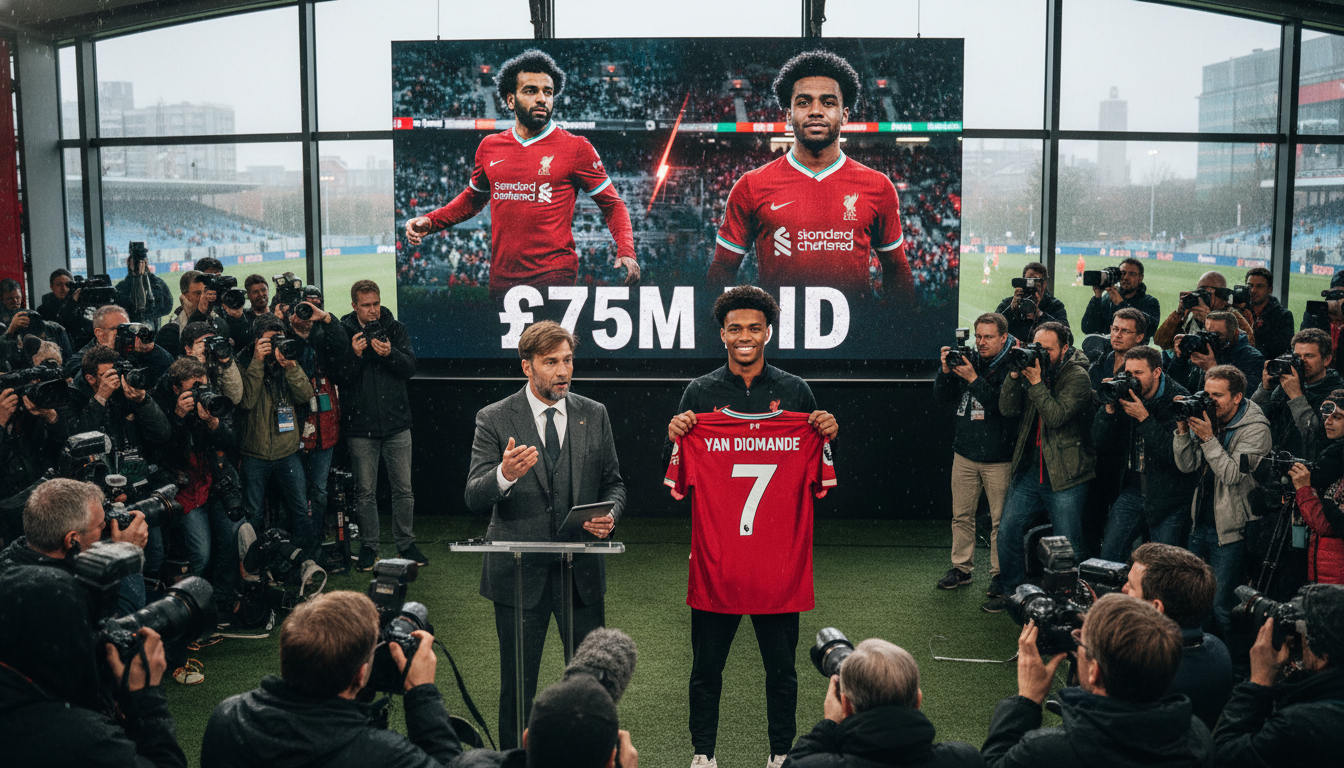
Yan Diomande is being tracked as a long‑term option who could step straight into top‑level competition, according to reports that place a significant valuation on the Ivorian. Club sources suggest Liverpool are prepared to explore a sizeable package should Leipzig be willing to negotiate, reflecting Diomande’s blend of athleticism, directness and goal threat. At club level he has combined pace with an eye for goal and the physicality to thrive in the Premier League, attributes that suit Liverpool’s fast‑transition style.
Liverpool scouts view Diomande as a forward capable of operating both on the right flank and in more central attacking areas when required. His profile offers the sort of mobility and finishing that could replace some of Salah’s output while giving the manager flexibility to rotate tactical approaches. Any transfer would likely be one of the club’s highest investments in the upcoming window, driven by the need for an immediate impact.
Bradley Barcola and Antonio Nusa as alternative options
Bradley Barcola represents a different recruitment profile, combining technical skill and wide positional versatility developed at Paris Saint‑Germain’s setup. His ability to operate on either flank and to link play in tight spaces is attractive for a side that values quick combinations and off‑the‑ball movement. Barcola’s experience in a top European environment and his comfort on both feet make him a plausible short‑to‑medium‑term solution.
Antonio Nusa, despite being naturally left‑sided, is also on Liverpool’s radar as an option who could be adapted to the right or used to reinforce the opposite wing. The Norwegian’s pace and directness have drawn attention across Europe, and Liverpool evaluators believe he could be converted into a dynamic wide attacker within their system. Both Barcola and Nusa would offer different tactical solutions and potentially lower price points than the reported package for Diomande.
Tactical implications for Arne Slot’s system
Under Arne Slot, Liverpool’s attacking shape has emphasized width, pressing triggers and quick vertical transitions, features that any incoming winger must accommodate. The club is therefore assessing how each target would fit into Slot’s preferred patterns, including full‑back interplay and inverted winger rotations. A new signing will be judged not only on raw output but also on defensive work rate, pressing intensity and adaptability to multiple forward pairings.
Recruitment planners are acutely aware that replacing Salah is not about finding a single like‑for‑like player but about rebalancing the forward line across several positions. Slot’s approach may encourage the club to invest in more than one wide option to spread the goalscoring burden and increase tactical unpredictability. Training ground integration and immediate tactical assimilation will be as important as transfer fees in the final evaluation.
Summer strategy, alternatives and contingency planning
Liverpool’s summer strategy appears to combine ambitious targets with pragmatic alternatives, creating a tiered list that can be executed depending on market conditions. If a primary target proves unattainable, the club has earmarked other candidates who can be developed or adapted to the right‑side role. Financial considerations, competitive bidding and the club’s own transfer priorities elsewhere in the squad will influence which approach is pursued.
The recruitment team will also weigh internal options and potential promotions from Liverpool’s academy or fringe squad as part of a balanced plan. Staffers are reportedly drafting contingency scenarios to protect against prolonged absence or further dips in form among current forwards. The club’s willingness to spend on a marquee option will be measured against longer‑term squad construction and wage structure implications.
Impact on Liverpool’s Champions League hopes and season finish
The search for immediate attacking reinforcements comes at a crucial juncture as Liverpool battle to secure Champions League qualification for next season. Recent results and defensive frailties have increased the stakes of the final fixtures, and the club’s transfer posture is shaped by the outcome of the domestic campaign. Qualification status will influence budget flexibility, market leverage and the timing of negotiations for leading targets.
A top‑four finish would preserve Liverpool’s appeal to high‑calibre signings and potentially smooth recruitment processes, while missing out could force a more conservative approach. The leadership is therefore balancing short‑term competitive objectives with the necessity of planning for life after Salah, mindful that recruitment decisions this summer will shape the club’s trajectory for multiple seasons.
Liverpool’s wider recruitment timeline is expected to accelerate once the domestic season concludes, with the club prioritising medical, scouting and contractual groundwork to be ready for early negotiations. The final decisions will reflect a mixture of strategic ambition, tactical compatibility and financial realism.
The coming weeks are likely to bring greater clarity as Liverpool assess on‑field developments and begin formal contact with clubs and agents to secure their preferred targets.