TSV 1860 München denied 3. Liga licence after shareholder fails to meet financing commitment
TSV 1860 München denied 3. Liga licence due to a €2.7m liquidity shortfall and missed shareholder funding, forcing the club to prepare for the Regionalliga Bayern season.


DFB refuses 3. Liga licence to TSV 1860 München
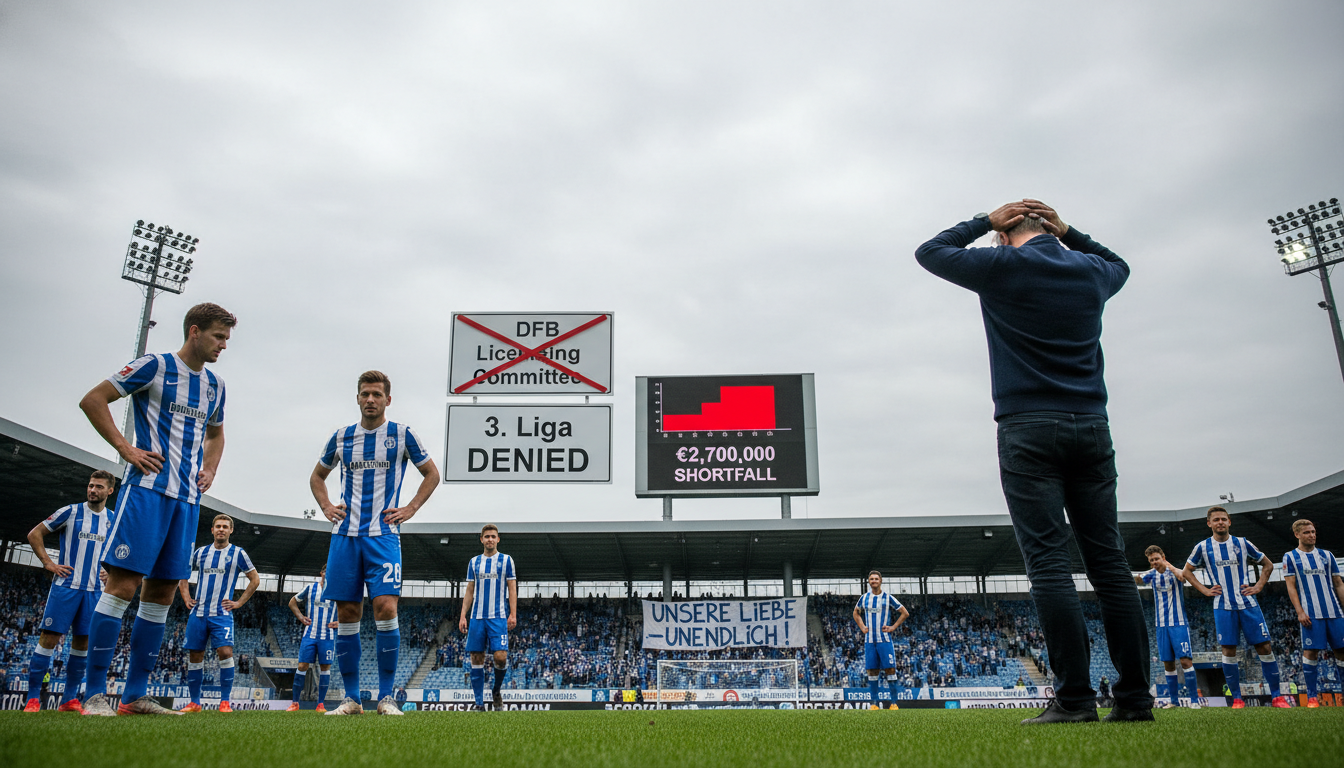
On June 3, 2026, the German Football Association (DFB) declined to grant TSV 1860 München the licence required to compete in the 3. Liga next season.
The club confirmed the decision stems from a failure to provide proof of liquidity by the regulatory deadline and an unmet financing commitment from major shareholder HAM International.
The refusal means 1860 München will not appear in the third tier in 2026-27 and will instead confront football and financial consequences in the weeks ahead.
Financial shortfall and shareholder default
The club’s published figures show an approximate shortfall of €2.7 million against the licensing requirements.
The management attributed the gap to the shareholder Hasan Ismaik and associated companies not fulfilling agreed financing obligations by the DFB deadline.
Club officials said the missed funding prevented submission of the necessary liquidity documentation that underpins licence approval in German professional leagues.
Management response and legal preparations
1860 München’s board says it has engaged insolvency-law specialists and experienced consultants to stabilise operations and map out options.
Those advisers are tasked with ensuring orderly business conduct while protecting the company’s rights and refining a viable path forward.
The club’s managing director expressed public regret at the shareholder’s failure to deliver pledged financing and confirmed staff and leadership would focus on pragmatic next steps.
Sporting consequences: relegation to Regionalliga Bayern
With the 3. Liga licence denied, 1860 München will compete in the Regionalliga Bayern, the fourth tier of German football, in the coming season.
Management has already stated its intention to prioritise assembling a competitive squad capable of contending in that division.
Dropping to the Regionalliga alters the club’s sporting and commercial blueprint, affecting matchday revenue, broadcasting income and player recruitment strategy.
Immediate financial risks and Regionalliga licensing
Local reports have indicated a further immediate need to secure around €1 million to obtain a Regionalliga licence, a sum the club must produce to continue operating legally at the lower level.
Failure to meet the Regionalliga licensing requirements could expose the club to insolvency proceedings, according to the same reporting and warnings cited by club officials.
The dual pressure of the 3. Liga rejection and the new Regionalliga requirement creates a narrow window for securing emergency funding or restructuring agreements.
Impact on squad, staff and contractual obligations
A change in competitive level typically triggers contractual and budgetary adjustments for players and staff, with many agreements containing clauses tied to division status.
1860 München will need to review contracts, renegotiate terms where possible and decide which professional players fit the club’s revised financial and sporting plan.
Staff roles and scouting priorities are likely to be realigned to reflect the club’s immediate objective: stabilisation in the Regionalliga and rebuilding financial credibility.
Supporter and sponsor implications
Supporters face the prospect of lower-tier football at the Grünwalder Stadion and a season marked by transition and uncertainty.
Sponsors and commercial partners will reassess exposure value and may seek renegotiations aligned with the club’s new competitive context.
Club leadership must balance short-term fiscal triage with transparent communication to retain fan trust and commercial relationships.
Possible scenarios and governance choices ahead
Club executives have a limited set of options: secure immediate capital from new or existing investors, restructure debts under insolvency supervision, or mount a legal challenge if procedural errors occurred in the licensing review.
Management’s declaration that it is working with insolvency-law experts suggests a preference for controlled restructuring rather than abrupt collapse.
Any lasting solution will require clear timelines, binding funding commitments and credible operating plans acceptable to regulators and creditors.
Regulatory framework and licence standards
German football licence rules demand demonstrable liquidity and reliable financing to safeguard competition integrity and creditor protection.
The DFB’s licensing system aims to ensure clubs can meet contractual and operational obligations across the season, and failure to demonstrate these safeguards triggers licence refusal.
The 3. Liga licence denial of 1860 München thus reflects not only a single funding shortfall but the broader fiscal controls embedded in German football governance.
Outlook for the 2026-27 season
In the coming weeks the club must finalise a Regionalliga licence application, confirm its playing squad and prepare for a season where sporting success will be measured alongside financial recovery.
1860 München’s leadership has signalled an intent to devote its energy to building a competitive roster for the Regionalliga Bayern and to stabilise the club’s business model.
How quickly the club can secure the required sums or reach restructuring agreements will determine whether it enters the new campaign in a solvent, competitive condition.
The denial of the 3. Liga licence marks a significant turning point for TSV 1860 München, placing immediate pressure on its finances and forcing a recalibration of sporting ambitions while the club works to safeguard its long-term future.