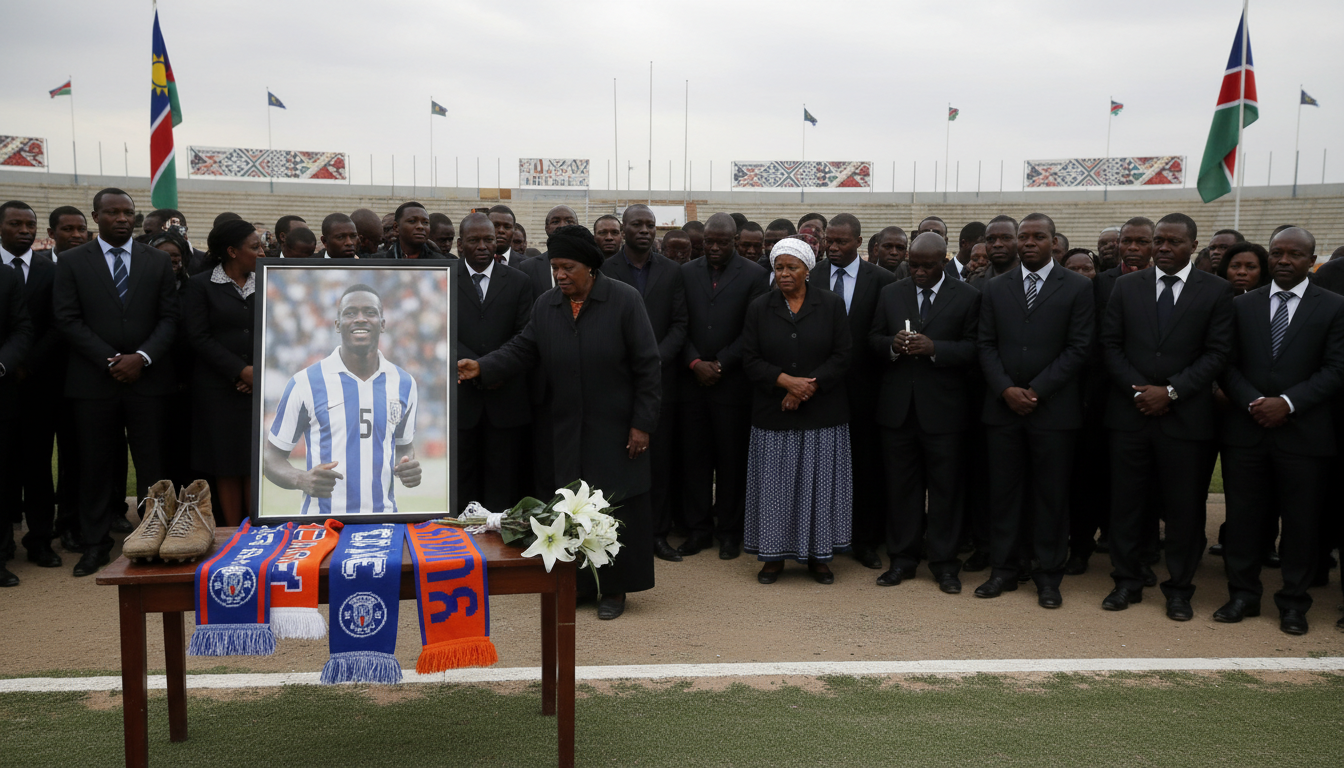
Johannes Umati, former Tigers defender known as ‘Kumi’, dies in Windhoek
Johannes Umati, the Tigers stalwart nicknamed "Kumi", has died in Windhoek, leaving Namibian football to mourn a defender famed for his toughness and fitness. His passing comes weeks after Tigers were relegated from the premiership and shortly after the death of fellow great Hans "Alu" Hummel. Teammates and former opponents remembered Umati for his fierce tackling, relentless running and leadership on and off the field.


Death confirmed in Windhoek; funeral arrangements pending
Club officials and former teammates confirmed that Johannes Umati died in the capital on Tuesday, prompting an outpouring of condolences across the local football community. Details surrounding his illness or the circumstances of his death have not been released, and family and club representatives said funeral arrangements will be announced in due course. The timing of his passing, coming after a turbulent period for his old club, has intensified grief among supporters.
The announcement revived memories of Umati’s long association with the Tigers, the Katutura-based side where he developed from a reserve player into a leading first-team figure. For many fans, his name quickly became synonymous with the club’s most combative era and with the neighborhood identity the Tigers carried. His death also drew comparisons with other recent losses in Namibian football, compounding a sense of generational transition.
Rise from reserve to first-team mainstay
Umati’s pathway into senior football began in the mid-1970s, when he and a small group of teammates were promoted from the reserves to the Tigers’ first team. Early in his career he was tried in advanced positions before coaches identified a stronger long-term role deeper on the pitch. That positional evolution, from attacker to midfielder and finally to fullback, shaped his reputation as a versatile and intelligent player.
Coaches and teammates credited Umati with the adaptability that allowed him to flourish in different systems and match situations. His physical profile—taller and more robust than many defenders of his era—helped him excel in aerial duels and in the aggressive one-on-one defending that defined his play. The path from reserve squad to a provincial representative on the Currie Cup and Impala Cup stage underscored both his talent and his drive.
Defending that unsettled opponents
Opponents often spoke of Umati as a defender they preferred to avoid, a reputation forged by his uncompromising tackles and readiness to contest every ball. Several coastal fixtures against Blue Waters became notorious for their physical intensity, with visiting players and officials commenting on the high toll those matches took. One visiting official reportedly confronted the Tigers dressing room after a return match and offered Umati cash as an impressed acknowledgment of his impact.
Former team captain Mentos "Metu" Hipondoka recalled the practical details that made Umati a standout: a willingness to play through pain, a readiness to lead by example on the training ground and a competitive edge that shaped team standards. "He had an unbelievable fighting spirit and he hated to lose," Hipondoka said, capturing how Umati’s mentality influenced those around him. That blend of physicality and attitude meant Umati’s presence often set the tone for Tigers’ defensive identity.
Endurance, work-rate and attacking intent from the back
Beyond his tackling, Umati was admired for an extraordinary level of fitness that allowed him to cover ground and initiate forward moves from deep positions. Teammates described him as the fittest player in the squad during his era, someone who could outlast opponents and repeatedly support attacks. His tendency to launch runs from the back made him both a defensive anchor and an outlet for the team’s transitions.
His background as an attacker and midfielder informed an instinctive ability to read the game and carry the ball forward when space appeared. Coaches valued that dual capacity: the capacity to shut down threats and the skill to drive momentum going the other way. Those attributes also fed into his later work as a coach, where conditioning and positional awareness remained central tenets of his approach.
Tributes from teammates and the Katutura community
Reaction from former colleagues and supporters was immediate, with messages emphasizing Umati’s leadership and the personal impact he had on younger players. Hipondoka and others spoke of a man who mentored team-mates, covered for them physically in matches and set an example of commitment in training. Stories from practice matches and local derbies—some ending in bruises and hard lessons—were offered as evidence of the respect he earned.
Supporters and local figures also highlighted Umati’s role beyond the pitch, noting his involvement in coaching the Tigers at different stages and his efforts to pass on experience to subsequent generations. The Tigers’ feeder culture and community links meant that figures like Umati remained visible and influential long after their prime playing years. For many in Katutura, his death represents the loss of a familiar presence who helped define a neighborhood’s footballing ethos.
Representative honours and later coaching roles
Umati represented the then South West Africa in provincial competitions, appearing in both the Currie Cup and the Impala Cup when regional representative football offered a rare stage for local talent. Those appearances reinforced his standing among the country’s best defenders of his generation and gave him exposure to higher levels of competition. Playing for provincial sides also connected him with a wider network of players and coaches across the region.
After his playing career he returned to Tigers in a coaching capacity, drawing on his experience to shape training routines and defensive organization. Former players who worked under him recalled a coach who emphasized fitness, tactical discipline and mental toughness—traits that mirrored his playing style. His coaching contributions, while less celebrated than his playing days, helped sustain the club’s culture and produced new talents for Namibian football.
Tigers’ relegation and the broader context for Namibian football
The Tigers’ recent drop from the premiership occurred only weeks before Umati’s death, compounding the sense of uncertainty around a club that had been a consistent producer of talent. Several former stars from Tigers—Dahle Stephanus, Oubaas Pogisho, Forresta Nicodemus and others—had previously underlined the club’s historical role as a development hub. The relegation sparked debate about funding, youth development and the competitive balance in the domestic game.
Observers warned that the loss of institutional memory and the passing of senior figures would make it harder for clubs like Tigers to maintain their identity amid changing league dynamics. Umati’s passing has therefore been cast not only as the loss of an individual but as a marker of a shifting era in Namibian football. For supporters and administrators alike, his death prompted renewed calls to preserve club histories and to invest in structures that protect community-based football.
Final thoughts
Johannes "Kumi" Umati leaves behind a legacy defined by combative defending, exceptional endurance and a readiness to lead, both as a player and as a coach. His death has prompted an outpouring from teammates, opponents and fans who remember a player willing to sacrifice his body and energy for the Tigers’ cause. Funeral details are awaited, and the football community in Windhoek and beyond is preparing to honor a figure who helped shape the character of club and provincial football for a generation.