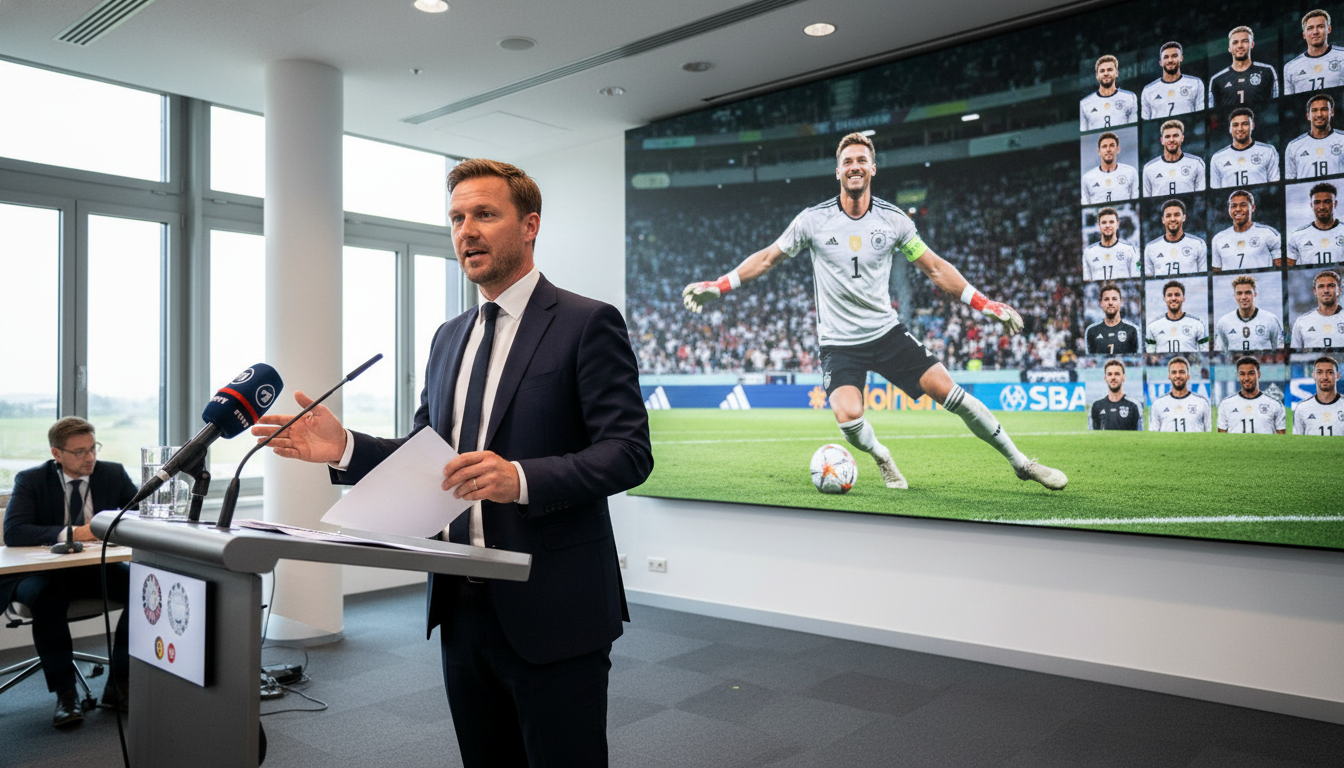
Nagelsmann set to name 26-man Germany World Cup squad with Manuel Neuer poised for shock comeback
Julian Nagelsmann will name his 26-man Germany World Cup squad on Thursday, with Manuel Neuer’s shock return and several surprise call-ups reshaping the roster.


Julian Nagelsmann prepares to finalise his 26-man Germany World Cup squad on Thursday after a series of leaks over the past 48 hours revealed the likely composition of the delegation. The tentative list includes veteran goalkeeper Manuel Neuer returning from international retirement, a raft of Bundesliga form players and a handful of unexpected inclusions that have reignited debate about Germany’s balance. The leaked names set a clear tone for Nagelsmann’s selection priorities heading into the summer tournament.
Nagelsmann to make official announcement this week
Julian Nagelsmann will make a formal announcement on Thursday after weeks of speculation and assessment of players’ fitness and form. The German coach has been consulting closely with club staff and his technical team to finalise a group designed to combine experience with in-form talent.
Leaked information has removed much of the suspense, but the official list will confirm which players travel and who occupies the final 26 slots permitted for the World Cup. Nagelsmann’s choices will be scrutinised for tactical intent and the degree to which recent club performances influenced selection.
Goalkeeper hierarchy altered as Neuer set for comeback
The most talked-about development in the leaked list is the decision to bring Manuel Neuer back into the fold as Germany’s first-choice goalkeeper. Bayern Munich’s captain is reportedly coming out of international retirement and is expected to reclaim the No.1 shirt ahead of Hoffenheim’s Oliver Baumann.
Alexander Nübel of VfB Stuttgart looks set to be included in the 26-man group as well, providing experienced cover, while Bayern’s Jonas Urbig has been told he will accompany the team to the World Cup but will not be registered in the official 26. That arrangement suggests Nagelsmann values the presence of additional young keepers for training and emergency use, even as Finn Dahmen and Noah Atubolu appear to have been omitted entirely.
Striking options feature proven names and risky selections
Up front, the leaked roster blends established internationals with unproven but red-hot domestic scorers. Kai Havertz, fresh from Premier League success with Arsenal, is reported to have secured his place among the attackers and midfield options. His inclusion underscores Nagelsmann’s preference for players who can operate across several forward and attacking midfield roles.
By contrast, Niclas Füllkrug looks set to miss out, with the striking berth going to Tim Kleindienst from Borussia Mönchengladbach despite his extremely limited minutes this season. That choice indicates Nagelsmann may be prioritising certain tactical attributes or training ground form over sustained club minutes in the late campaign, a decision likely to draw both praise and criticism.
Cologne’s Said El Mala and Bayern’s Lennart Karl earn surprise call-ups
Perhaps the most unexpected names on the leaked list are Cologne forward Said El Mala and Bayern youngster Lennart Karl, both reportedly informed of their inclusion by Nagelsmann. El Mala’s domestic numbers are eye-catching—13 goals and five assists in 34 Bundesliga appearances—and his selection comes despite him not yet having earned a senior cap for Germany.
Lennart Karl’s call-up reflects Nagelsmann’s willingness to fast-track promising talents into the national setup, while also expanding the squad’s attacking and wing options. These selections signal a readiness to reward current-season productivity and to inject fresh attacking impulses into the squad dynamic.
Stuttgart trio and midfield balance shape roster depth
Several players from VfB Stuttgart are set to be part of the final 26, with Angelo Stiller, Jamie Leweling and Deniz Undav reported among the nominees. Their inclusion gives Nagelsmann multiple midfield and attacking configurations to choose from while providing depth across the wings and central areas.
At the same time, established options such as Robert Andrich appear to have missed the cut, suggesting the coach favours form and versatility over prior international experience in some midfield slots. The midfield mix aims to combine ball progression, pressing intensity and transitional speed in order to suit different match scenarios at the World Cup.
Defensive decisions underline preference for current form
In defence, the leaked selections reflect a clear tilt toward players who have impressed domestically this season. Nathaniel Brown of Eintracht Frankfurt has reportedly been rewarded with a place following another strong campaign, highlighting Nagelsmann’s readiness to promote players who have delivered consistently at club level.
Conversely, several names did not make the final list, including Yann Aurel Bisseck, Josha Vagnoman and Maximilian Mittelstädt, which will prompt questions about the depth of options at full-back and centre-back. Nagelsmann will need to balance the desire for flexible defenders capable of covering multiple roles with the necessity of reliable specialists for set-piece and one-on-one scenarios.
Notable omissions and potential controversies
The leaks also underscore a number of notable exclusions that could become talking points ahead of the tournament. Jonathan Burkardt and Chris Führich are among those reportedly left out, while Finn Dahmen and Noah Atubolu appear to have been dropped entirely from the travelling party. Those omissions will fuel debate over whether club pedigree, recent form, or tactical fit should dominate selection decisions.
Tim Kleindienst’s selection over a fit and more active goalscorer like Niclas Füllkrug is likely to be scrutinised by pundits and fans alike, especially if Kleindienst’s limited minutes raise questions about match sharpness. The inclusion of uncapped players such as Said El Mala may be defended as a bold move to exploit hot form, but it also increases reliance on squad cohesion forming quickly in camp.
Tactical implications for Germany’s World Cup campaign
Nagelsmann’s reported roster choices point toward a multi-faceted tactical plan that emphasises adaptability. The presence of seasoned internationals alongside in-form domestic players gives Germany the flexibility to switch between possession-based patterns and more direct, counter-attacking approaches depending on opponents.
Goalkeeper leadership under Neuer, if confirmed, will anchor the team defensively and provide an experienced voice for organising the backline. Meanwhile, the attacking options suggest Nagelsmann values players who can interchange across the front line, creating overloads and exploiting transitional moments.
Germany’s squad depth will be tested by the tournament schedule, and injuries or suspensions could quickly change the calculus of who plays. Selecting a balanced group with cover in key positions appears to have been a priority, even if some choices carry risk in terms of form or experience.
Nagelsmann’s final choices, once announced, will set the team’s public narrative and shape how opponents prepare for Germany’s tactical profile in the group stage. The blend of veterans and in-form Bundesliga performers aims to provide both leadership and momentum as the squad seeks to advance deep into the competition.
The official squad announcement on Thursday will remove the uncertainty surrounding these leaks and provide clarity on which players will wear the national shirt in the World Cup. Fans and analysts will immediately shift to assessing how the selected group fits Nagelsmann’s preferred systems and which matchups will determine Germany’s progress in the tournament.