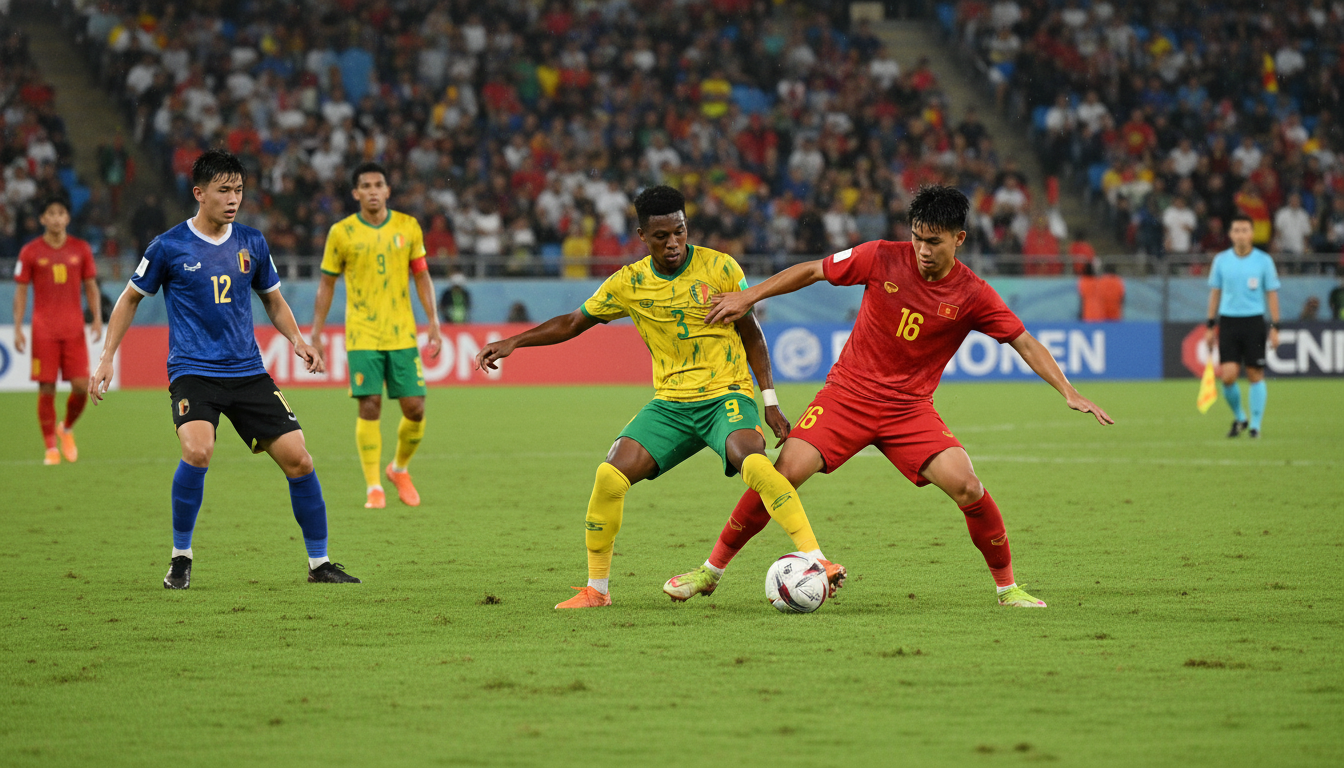
Vietnam U17 Drawn into Group G with Mali, Belgium and New Zealand at FIFA U17 World Cup 2026
Vietnam U17 drawn into Group G at FIFA U17 World Cup 2026 with Mali, Belgium and New Zealand; historic first appearance in Qatar and knockout hopes now.


Vietnam’s U17 side will face Mali, Belgium and New Zealand in Group G at the FIFA U17 World Cup Qatar 2026, marking the country’s first-ever appearance at the tournament.
The draw, confirmed on 23 May 2026, places the Vietnam U17 team against opponents from three confederations and sets the stage for a challenging group-phase campaign in November and December.
This milestone arrival at the global youth stage arrives as the Vietnamese federation emphasizes development, exposure, and the chance for young players to measure themselves against established youth programs.
Vietnam Drawn into Group G with Mali, Belgium and New Zealand
Vietnam secured a place in Group G after the official draw for the expanded 48-team FIFA U17 World Cup was completed on 23 May 2026.
The group pairs Vietnam with Mali from Africa, Belgium from Europe and New Zealand from Oceania, offering a blend of physicality, technicality and differing tactical approaches.
Tournament organisers have scheduled the FIFA U17 World Cup Qatar 2026 to run from 19 November to 13 December 2026, with a format designed to advance the top two teams in each group plus the eight best third-placed sides to the knockout stage.
Historic First FIFA U17 World Cup Appearance for Vietnam
Vietnam’s qualification represents a watershed moment for youth football in the country and for the Vietnam Football Federation’s long-term development plans.
VFF Vice President Tran Anh Tu described participation as a “very proud historical milestone,” highlighting the tournament as an opportunity for experience and growth for a new generation of players.
That sentiment underscores the broader ambitions within Vietnamese football to translate success at youth levels into sustained competitiveness at higher age groups and, eventually, senior international stages.
Group G Matchups and Tactical Challenges
Mali arrive as one of Africa’s traditionally strong youth sides, known for athleticism, direct play and robust set-piece presence.
Belgium brings a pedigree from European youth systems that emphasize ball retention, positional play and tactical sophistication, posing a technical test for Vietnam’s defensive organisation.
New Zealand, as Oceania’s representative, will likely offer a disciplined, hard-working approach with physical defenders and quick transitional threats, meaning Vietnam must prepare for varied match rhythms and styles.
Route to the Knockout Stage and Tournament Format
The FIFA U17 World Cup’s expanded 48-team format divides squads into 12 groups, with each team playing three round-robin matches in the group phase.
Progression to the knockout rounds will be awarded to the top two finishers in each group plus the eight best third-placed teams, making goal difference, discipline records and timely results crucial for Vietnam’s pathway.
For Vietnam U17, realistic tactical objectives will include securing points against at least one opponent, maintaining a favourable goal difference, and prioritising defensive discipline to enhance their chances of advancing as one of the best third-placed teams if necessary.
VFF Reaction and Player Development Implications
Vietnam’s leadership has framed the World Cup appearance not only as a competition but as a development milestone for players and coaches alike.
The federation’s public comments emphasize long-term benefits: exposure to international scouting environments, accelerated learning under pressure, and benchmarking against top youth systems.
Officials will likely use performance data and match footage from Qatar to refine youth training curricula, identify gaps in physical preparation, and map individual player pathways toward higher competitive levels.
Preparations, Logistics and What to Watch in Qatar
With the tournament scheduled for late November to mid-December, Vietnam’s technical staff faces a calendar that requires balancing domestic youth competitions, fitness cycles and travel logistics.
Key preparation items include arranging high-intensity friendlies, implementing targeted strength and conditioning programs to handle physical opponents, and finalising squad selection with contingency plans for injuries or late call-ups.
Monitoring player form across the months leading to Qatar will be essential; performances in regional youth tournaments and training camps can influence tactical decisions and the final 21-player roster.
Vietnam’s draw into Group G offers a vivid test of the country’s youth program at the highest global level.
The group’s mix of African physicality, European technical structure and Oceania’s tenacity will demand tactical flexibility and mental resilience from Vietnam’s U17s.
Success in Qatar for Vietnam U17 will not be measured solely by results, but by the growth of players, the learning captured by coaches and the foundations laid for future national teams.