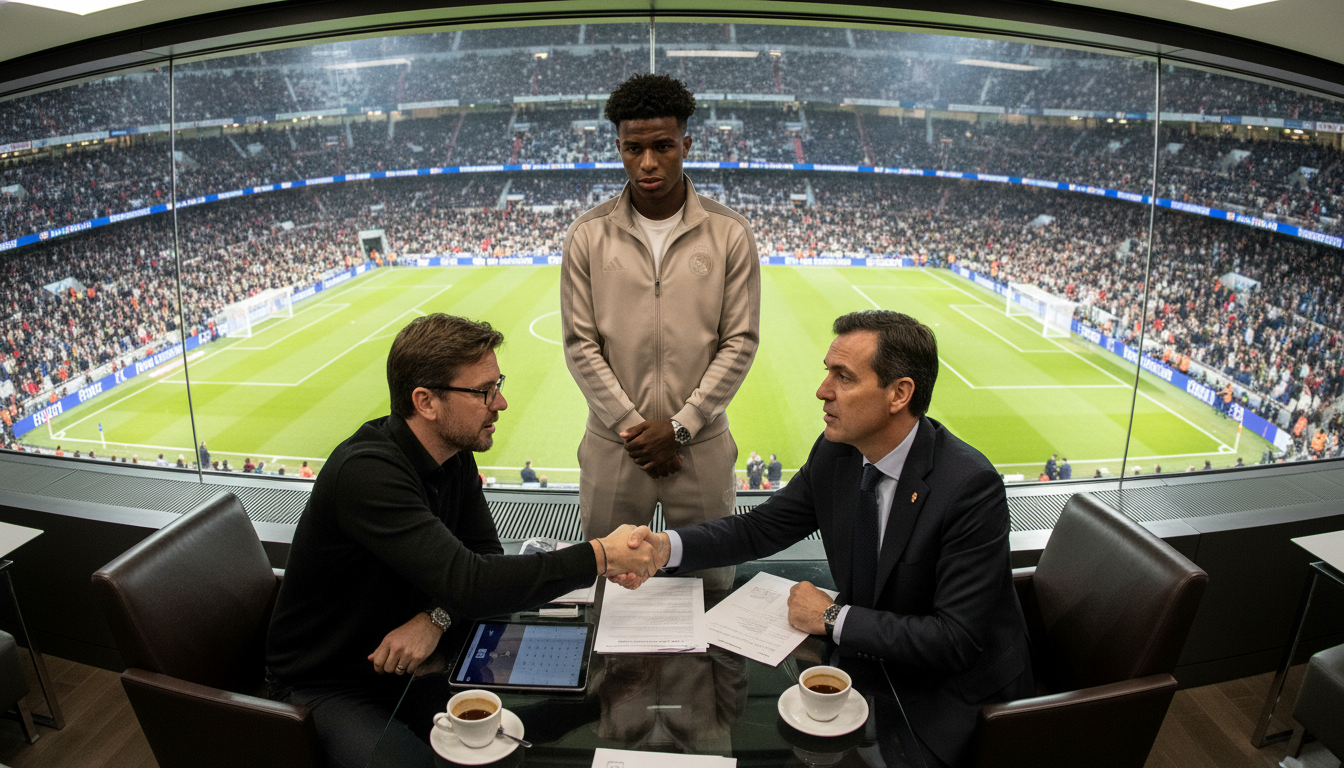
Manchester United open talks with Real Madrid over Vinicius Junior as summer plans take shape
Manchester United have opened contact with Real Madrid over Vinicius Junior, putting the Brazilian forward at the centre of their summer transfer thinking after a third‑place finish and Champions League qualification. The Vinicius Junior move is being weighed against United’s broader need to strengthen across several positions as the club prepares for a busy mercato.


United contact Real Madrid over Vinicius Junior
Manchester United have reportedly initiated discussions with Real Madrid about Vinicius Junior as they plot an ambitious summer recruitment drive. The club sees the Brazil international as a potential upgrade on the wings and a player who could add decisive attacking quality in the Champions League next season.
Those contacts appear to be exploratory rather than final, with United aiming to gauge Real Madrid’s stance and the player’s appetite for a move. The club’s hierarchy will use the talks to establish a realistic valuation and to map out how any transfer would fit into their recruitment budget.
Contract situation at Real Madrid creates a potential opening
Vinicius Junior’s contractual status at Real Madrid has been widely discussed, with reports indicating his deal is approaching its final year and talks over an extension are ongoing. That uncertainty is understood to be one reason United believe there may be a window to pursue the forward, particularly if Madrid prefer to avoid a potential free‑transfer loss in the near future.
At the same time, both Real Madrid and Vinicius have given public signals of mutual intent to reach an agreement, suggesting Madrid would rather keep one of their most influential attackers. Any bid from United would therefore have to contend with the likelihood that Madrid will offer improved terms to retain the forward.
Price tag and financial considerations for Manchester United
Market valuations place Vinicius among world football’s most expensive assets, reflecting his output and profile across domestic and continental competitions. Such a transfer would demand a substantial fee and likely a lucrative contract for the player, forcing United to consider whether spending heavily on a winger is the optimal allocation of resources.
United’s recruitment committee will have to weigh the financial cost against the immediate impact Vinicius could provide on the right flank and in transition. There are also wage‑structure and FFP considerations to manage, meaning any offer would likely involve detailed modelling of transfer fees, amortisation and salary consequences over multiple seasons.
Tactical fit and what Vinicius would bring to Erik ten Hag’s side
Vinicius Junior is best known for his explosive dribbling, directness in the final third and a high goal‑creation output, traits that would offer a new dimension to Manchester United’s attack. Under Erik ten Hag, United have sought forwards who combine pressing intensity with technical ability to destabilise high‑line defences, a description that broadly aligns with Vinicius’s playing profile.
However, the manager and his coaching staff must determine how Vinicius’s style would interact with existing personnel and formations. Integrating a high‑maintenance attacking star requires careful rotation planning and defensive cover, particularly if resources are diverted away from bolstering the back line or central midfield.
Squad priorities and alternatives to a Vinicius pursuit
Club officials face a strategic choice: invest heavily in an elite winger or channel funds into areas of acute need such as centre back or defensive midfield. Sources around the club argue that strengthening the spine of the team would offer longer‑term stability and could be a better use of a sizeable transfer budget than signing another forward.
As a result, United are likely to weigh a broad shortlist of alternatives alongside any approach for Vinicius, targeting emerging wide players, younger talents with resale value, or proven defenders. The decision will hinge on scouting reports, internal assessments of squad depth, and the perceived urgency of each position ahead of a Champions League campaign.
Timing, obstacles and how negotiations might unfold
Even with initial contact established, multiple hurdles remain before any transfer for Vinicius Junior could progress to completion. Real Madrid’s willingness to sell, the player’s preference, valuation, and competitive interest from other European heavyweights will influence the timetable and the structure of any potential deal.
United would need to prepare a flexible proposal that could include staged payments, sell‑on clauses or player exchanges to bridge valuation gaps. The club must also coordinate any approach with its own incoming and outgoing transfer plans to ensure wage‑bill balance and compliance with league regulations.
Commercial and branding implications of a Vinicius signing
Securing a player of Vinicius Junior’s calibre would carry significant commercial upside for Manchester United, enhancing global reach and sponsorship appeal. A high‑profile signing like Vinicius could drive merchandise sales, fan engagement in key international markets and ancillary revenue streams tied to global broadcasting interest.
That commercial benefit will be part of the club’s internal calculus, but it cannot substitute for the on‑field rationale that must justify the investment. United’s decision‑makers will therefore balance marketing returns against sporting priorities and long‑term sustainability.
Manchester United’s apparent interest in Vinicius Junior reflects both ambition and the complexity of modern transfer markets, where player contracts, valuations and squad needs intersect. The club’s contacts with Real Madrid should be viewed as the opening stage of a multifaceted evaluation rather than an imminent agreement.