Brazil World Cup 2026: Ancelotti’s Brazil begin campaign against Morocco amid injury and form concerns
Brazil World Cup 2026 campaign begins against Morocco as Carlo Ancelotti’s team faces pressure after a turbulent qualifying run, key injuries and a bold tactical reset.

Brazil enter the World Cup as perennial favorites but arrive in 2026 carrying fresh doubts after an erratic qualifying campaign and leadership changes at the Brazilian Football Confederation. Carlo Ancelotti’s appointment in May offered immediate stability and a clear tactical outline centered on a 4-2-4 shape, though several high-profile injuries have forced rapid adjustments. The opening match against 2022 semifinalists Morocco is widely viewed as one of the tournament’s first major tests and will set the tone for how Ancelotti’s side responds under pressure.
Qualifying setbacks and CBF upheaval
Brazil’s path to qualification for the 2026 World Cup was uncharacteristically rocky, exposing vulnerabilities long masked by historical dominance. The campaign included stalemate results and rare away defeats in South America, with losses across Argentina, Colombia, Uruguay, Paraguay and Bolivia that prompted questions about defensive organisation and squad cohesion.
Off the pitch, turmoil at the Brazilian Football Confederation complicated matters further when internal disputes culminated in a change of presidency. The administrative shake-up coincided with results that left even optimistic observers wondering whether Brazil’s World Cup streak might be in jeopardy. Ultimately, the South American qualifying format — generous with six direct places for ten teams — afforded Brazil the margin to recover and secure their place in North America.
Coaching change and tactical blueprint
The most consequential decision for Brazil ahead of the tournament was the hiring of Carlo Ancelotti in May, a move designed to steady a team facing both internal and on-field turbulence. Ancelotti has favoured a 4-2-4 formation since taking charge, signaling an intent to blend attacking width with a compact midfield screen. That approach seeks to marry Brazil’s traditional emphasis on flair with improved defensive balance.
Implementing a distinct tactical identity in a short window has required clarity from the coaching staff and buy-in from senior players. Ancelotti’s reputation for pragmatic management and man-management was a decisive factor in his selection, with expectations that he will harness the squad’s attacking talent while shoring up transition moments that proved costly during qualifying. The early signs will be judged against Morocco in the opener and in the group phase.
Injury absences force selection adaptations
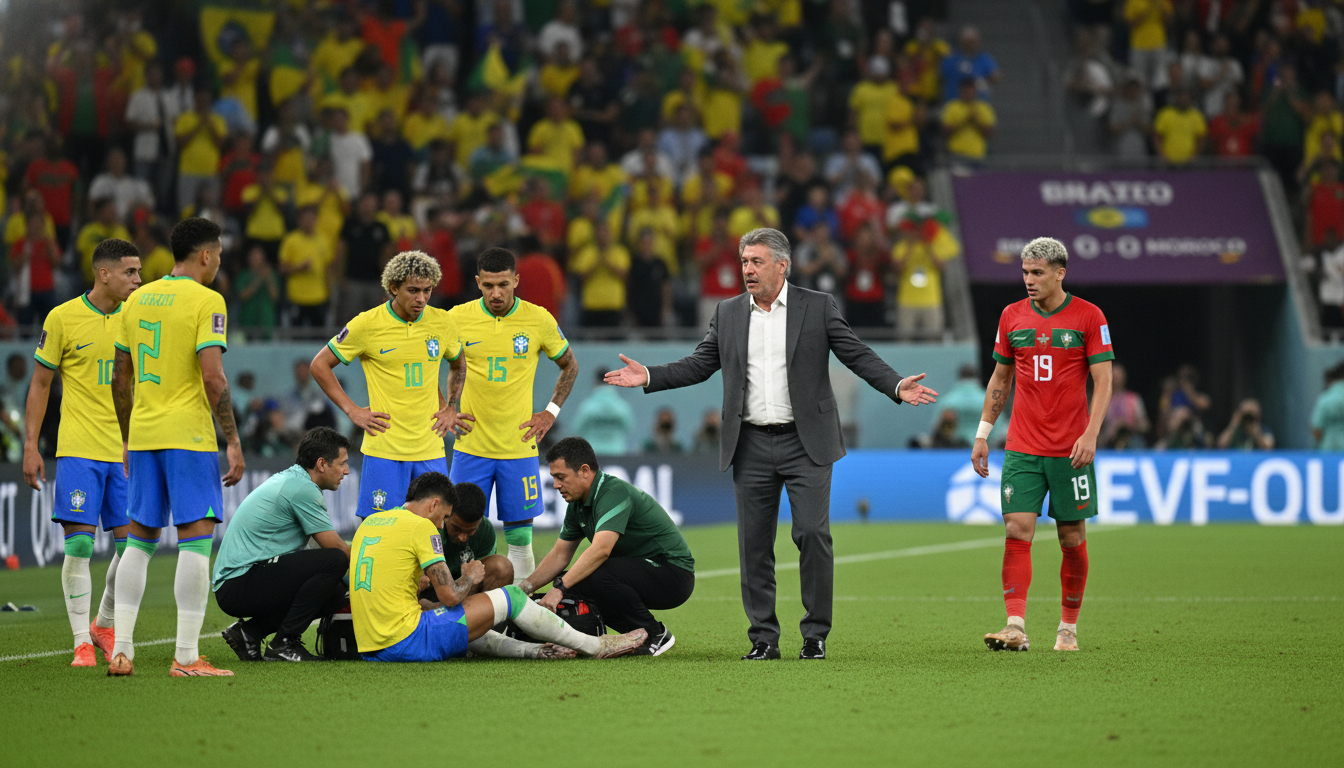
Injuries have reshaped Brazil’s preparation, removing several players initially expected to be key contributors. Central defender Éder Militão and attackers Rodrygo and Estêvão have been sidelined, depriving Ancelotti of both defensive continuity and attacking rotation. Those absences require tactical flexibility and present opportunities for fringe players to stake a claim.
The loss of Militão is particularly disruptive given Brazil’s struggles in coping with physical, high-tempo opponents during qualifying. Replacements will need to provide similar aerial presence and ball-playing ability to maintain the planned back line. Offensively, the absence of Rodrygo narrows options on the right flank and reduces the coach’s ability to rotate without losing pace and directness, placing a premium on fitness and form among the remaining attackers.
Group opener against Morocco is a pivotal gauge
Brazil’s first match against Morocco carries significance beyond three points because it will reveal how quickly the team has assimilated Ancelotti’s ideas. Morocco stunned the world in 2022 as semifinalists and have developed a reputation for disciplined defending and swift counter-attacks. Facing a side that blends collective organisation with experience at the highest level will be an immediate examination of Brazil’s tactical coherence.
A strong performance in the opener would quiet critics and build momentum, while a poor showing could intensify scrutiny on selection decisions and the federation’s governance. For players returning from long seasons and those integrating into a new system, the match will test concentration, match fitness and the managerial staff’s tactical preparation under tournament pressure.
Potential starting XI and squad depth considerations
Ancelotti’s preferred 4-2-4 framework suggests a back four protected by a two-man pivot and two advanced wide forwards supporting a central striker. Personnel choices will be influenced by injuries, recent form and the need for defensive solidity. The central midfield pairing will likely be chosen to provide balance between ball progression and screening responsibilities.
At full-back positions, Brazil traditionally looks for players capable of offering offensive width while tracking back quickly on transitions. Centre-back options will be evaluated not only for individual attributes but also for how they communicate and marshal a defence under pressure. Up front, the absence of key wingers increases the likelihood of leaning on established stars and encouraging midfielders to occupy half-spaces to create overloads.
Rotation will be essential across the group stage to manage fatigue and reduce injury risk, especially given a compressed international calendar. The depth of Brazil’s bench will be tested, and the coaching team must balance protecting key veterans with preserving competitive intensity in each match.
Expectations, public pressure and tournament trajectory
Brazil arrive in a familiar position: expected to contest the later stages based on history and squad quality, yet judged more harshly this time because of recent inconsistencies. The national narrative oscillates between faith in the talent pool and anxiety about tactical fragility exposed during qualifying. Both emotions are amplified by media attention and the public’s high standards.
Managing expectations will fall to Ancelotti and veteran leaders within the squad, whose influence in the dressing room may prove as decisive as tactical tweaks. The tournament trajectory hinges on how quickly Brazil converts possession into controlled attacking sequences while avoiding the lapses that produced costly concessions in qualifying. Progression from the group into the knockout rounds will require pragmatic adjustments and disciplined match management.
Brazil’s opening game and subsequent group fixtures will shape public perception and the coaching staff’s ability to make bolder moves later in the competition. A measured start could allow Ancelotti to refine his preferred lineup and introduce variations; an early stumble would force an accelerated search for answers and risk eroding confidence.
The balance between creative ambition and defensive resilience will determine whether Brazil can turn uncertain form into a sustained run in the knockout phase. Young players called upon to fill gaps have the chance to emerge as tournament revelations, while the veterans must anchor the team’s identity. As Brazil begin their World Cup campaign, the combination of tactical clarity, squad health and mental composure will be the keys to meeting the high expectations that accompany the five-time champions.