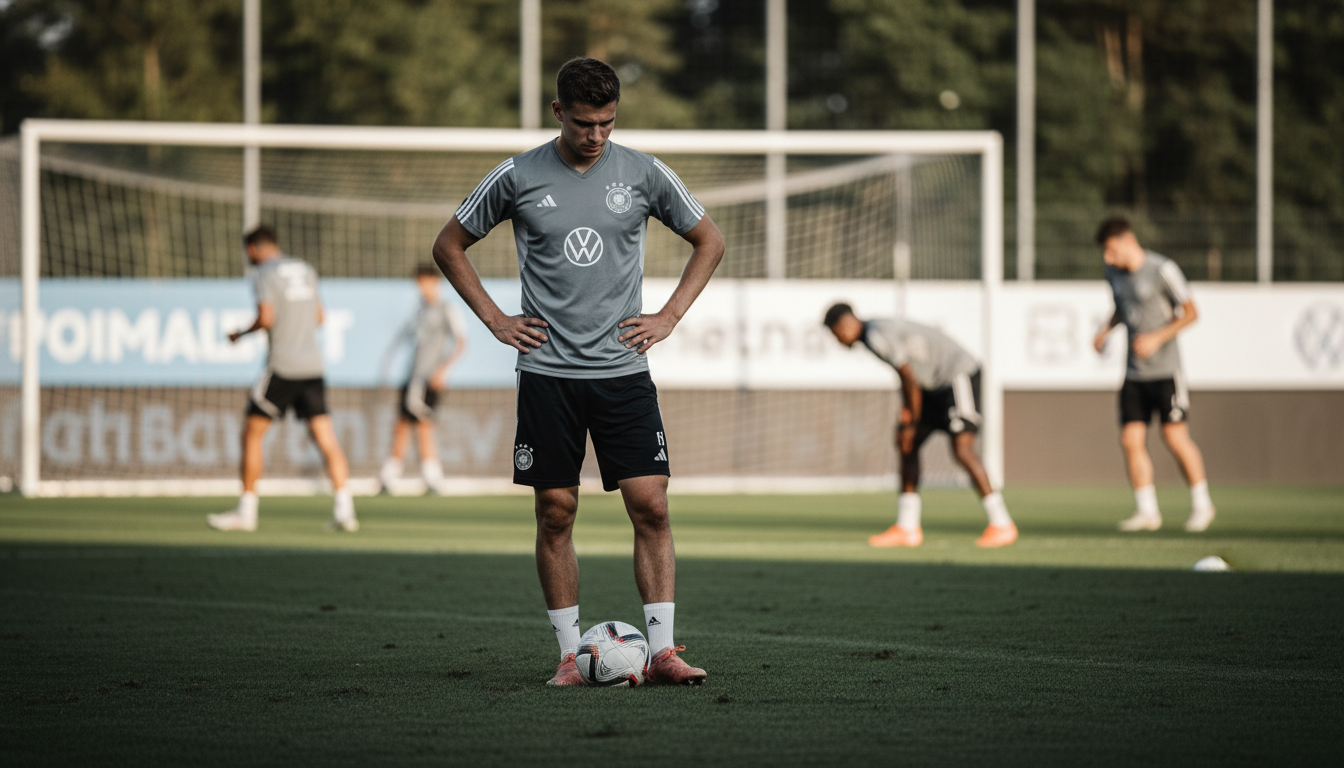
Nathaniel Brown assesses his World Cup starting chances at left-back for Germany
Nathaniel Brown outlines his chances of starting at left-back for Germany at the 2026 World Cup after earning the nod in the 4-0 friendly win over Finland.


Brown handed start in Finland as Raum sits out
Nathaniel Brown was selected in Germany’s starting XI for the 4-0 friendly victory over Finland, a decision that provided fresh material for the late squad debate over the left-back position. The RB Leipzig captain completed the match while David Raum, who had been Germany’s regular left-back through qualifying, remained an unused substitute for the full 90 minutes.
The choice to start Brown in Leipzig’s colors underscored the coaching staff’s willingness to test alternatives ahead of the tournament. That experiment immediately sparked questions about whether club form, tactical fit or rotation management drove the selection against Finland.
Brown outlines his World Cup expectations
Speaking to journalists during a virtual media session, Brown described the honour of making Germany’s World Cup squad and downplayed any personal tension about starting spots. "I’m extremely happy to be part of the World Cup squad," he said, and added that he respects the competitive dynamic in the squad while remaining focused on the team’s objectives.
Brown made clear he wants to contribute on the pitch but emphasised collective aims over individual ambition. He said he would support whoever is selected and welcomed guidance from senior team-mates, reflecting an approach intended to keep dressing-room unity intact.
Squad harmony and competition at left-back
The left-back duel between Brown and Raum is shaping into a classic selection dilemma for the coaching staff, pitting Raum’s consistency during qualifying against Brown’s current run of form. Raum’s experience in the system that secured Germany’s qualification gives him a strong claim, but Brown’s starting appearance suggests the coaching team is prepared to reassess established hierarchies.
Both players appear to handle the rivalry professionally, with Brown noting a good relationship and routine exchanges of advice. That public camaraderie matters for Germany, where continuity and cohesion are often cited by staff as prerequisites for tournament success.
Final warm-up versus United States to reveal Tactics
Germany’s final pre-tournament friendly against the United States this coming Saturday will be closely watched for clues about final XI intentions, particularly at left-back. If the staff start Brown again it will likely be interpreted as a signal that he has moved ahead in the pecking order, while a start for Raum would reaffirm the veteran’s standing.
Coaches often use the last warm-up to finalise roles and test specific game scenarios rather than to settle every positional question, but selections in these fixtures usually offer a reliable indicator of the immediate plan. How each player performs in that match could have an outsized impact on who begins Germany’s World Cup opener against Curaçao on June 14.
The match also provides an opportunity to observe how each full-back integrates with Germany’s midfield and wide players under match conditions. Those links — defensive positioning, overlapping runs and recovery speed — will be scrutinised by analysts and supporters alike.
Tactical considerations and Leipzig form
From a tactical perspective, Brown brings directness and willingness to surge forward, which can provide extra width and crossing options for Germany’s attack. That trait may appeal to coaching staff seeking greater offensive balance from full-back positions, especially against opponents who invite possession.
Conversely, Raum’s defensive reliability and familiarity with Germany’s structural principles offer the stability coaches prize in knockout tournaments. The staff must weigh immediate attacking upside against the need to limit high-quality chances for opposition wingers and forwards.
Brown’s club performances for RB Leipzig this season have kept him in the conversation for national selection, where consistency and adaptability count heavily. Leipzig’s system has allowed him to refine both offensive instincts and positional discipline, making him a credible alternative on the international stage.
Managerial selection and squad planning
Germany’s coaching team has signalled an openness to rotation during the tournament, suggesting that the left-back role could be adaptable depending on opposition and match state. That flexibility reflects a broader contemporary trend of using full-backs as interchangeable assets, tasked with both build-up duties and defensive containment.
Selection decisions will also be informed by training-ground observations, injury management and the need to preserve players’ freshness across a condensed tournament schedule. The management must balance short-term match demands with the long-term objective of reaching the latter stages.
The tactical brief communicated to both Brown and Raum appears to emphasise team shape and mutual support rather than isolated showings. For managers, securing buy-in from multiple capable options at a single position reduces the risk posed by fatigue or injury.
Germany’s defensive set-up will be continually adapted to tournament opponents, and the coaching staff has the luxury of two seasoned options at left-back. That depth allows for nuanced match plans and reactive substitutions that can change the complexion of games.
Nathaniel Brown’s starting appearance in the Finland friendly, his measured comments to media, and the imminent test against the United States together frame a selection process that will be decided on form, fit and tactical alignment in the next nine days.