Lennart Karl ruled out of 2026 World Cup after torn muscle in Germany training
Lennart Karl will miss the 2026 World Cup after suffering a torn muscle bundle in Germany’s final training session in Chicago, with Bayern and national staff now weighing treatment and next steps.

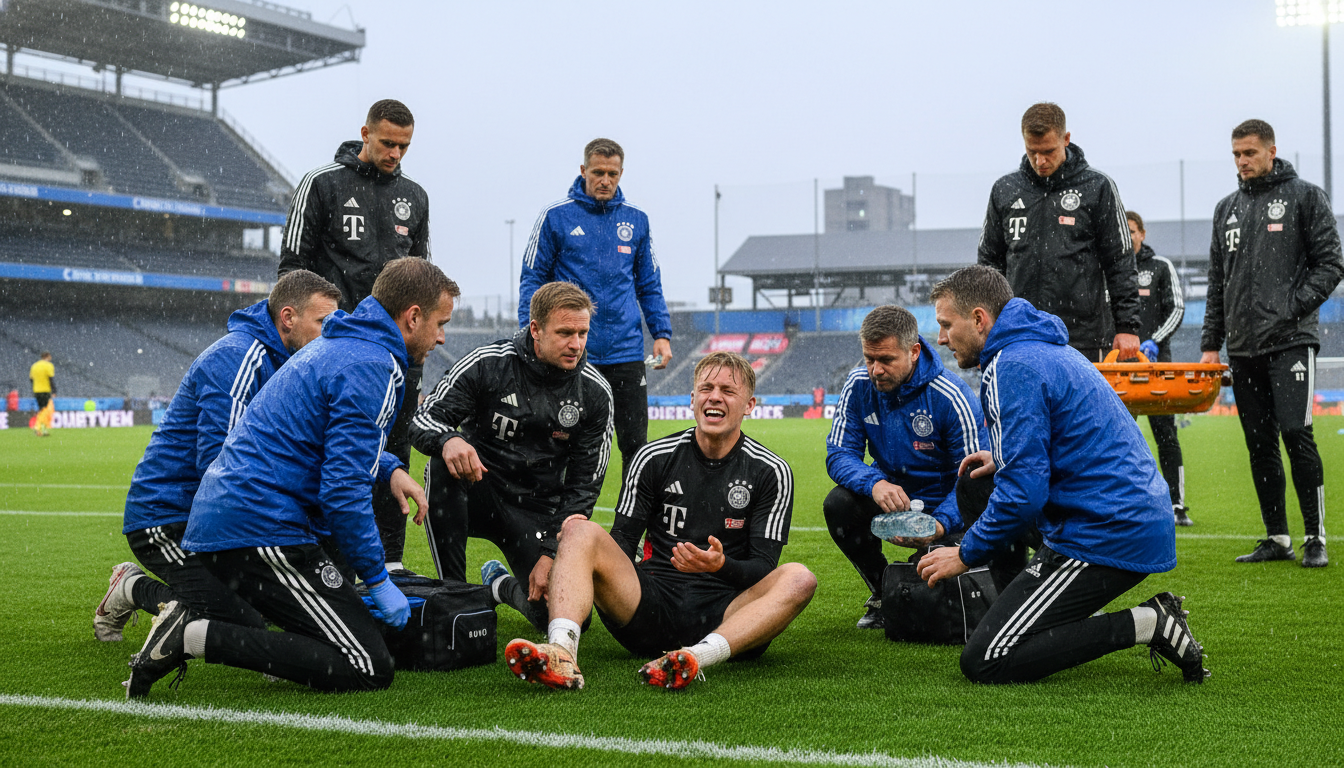
Lennart Karl’s bid to appear at his first senior World Cup ended abruptly when the 18-year-old Bayern forward sustained a torn muscle bundle during Germany’s final training session in Chicago.
The injury, which forced Karl to limp off the field with around 20 minutes remaining, was confirmed by an MRI scan and has led team officials to rule him out of the tournament.
Coaching staff and medical personnel are now determining the appropriate course of treatment while internal discussions continue over whether Karl will return to Munich for care and rehabilitation.
Injury confirmed after MRI scan
German team sources confirmed the diagnosis following imaging that showed a significant muscle tear consistent with the symptoms observed on the training ground.
The scan prompted immediate conversations between national team doctors, coaching staff and representatives from Karl’s club to assess the severity and treatment options.
Reports indicate the injury occurred late in the session, with the forward departing the field in obvious discomfort and receiving attention from the medical team before being taken for scans.
The reality of the diagnosis removes Karl from Germany’s roster for the tournament weeks before the squad’s scheduled opening fixtures.
Medical options and recovery considerations
Team medical staff are weighing a range of interventions, from conservative rehabilitation to more invasive procedures, depending on the extent of the muscle damage.
Decisions will be driven by the precise nature of the tear, the location of the injured muscle fibers and the short-term goals for the player’s health and long-term career.
Conservative treatment typically involves rest, targeted physiotherapy and a phased return to training, while surgical options are reserved for more extensive structural damage.
Given Karl’s age and developmental trajectory, club and country medics are likely to prioritize solutions that protect his long-term prospects even if that precludes immediate return.
Impact on Germany’s squad planning
Karl’s withdrawal forces Germany’s coaching staff to reconsider selection balance and attacking options ahead of the tournament.
The coaching staff will assess reserve players already on-site as well as potential late call-ups to replace the versatile forward in the squad list.
Tactical adjustments may be modest or more pronounced depending on the role Karl had been expected to play, but the coaching team retains depth across attacking positions.
Any replacement decision will weigh form, international experience and the specific tactical demands posed by Germany’s group-stage opponents.
Bayern Munich’s role and immediate club considerations
Bayern Munich’s medical team will play a central part in the next phase of Karl’s care if the player returns to the club, with discussions reportedly underway between Munich and national team officials.
The club faces the dual responsibilities of overseeing rehabilitation and protecting a promising young asset whose development has been carefully managed.
Bayern will likely tailor a recovery program that integrates the club’s long-term management strategy for a young attacker while coordinating with national staff on milestones and timelines.
How quickly Karl rejoins team training at Bayern will depend on regular reassessment and medical benchmarks agreed upon by both parties.
Player profile and significance to future plans
Karl emerged from Bayern’s youth pathway and has been viewed as one of the club’s most promising attacking talents, earning attention for his versatility and technical qualities.
At 18, his progression into senior environments at both club and international levels had marked him as a player for the future, making this setback particularly disappointing for his immediate ambitions.
For the national team, Karl represented an investment in the next generation and a potential option to inject pace and creativity into the front line.
His absence will be felt more as a lost opportunity to integrate a young talent on football’s biggest stage than as a long-term void in Germany’s talent pool.
Tournament timing and broader implications
Suffering a muscle tear so close to the tournament start means Germany must finalize squad adjustments under tight time constraints and communicate changes to stakeholders.
The loss also highlights the fine margins of pre-tournament preparation, where an injury in a routine session can alter a player’s career moment and a team’s immediate plans.
Beyond the immediate roster shift, the situation will prompt reflection within the German setup on training intensity, load management and risk mitigation during pre-competition camps.
Clubs and national teams often reassess coordination protocols after late injuries to ensure player welfare is prioritized without compromising competitive readiness.
Germany’s camp and Bayern Munich have signalled that they will place Karl’s long-term health at the center of any decision, with detailed follow-up assessments scheduled to determine the rehabilitation timetable.
While the immediate heartbreak of missing a first World Cup is clear, the focus for all parties will now be on a measured, medically guided recovery capable of preserving Karl’s career prospects in the seasons ahead.