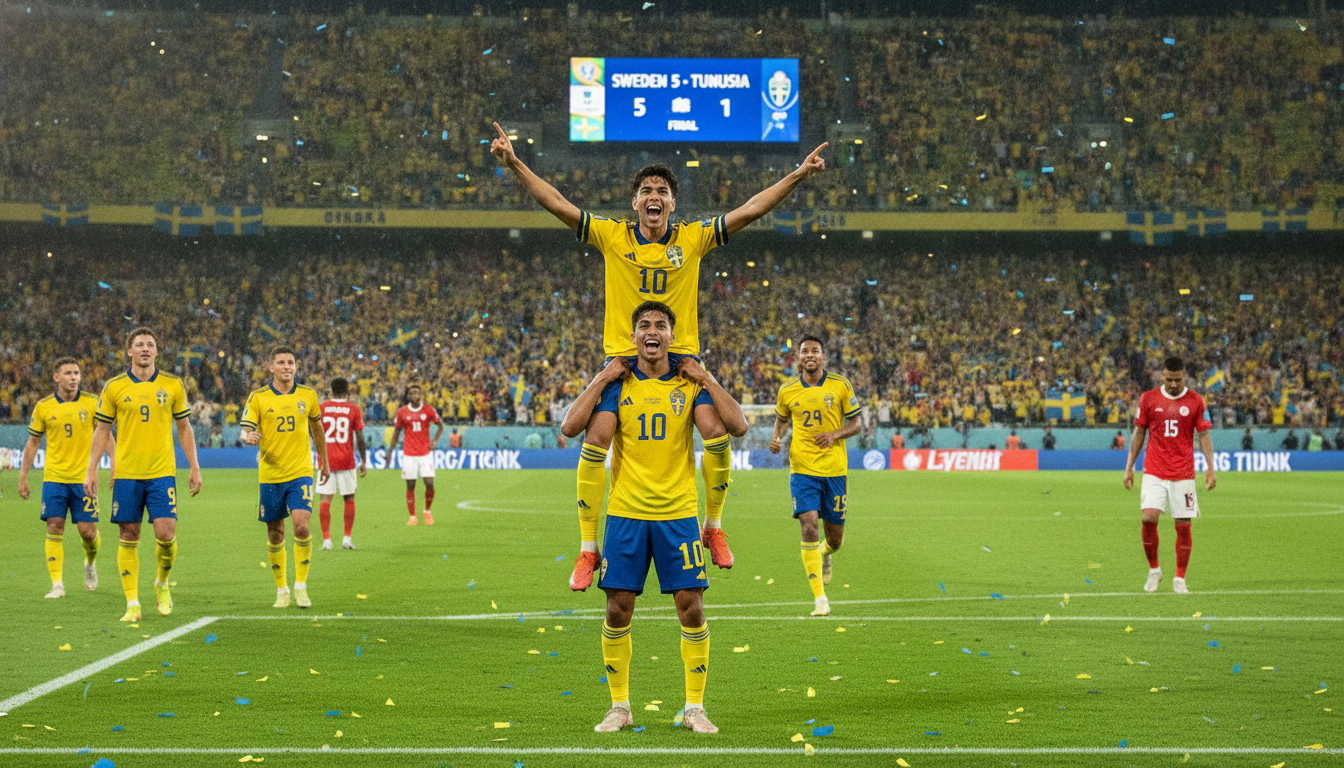
Sweden 5-1 Tunisia: Ayari, Isak and Gyökeres Power Confident World Cup Statement
Sweden rout Tunisia 5-1 in Group F opener, with early strikes from Yasin Ayari and Alexander Isak setting the tone and Viktor Gyökeres adding a calm second-half finish.


Sweden 5-1 Tunisia was the headline result as the Nordic side marked their return to the World Cup with a dominant performance in their Group F opener. Yasin Ayari’s thunderous early strike and Alexander Isak’s composed finish within the first half-hour put Sweden firmly in control. Viktor Gyökeres extended the lead after the break, while Tunisia managed a brief reply through Omar Rekik before substitute Mattias Svanberg and a late Ayari second sealed a comprehensive victory. The result underscored Sweden’s attacking depth and exposed vulnerabilities in a Tunisian defence that had been imperious during qualifying.
Early statement: Ayari sparks Sweden inside 10 minutes
Yasin Ayari gave Sweden a dream start, racing onto a chance and unleashing a howitzer that cannoned past the Tunisian goalkeeper. The 22-year-old’s strike came just seven minutes in and instantly shifted momentum to the Swedish side. His celebration — a reflective moment on his knees — signalled the significance of the strike for both player and team.
The opener forced Tunisia to chase the game and opened space for Sweden’s forwards to exploit. Ayari’s goal demonstrated both his shooting power and Sweden’s willingness to attack through midfield. It set the template for a first half in which Sweden showed greater cohesion and cutting edge.
Isak doubles lead as Tunisia’s back line falters
Alexander Isak added a second goal inside the opening half-hour after a defensive miscue left Tunisia exposed on a long ball. Mouhib Chamakh’s rushed attempt to beat Isak to the ball resulted in a weak chested touch that allowed the striker to pounce. Isak’s composed finish over the stranded keeper turned Sweden’s early lead into a commanding advantage.
That second strike was symptomatic of Tunisia’s difficulties dealing with Sweden’s front line. The visitors had come to the tournament with confidence in a defence that had not conceded during qualifying, but against top-level attacking talent they were repeatedly tested. Sweden’s movement and decision-making in the final third gave the North African side few moments of respite.
Tunisia briefly respond through Rekik but issues persist
Omar Rekik pulled one back for Tunisia with a headed effort shortly before half-time, offering a fleeting reminder of their set-piece threat. The goal briefly halted Sweden’s momentum and gave Tunisian supporters something to hold onto heading into the interval. However, the response lacked the intensity and sustained pressure needed to force a real shift in the game’s balance.
Even when Tunisia threatened, their defending remained patchy and reactionary rather than structured. Montassar Talbi’s unconvincing clearance following Gyökeres’ initial attempt was indicative of a back line under strain. For a side that had recorded ten consecutive clean sheets in qualifying, the match exposed a gap between defensive records earned in qualifying and the demands of World Cup opposition.
Gyökeres restores control with a decisive second-half finish
Viktor Gyökeres settled any second-half nerves when he found the net 14 minutes after the restart, finishing from close range after seizing on a loose ball. The Arsenal-linked striker gathered the rebound from a scramble and lifted the ball over a prone keeper, restoring Sweden’s three-goal cushion. The strike underlined Sweden’s clinical instincts in and around the penalty area.
Gyökeres’ goal also changed the tactical complexion of the match, allowing Sweden to manage possession and probe for further chances without exposing themselves to sustained Tunisian pressure. His presence as a central reference point gave Sweden the ability to play through him and create opportunities for runners arriving from deeper positions.
Late substitutions and finishing touches from Svanberg and Ayari
Mattias Svanberg made an immediate impact after being introduced as an 84th-minute substitute, scoring with his first touch to make it 4-1 and effectively end the contest as a competitive affair. The goal showcased Sweden’s depth and readiness to rotate while maintaining attacking threat. Svanberg’s entrance highlighted a bench capable of influencing the match late on.
Deep into stoppage time Yasin Ayari added a second to his name with another ferocious strike, a fitting finish to a personal statement-making night. The late flourish capped a performance in which Sweden’s attacking trio combined power, movement and precision. It also left Tunisia with a heavy scoreline and a need to regroup quickly ahead of their remaining Group F fixtures.
Tactical readout and Group F implications
Sweden’s display was rooted in quick transitions, high-quality forward runs and a directness that unsettled Tunisia’s defenders. The visitors exploited space in behind and punished hesitancy on the back line, converting a couple of defensive errors into goals. Their frontline of Ayari, Isak and Gyökeres offered a balance of finesse, pace and finishing that Tunisia struggled to match.
For Tunisia, the result will prompt questions about whether their qualifying form — a run that yielded ten clean sheets — can withstand the elevated standard of World Cup opponents. The defence that had been so resolute will need recalibration when facing squads with varied attacking threats. Sweden’s victory places them in a strong position within Group F, where goal difference and confidence will now be on their side.
Player performances and individual takeaways
Yasin Ayari emerged as the evening’s standout with two thunderous goals and constant influence through the middle, reflecting his shooting ability and timing in the final third. Alexander Isak delivered a composed finish and several dangerous moments that reminded observers of his reputation as a clinical frontman. Viktor Gyökeres provided the physical presence and opportunism that allowed Sweden to convert dominance into a clear scoreline.
On the Tunisian side, the evening’s bright moment came via Omar Rekik’s header, but individual errors at the back and a lack of sustained offensive threat remain concerns. Goalkeeper dynamics and defensive coordination will be areas for coach attention ahead of Tunisia’s next match. The collective display suggested more work is required to match the balanced attacking systems they faced.
Sweden’s emphatic opening victory altered the early dynamics in Group F and delivered a performance that combined clinical finishing with controlled game management. The 5-1 scoreline highlights Sweden’s attacking depth and gives them momentum heading into the rest of the group stage.
Looking ahead, Tunisia must address defensive frailties and find ways to generate more threat going forward if they hope to recover in the group. Sweden will seek to consolidate this positive start, but the team must guard against complacency as the tournament progresses. The result provided an emphatic reminder that early World Cup outings can set the tone — and for Sweden this was a statement on a big stage.