Carlos Queiroz World Cup record: veteran coach equals Milutinović with fifth consecutive tournament for Ghana
Carlos Queiroz World Cup record: Queiroz takes charge of Ghana at the 2026 World Cup as he matches Bora Milutinović’s run of five straight tournaments.


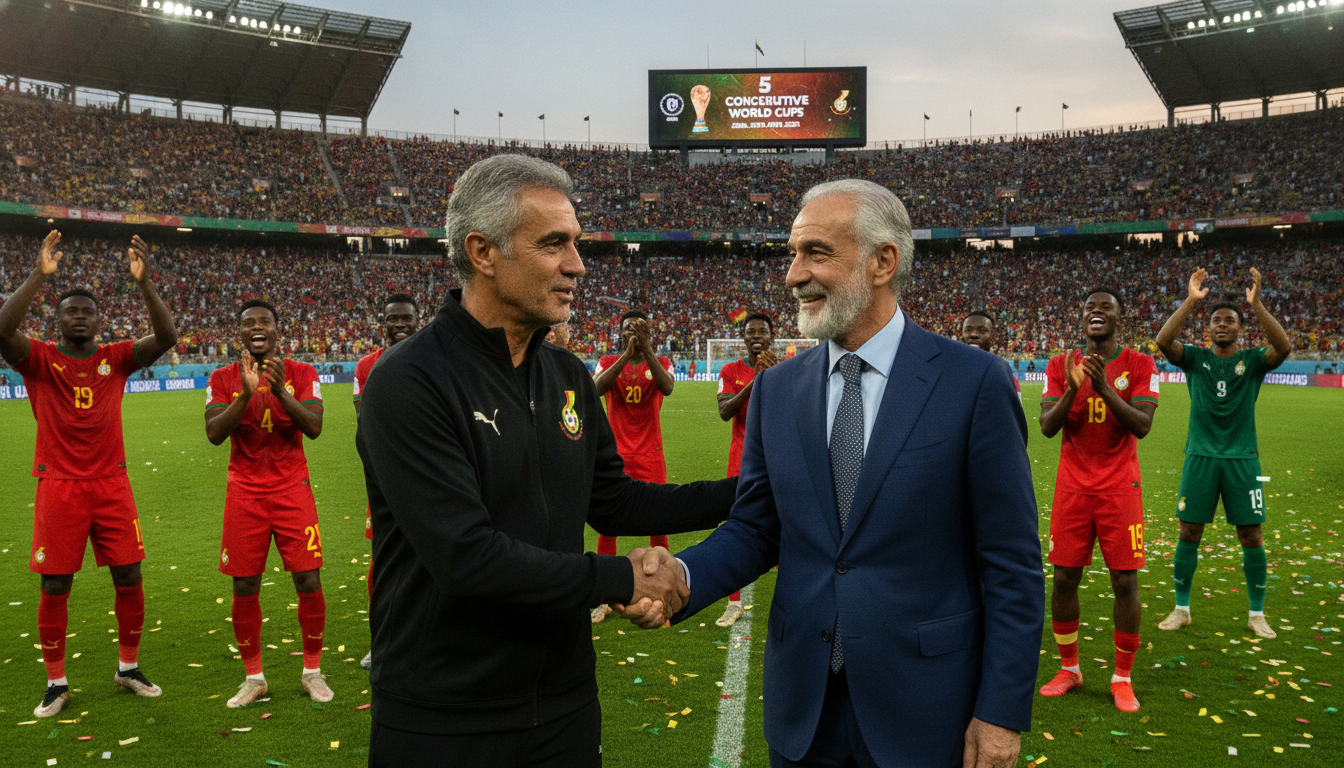
Carlos Queiroz’s appointment as Ghana’s coach for their opening Group L match against Panama in Toronto marks a new chapter in an already historic World Cup journey for the 73-year-old manager. The move puts the Carlos Queiroz World Cup record into the spotlight, as his presence at this tournament extends an uninterrupted run of appearances that began with Portugal in 2010 and continued with Iran at the three subsequent tournaments. While he remains one tournament short of the all-time appearance record, his fifth consecutive World Cup places him level with Bora Milutinović’s unique streak from 1986 to 2002.
Queiroz’s place in World Cup history
Queiroz’s run at World Cups now spans four previous tournaments with Portugal and Iran and continues with Ghana in 2026, a sequence that cements his status among the game’s most persistent international coaches. His fifth straight finals campaign equals the record set by Milutinović, who managed five different national teams across five successive World Cups. Carlos Alberto Parreira still holds the record for appearances overall with six non-consecutive tournaments, but Queiroz’s continuous presence is notable in modern football where coaching tenures are typically shorter.
This milestone reflects both longevity and adaptability, as Queiroz has navigated different footballing cultures, expectations, and administrative environments over more than three decades. Each assignment required tactical reinvention and communication with diverse player pools, demonstrating a professional durability that few managers sustain at the international level. His arrival in Toronto to lead Ghana against Panama will be measured not only by results but also by how effectively he adapts his methods to a squad assembled on short notice.
How Ghana turned to Queiroz
Ghana’s decision to appoint Queiroz in April followed the dismissal of Otto Addo after a run of unsatisfactory friendly results in the lead-up to the tournament. The federation moved decisively to replace Addo, seeking an experienced hand to steady the team and extract the best possible showing at the World Cup. Queiroz was not the federation’s first long-term plan for 2026, but the timing and the need for an immediate, experienced solution aligned to bring him into the role.
The sudden nature of the hiring required rapid rapport-building with players and staff, and it placed Queiroz into a preparatory window shorter than most incoming managers expect. That compressed timeframe increases the premium on clear messaging, tactical simplicity, and quick adjustments during match preparation. Ghana’s federation has bet that Queiroz’s international experience and track record of tournament management make him the right choice to salvage and potentially elevate their World Cup campaign.
Tactical identity and on-pitch demeanor
Queiroz’s coaching profile has long been defined by a cerebral, technically oriented approach to preparation and player development. His teams often reflect careful organization, emphasis on structured build-up play, and attention to transitional moments where matches are frequently won or lost. That technical blueprint has been credited with long-term developmental successes, particularly during his early work with Portugal’s youth setups, which produced an exceptional generation of players.
Contrasting with his methodical tactics is a sideline persona that can appear combative or theatrical during matches, earning him a reputation as a volatile presence on the touchline. Observers and former players have offered mixed appraisals, with some praising his meticulousness and others describing his sideline behavior as off-putting. Whatever the perception, Queiroz’s combination of detailed planning and intense matchday temperament remains a defining feature of his management style.
Career milestones and past tournaments
Queiroz’s international résumé is extensive and varied, stretching from youth international success to senior roles at some of the world’s best-known clubs and national teams. He first gained broad recognition by leading Portugal to consecutive FIFA U-20 World Cup titles in 1989 and 1991, an achievement that helped launch the careers of future stars. He later held high-profile roles, including a spell at Real Madrid and a period working alongside Alex Ferguson at Manchester United, alongside multiple national-team appointments.
At the senior international level, Queiroz led Portugal at the World Cup in 2010 and guided Iran through three straight finals tournaments in 2014, 2018, and 2022. That sequence of tournaments, now extended by the 2026 campaign with Ghana, illustrates both his appeal to national federations and his capacity to prepare sides for the unique demands of World Cup competition. Across those assignments he has coached in eight different countries’ national teams, bringing a global perspective to each new posting.
Immediate challenges for Ghana in Group L
Ghana arrives in Group L with high expectations from supporters who remember the nation’s deep World Cup runs in previous decades. The immediate challenge for Queiroz is to align a squad assembled amid coaching upheaval and limited preparation time into a coherent unit capable of competing against disciplined and varying styles of opposition. The opening match against Panama in Toronto will be an early test of how rapidly his tactical concepts can be understood and executed under match pressure.
Set-piece organization, defensive transitions and midfield control are likely priorities in early training sessions, where clarity of roles can compensate for a lack of extended working time. Queiroz must also manage player fitness and rotation given the compressed group schedule and the physical demands of tournament football. How quickly the team bonds and internalizes his tactical approach will be decisive for Ghana’s chances of advancing from what is expected to be a competitive group.
Reputation, youth development and long-term impact
Despite the controversy that sometimes surrounds his on-field comportment, Queiroz is widely acknowledged in Portugal and beyond for influencing coaching methods and youth development practices. His early work with Portuguese youth teams is credited with helping create structures that later produced elite talent at senior level. That legacy of player development makes him an attractive short-term appointment for federations seeking not just immediate results but also systematic improvements in player pathways.
For Ghana, even a brief tenure by a coach with significant developmental credentials can leave an imprint on training methods and talent assessment processes. If Queiroz focuses on organizational details and technical foundations during his stint, those changes could persist beyond the tournament and shape longer-term national-team planning. Federations frequently bring in elder statesmen of coaching to stabilize transitional periods, and Ghana’s leadership is effectively asking whether Queiroz can provide both immediate steadiness and durable institutional gains.
The decision to appoint Queiroz at this stage of his career underscores the high value some federations place on tournament experience and tactical acumen. His arrival has already drawn comparisons with historical coaching runs at the World Cup, and his performance in Toronto will add another chapter to an unusual international resume.
Queiroz’s immediate task is straightforward to describe but difficult to deliver: rapidly convert a national team into a tournament-ready unit under intense scrutiny and against accomplished opponents. His past tournaments show an ability to impose a tactical framework, yet the compressed timeline and high expectations mean outcomes are far from guaranteed.
The match in Toronto and the subsequent fixtures will offer the clearest measure of whether this late-stage appointment translates into competitive results, and whether Carlos Queiroz’s World Cup record becomes an enduring part of his managerial legacy.