Cape Verde Spain draw: Debutants hold reigning champions to 0-0 World Cup shock in Atlanta
Cape Verde hold Spain to a 0-0 draw in Atlanta as debutants produced a World Cup shock; veteran goalkeeper Vozinha starred to secure a historic point.


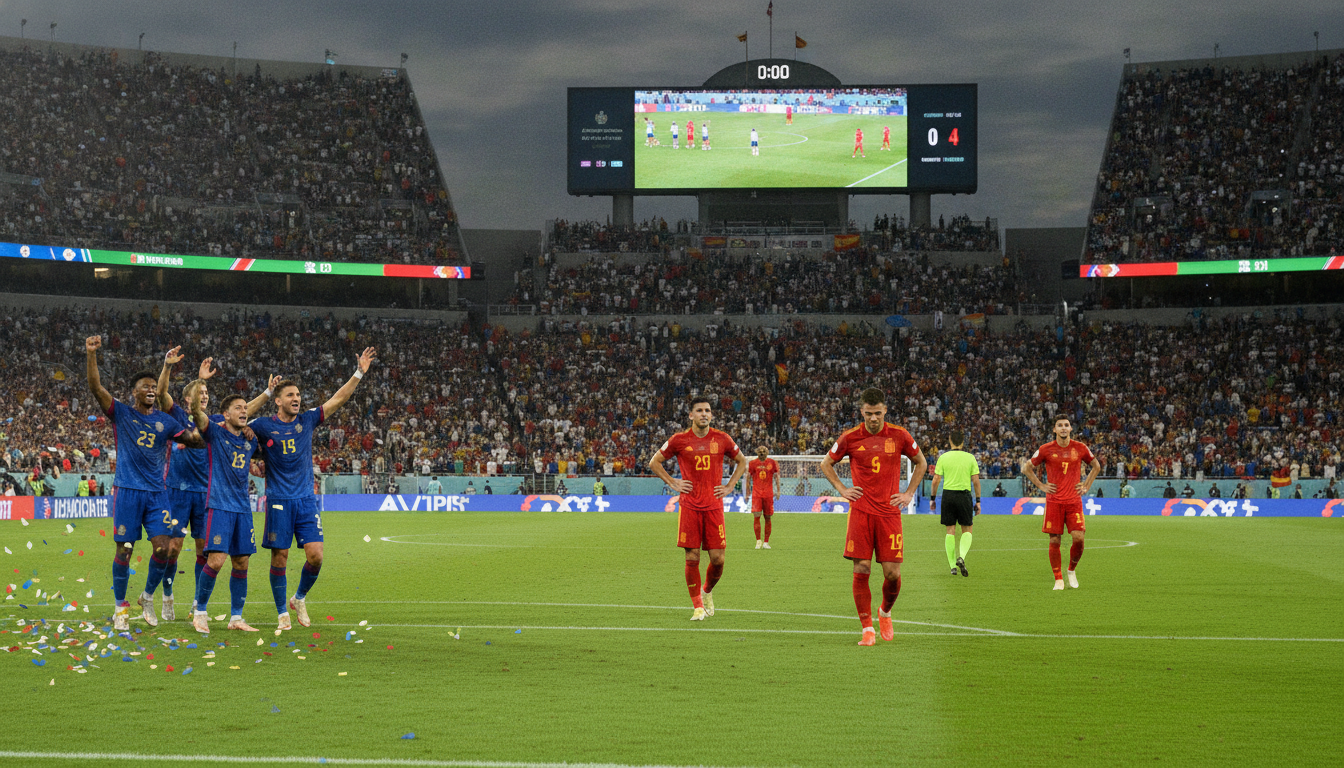
Cape Verde produced one of the tournament’s most unexpected results by holding Spain to a goalless draw in Atlanta, leaving the reigning European champions frustrated and the African debutants jubilant. The Cape Verde Spain draw was built on disciplined defending and a series of standout saves from 40-year-old goalkeeper Vozinha, who denied multiple clear chances. Spain dominated possession at times but struggled to convert pressure into goals until late substitutions injected urgency that ultimately failed to break the deadlock. The point gives Cape Verde a crucial opening boost in Group H and hands Spain a sobering start to their title defence.
Defensive organisation frustrates Spain
Cape Verde set up in compact, rigid defensive lines that absorbed Spain’s patient build-up play for long stretches of the match. The Blue Sharks stayed disciplined between the lines, rarely allowing Spain’s attackers clear sight of goal and forcing shots from distance or crowded penalty-area situations. That structure limited high-quality opportunities, and when Spain did fashion chances they were often from set pieces or frantic scramble situations. The visitors’ ability to maintain shape for most of the 90 minutes was central to preserving a clean sheet against one of the tournament favorites.
Vozinha’s veteran performance decisive
At the heart of Cape Verde’s resistance was goalkeeper Vozinha, whose reflexes and command of the area repeatedly frustrated Spain’s forwards. The 40-year-old, who plays his club football with Chaves in Portugal’s second tier, produced a string of important saves, including difficult stops from Ferran Torres and Aymeric Laporte before half-time. Vozinha’s willingness to come off his line to collect crosses and to organise his defence calmed what might otherwise have been a chaotic rearguard. He was embraced by teammates after the whistle, a visible testament to his influence on what will be remembered as a historic result for the nation.
Spain’s best chances fail to find the net
Spain created threatening moments but lacked a cutting edge in the final third for extended periods, with only seven of their 27 attempts ending on target. Ferran Torres had the clearest opening in the first half when he connected with Marc Cucurella’s knock-back but struck the crossbar while under pressure from Vozinha. Substitute Lamine Yamal injected life into Spain’s attack after the break following an eight-week recovery from a hamstring injury, but the Barcelona teenager could not produce a decisive moment on his tournament return. Mikel Oyarzabal, who scored Spain’s Euro 2024 winner, was denied late on by a superb block from Roberto Lopes, while a headed corner from Diney Borges at the other end flew straight at keeper Unai Simón.
Tactical choices and game management
Cape Verde’s coach set out a clear game plan focused on structured defending, limiting Spain’s space between midfield and defence and inviting long spells of possession. The team relied on quick transitions and set-piece deliveries to create the few attacking moments they had, while defenders dropped in to shield the penalty area. Spain, for their part, sought to probe patiently through midfield combinations and wing rotations but often found themselves unable to penetrate the compact block. The introduction of Lamine Yamal and the return of winger Nico Williams offered intermittent bursts of width and pace, yet Spain’s final ball and finishing quality remained inconsistent.
Significance for Group H and knockout prospects
The single point earned by Cape Verde significantly boosts their prospects of progressing from Group H, particularly in a tournament format that advances eight of the best third-placed teams to the last 32. As World Cup debutants, the Blue Sharks have already exceeded expectations by taking a point from a side widely tipped to contend for the title. Their performance will provide morale and belief that they can compete for a second matchday result that might secure a route into the knockout rounds. For Spain, the draw complicates an opening round they will now view as missed opportunity, but it does not extinguish their chances of advancing if they can sharpen their attack in subsequent fixtures.
Historical context and Spain’s tournament trajectory
Spain have a mixed record in opening matches at recent World Cups, with early slips that did not prevent later success in the past; notably they lost their 2010 opener but ultimately won the tournament. The 0-0 result in Atlanta will be filed alongside previous first-match disappointments, but the national side has previously rebounded from similar setbacks. Nonetheless, the draw underscores vulnerabilities in Spain’s current setup and amplifies scrutiny over whether the reigning European champions can rediscover consistent goal threat. Coaching staff and players will need to address finishing and creativity in training ahead of their remaining group encounters.
Cape Verde’s route to this World Cup came via topping a qualifying group that included Cameroon, a run that already signalled the team’s capacity to upset more established sides. Their Atlanta performance combined defensive discipline, collective organisation and individual bravery, most visibly from Vozinha and central defenders who limited Spain’s high-value chances. The Blue Sharks’ point has historical resonance too, as no African debutant has reached the World Cup knockout stage since Ghana did so in 2006, a benchmark Cape Verde will now quietly aim to challenge. Confidence from this opening result will allow Cape Verde to approach their next fixtures with renewed belief rather than cautious survival instinct.
Spain’s coaching team will confront questions about attacking variety and the balance between control and penetration. Possession statistics and territorial dominance did not translate into the decisive moments required to secure three points, and finishing practice will be a focus during the brief recovery window. The return of players from injury offers selection options, but integration must still produce coherent threat in the final third. Spain remain among the tournament favorites on paper, yet the match in Atlanta served as a reminder that high-ranked teams can be punished for profligacy and tactical rigidity.
The tactical lessons from the Cape Verde Spain draw extend beyond the two teams, offering a wider tournament reminder that compact defending and a resilient goalkeeper can neutralise technically superior opponents. Smaller nations with clear organisation and belief can make group stages unpredictable, and this match will be analysed as an example where underdogs executed a plan to near perfection. For viewers and analysts, the draw provides fresh narrative texture to Group H and contributes to the early drama of the tournament’s opening rounds.
Both teams now shift focus to their upcoming matches with different mindsets: Cape Verde buoyed by a historic point and intent on sustaining the momentum, and Spain needing to convert chances into goals to justify their pre-tournament billing. The scheduling and recovery programs will be pivotal in what follows, as will tactical tweaks designed to exploit opponents’ weaknesses while shoring up identified deficiencies. The draw in Atlanta will be remembered as a night when preparation, pride and an accomplished veteran performance combined to produce one of the World Cup’s early surprises.
Cape Verde’s players left the pitch celebrating a result that will stand as a landmark in the country’s football history, while Spain must regroup quickly and respond with improved attacking ruthlessness if they are to reclaim top spot in Group H.