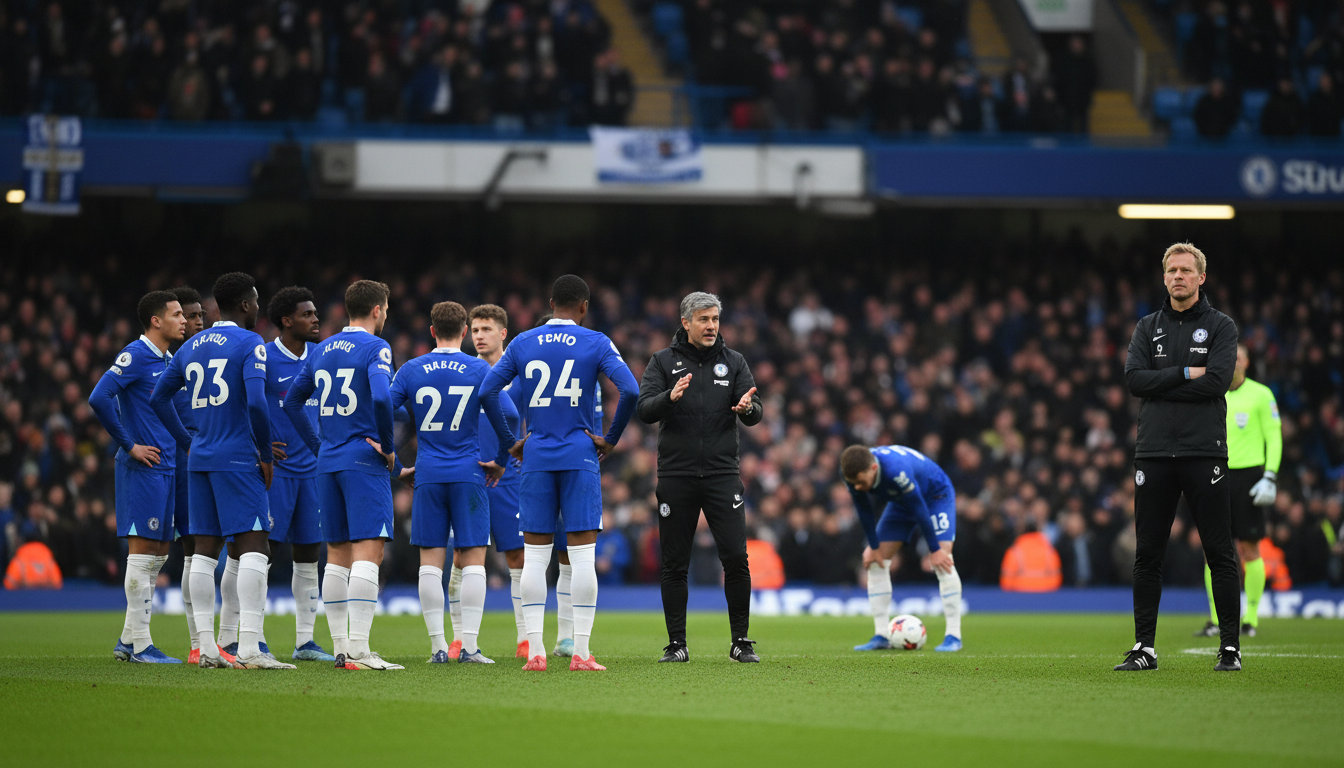
Chelsea vs Leeds FA Cup semi-final: Farke warns of fired-up Blues after Rosenior exit
Chelsea vs Leeds FA Cup semi-final preview: Daniel Farke warns of a motivated Chelsea after Liam Rosenior’s sacking, while Leeds aim to reach Wembley for the first time since 1987.


Daniel Farke has warned that Chelsea will be a dangerous opponent in the Chelsea vs Leeds FA Cup semi-final at Wembley after the west London club dismissed manager Liam Rosenior this week. The Leeds head coach said Chelsea’s squad is packed with high-quality players and that the change in management could act as a reset ahead of Sunday’s clash. Leeds arrive having shown resilience in recent rounds and will attempt to exploit any disruption while chasing a rare trip to the FA Cup final.
Farke: Chelsea a dangerous prospect despite turmoil
Farke described Chelsea as a side with "top-class players" and said he expects the Blues to be rejuvenated by the managerial change. He suggested that when talented players are motivated and asked to reset basics, the team becomes particularly threatening. The Leeds manager framed his side as underdogs but stressed Leeds are capable of producing the performance required to progress.
The warning comes after Rosenior’s departure following a 3-0 Premier League defeat to Brighton that extended a worrying sequence of results for Chelsea. Farke said the FA Cup semi-final presents a context in which league form may matter less, and a fresh start often lifts players’ performances in a one-off knockout match. He added that Leeds will not be intimidated but will prepare to meet a highly skilled opponent.
Rosenior sacked after poor run and goalless streak
Chelsea announced the dismissal of Liam Rosenior this week after a run of five consecutive league defeats, a sequence during which the club failed to score in the Premier League. The Blues’ recent win came in the FA Cup quarter-final, when they beat Port Vale 7-0 to reach Wembley, but league form and an inability to find the net in top-flight matches precipitated the decision. Calum McFarlane has been named interim head coach until the end of the season and will take charge at Wembley.
The timing of the change—immediately ahead of a high-profile semi-final—adds an extra dimension to the tie because it offers Chelsea both disruption and the possibility of galvanisation. Interim appointments in knockout fixtures can produce short-term spikes in performance as players seek to impress, and Farke has explicitly warned his squad to expect a Chelsea side determined to prove a point. Leeds must plan for an opponent with little to lose and significant attacking talent.
Leeds chasing a first FA Cup semi since 1986-87
Leeds United have reached the FA Cup semi-final for the first time since the 1986-87 season, when they fell to Coventry City, and they last played in the final in 1972-73. The run to Wembley represents a notable achievement for Daniel Farke’s squad and provides a chance to rewrite recent Wembley history for the club. Leeds booked their place after a penalty shootout victory over West Ham in the quarter-finals.
For a club with a proud cup pedigree, the semi-final appearance carries both historical weight and immediate opportunity. Leeds’ progress is also a marker of Farke’s work since his appointment, showing that the team can compete with higher-profile opponents in knockout settings. Players and staff will be mindful of the club’s long gap between finals when preparing for the match.
Wembley record and psychological factors for both sides
Leeds have struggled on their most recent Wembley visits, losing their last three appearances without scoring across 1996, 2008 and 2024 finals and play-off ties. Those past results add a psychological layer to this semi-final, with memories of near-misses and defeats likely to be discussed internally. Farke has presented the tie as an opportunity to change that narrative and to instill belief that Leeds can win on the national stage.
Chelsea’s recent Wembley history has been more mixed but often reflects the talent within their squad rather than continuity under a single manager. The arrival of an interim coach can relieve pressure on individual players while raising stakes for those seeking to secure places long-term. Ultimately, the psychological battle will hinge on which side manages nerves and motivation better on the day.
Tactical matchup and players who could decide the tie
Tactically, Leeds will look to remain compact without sacrificing the verticality that has defined parts of their season under Farke. The Whites have demonstrated the ability to press effectively and to transition quickly, which could test Chelsea’s defensive organisation if the Blues push forward in search of a fast start. Set pieces and quick counters may prove decisive in a match where both managers could be cautious early on.
Chelsea possess an abundance of individual quality across midfield and attack, and those players will be the focus of Leeds’ defensive planning. If Chelsea rediscover composure and cohesion, their creative players can unlock tight defences; conversely, Leeds will hope their shape and collective discipline frustrate the Blues and create opportunities on the break. Individual duels in wide areas and midfield battles for second balls are likely to determine territory and tempo.
Probabilities, form lines and the underdog narrative
Statistical models give Chelsea the edge in most simulations, reflecting squad depth and recent cup form, yet Leeds’ unbeaten record against Chelsea this season (one win and one draw) makes them an uncomfortable opponent. The Opta-derived projection referenced by both clubs assigns Leeds around a 29.5% chance of victory and Chelsea roughly 45.1%, leaving a substantial probability for a draw or penalty-decided outcome. Those numbers underline that, despite public perception, the tie is far from straightforward.
Form lines paint a mixed picture: Chelsea arrive without goals in several league fixtures but with an emphatic cup win in the quarter-finals, while Leeds carry momentum from tough knockout victories and two positive league results against the Blues. The underdog tag suits Leeds in public discourse, but Farke’s encouragement to his squad is grounded in preparation and belief rather than rhetoric. Both teams therefore approach the match with distinct narratives and clear incentives.
Club perspectives and immediate implications of the result
A Chelsea victory would alleviate short-term pressure on the interim coaching staff and offer the club a route to silverware that could shape recruitment and internal assessment over the summer. For a side riddled with inconsistency in the league, a cup run provides a tangible objective and can recalibrate morale. The FA Cup remains an institutionally significant prize for clubs seeking validation during turbulent domestic campaigns.
For Leeds, progression to the final would be a landmark achievement that validates the season’s progress and strengthens the manager’s standing among supporters and stakeholders. A win would also carry financial and reputational benefits for the club and could provide momentum for the closing league fixtures. Even in defeat, a close semi-final performance would offer evidence of Leeds’ capacity to compete on big occasions.
Both clubs have made public statements in recent days and supporters on social channels have already voiced expectation and excitement, with Leeds posting a Wembley-focused message on April 23, 2026. That social-media engagement highlights the symbolic importance of the Wembley stage to players and fans alike, and it adds another layer of atmosphere ahead of a match that will be played under intense scrutiny.
The Chelsea vs Leeds FA Cup semi-final promises a compelling contest defined by contrasting storylines: managerial change and talent at Stamford Bridge versus cohesion and cup hunger at Elland Road. The result will carry consequences beyond a single trophy chase, shaping perceptions of both clubs as they approach the run-in. Whatever happens at Wembley, Sunday’s game will be judged on moments of execution, tactical discipline and which team channels pressure into performance.