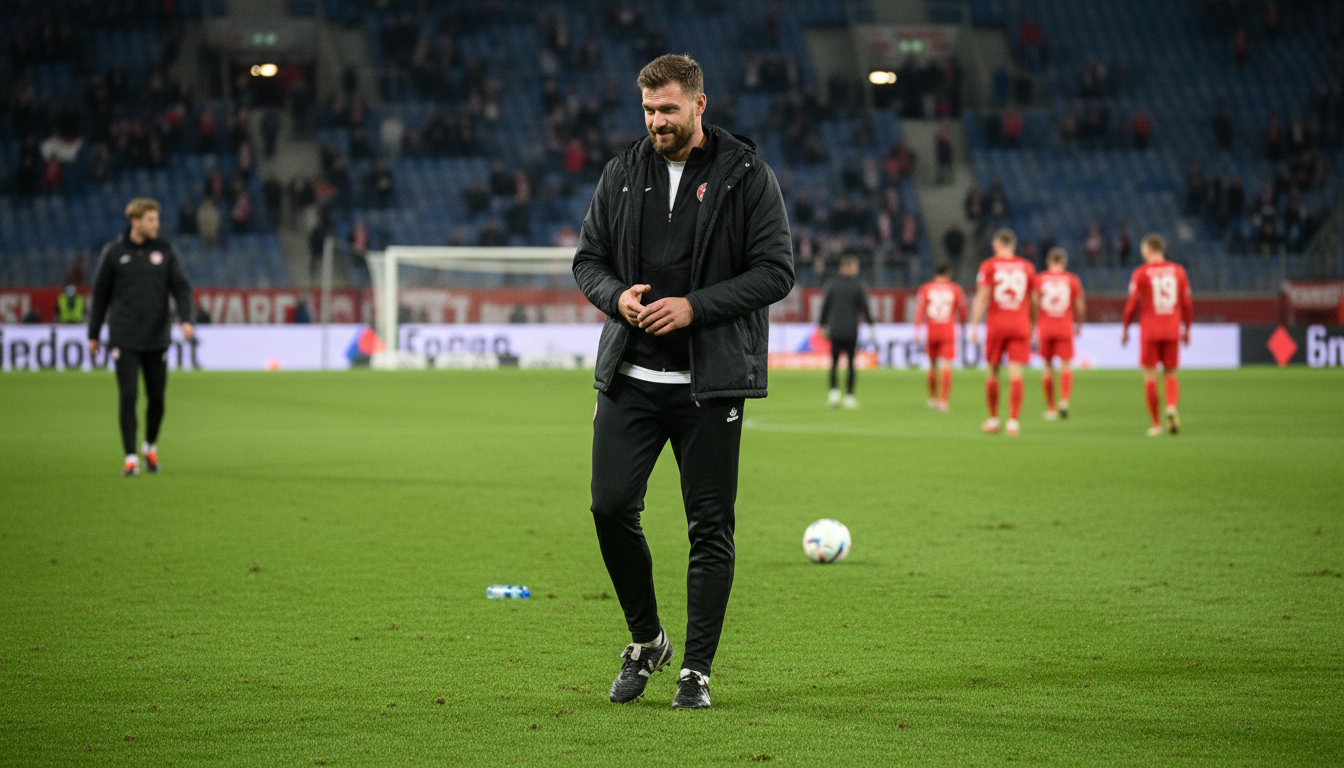
Sandro Wagner Says Augsburg Job Came Too Soon and He’s Not Rushing Back to Coaching
Sandro Wagner admits his brief stint at Augsburg showed taking a Bundesliga job so early was premature, and he plans to study football while delaying any immediate return to coaching.


Wagner reflects on a short, intense Augsburg spell
Sandro Wagner has publicly acknowledged that his time as head coach at FC Augsburg exposed gaps in his readiness for top-flight management. The 38-year-old conceded that stepping into a Bundesliga role only four years after earning his coaching license was a decision he now regards as hasty. He said the experience taught him that exposure at that level brings a steep learning curve and amplified scrutiny. For now, Wagner intends to watch, learn and rebuild rather than rush back into the dugout.
Wagner framed the Augsburg episode as formative rather than purely negative, noting that tough assignments can accelerate professional growth. He said the tenure confirmed the need for more seasoning before accepting another high-pressure position. Despite the short duration, the role provided real-time lessons about match preparation, media management and player interaction at the highest domestic level. Those lessons have led him to adopt a more cautious approach to career choices moving forward.
On public image and outspoken press moments
Wagner addressed his reputation for candid, sometimes polarizing press remarks and accepted that his public persona contributed to perceptions around his management style. He acknowledged occasions when emotion led to loose answers or incomplete statements during interviews and press conferences. Those moments, he conceded, could be distracting for the club and undermine the clarity expected from a head coach. Wagner said he learned to restrain instinctive responses and to prepare his communication more deliberately.
The coach pointed to particular episodes where press exchanges escalated beyond tactical or team-focused discussion, and he admitted that those interactions sometimes drew attention away from football matters. He expressed regret for answers that appeared provocative or unfinished, and he emphasised the professional obligation to represent his team in measured terms. Improving how he handles media relations is now part of the practical education he gained at Augsburg. The experience has helped him gauge the importance of strategic messaging in a coaching role.
Lessons from the dugout: tactical and managerial takeaways
On the tactical side, Wagner said his Augsburg spell revealed where his planning and in-game adjustments needed refinement. He reflected on moments when substitutions, formations or match tempo required faster or clearer responses from the coaching staff. Those tactical shortfalls convinced him that more time working under different systems and managers would strengthen his decision-making. Wagner has since focused on reviewing game tapes and seeking feedback to sharpen his match-day judgement.
Beyond pure tactics, Wagner spoke about leadership dynamics inside a professional squad and the challenge of balancing individual personalities with collective goals. He described learning to delegate certain responsibilities while maintaining overall control of team direction. Building trust with players and staff under intense results pressure proved to be an important facet of the job. Those managerial lessons have shaped his view of what he needs to be ready for the next top-level assignment.
Influence of peers and the Kompany example
Wagner singled out the composure demonstrated by leading coaches as instructive, pointing to managers who excel at deflecting provocative questions and maintaining focus. He cited the ability to absorb pressure and return to core coaching tasks as a model he now seeks to emulate. Watching peers who combine tactical clarity with media discipline has influenced how Wagner plans to conduct himself in future roles. He said observing other managers’ methods was as valuable as his own direct experiences.
The former DFB assistant also stressed that learning from colleagues does not mean copying them wholesale, but rather incorporating techniques that suit his personality and philosophy. He intends to adopt practices that enhance consistency without losing his natural candour when appropriate. Wagner’s approach going forward will blend the lessons of experienced managers with his own views on team culture and playing style. That hybrid approach reflects a pragmatic, iterative improvement plan.
Life after Augsburg: stepping back and studying the game
Since leaving Augsburg, Wagner has deliberately stepped away from the spotlight and curtailed public appearances to refocus on coaching development. He described changing his contact practices as a symbol of that withdrawal and said he values quieter routines while he reassesses career aims. Rather than pursuing immediate openings, Wagner prefers to study the game, absorb new tactical trends and solicit candid critique from trusted peers. That interval is intended as a professional sabbatical to repair and strengthen his managerial toolkit.
Wagner emphasized that his current focus is observational and analytical: watching matches, dissecting patterns and engaging in tactical discussions with former colleagues. He also noted the importance of receiving honest evaluations of his performance to identify blind spots. This period, he said, helps him weigh what type of club or environment would be the right fit next time. By postponing a hasty return, he aims to ensure any future appointment aligns with both his capabilities and the club’s expectations.
Conditions for a potential return to management
When asked about the prospect of returning to coaching, Wagner outlined clear conditions that would influence any decision. He said he will consider roles that offer a compatible club structure, realistic expectations and a pathway for measured development. Wagner made plain that he will not accept a high-risk position simply to re-enter management; the next step must fit his revised priorities and readiness. This stance marks a shift from the urgency that sometimes accompanies early-career moves.
Wagner also stressed the importance of mutual alignment between coach and employer on recruitment, playing philosophy and support resources. He indicated a willingness to rejoin a team if the project affords time for integration and constructive collaboration with sporting directors and staff. Flexibility regarding contract terms and clauses that reflect a long-term plan would also figure into his choices. Ultimately, Wagner said, any return would be judged not by headline appeal but by practical prospects for success and stability.
Reaction inside German football and implications for other young coaches
Wagner’s reflections have prompted commentary about whether the Bundesliga or clubs should be more selective in hiring coaches with limited senior experience. His case raises questions about balancing fresh ideas and coaching credentials against the immediate demands of top-tier competition. Club executives and commentators may use his example to reassess support systems for emerging coaches, including mentorship and incremental pathways to first-team responsibility. The debate touches on wider trends around coach development and risk management in professional football.
Some observers argue that giving promising coaches early opportunities can yield innovation, while others caution that such appointments need scaffolding to prevent premature burnout. Wagner’s public admission that he moved too quickly may encourage clubs to invest more in transitional roles or extended apprenticeship models. It could also prompt young coaches to seek broader exposure before accepting headline positions. Either way, his experience contributes to an ongoing conversation about how best to cultivate the next generation of managers.
Wagner’s case will likely be studied by aspiring coaches and sporting directors alike, as an example of the costs and benefits of rapid promotion. It reinforces the principle that technical qualification alone does not equate to readiness for the pressures of a top-flight head coach role. Equally, it demonstrates that candid assessment and a willingness to learn can preserve professional prospects after a difficult spell. In that regard, his approach underlines a pragmatic route back to the touchline rather than an abrupt return.
Sandro Wagner has turned his Augsburg experience into a deliberate learning phase, choosing to withdraw from high-profile roles while refining his tactical and managerial skills. He has acknowledged mistakes in media handling and match management and intends to apply those lessons in future opportunities that meet his revised criteria. For now, he remains an engaged student of the game, cautious about any immediate comeback but open to a well-suited project when the timing and conditions are right.