Gor Mahia Clinch FKF Premier League After AFC Leopards Loss Amid Officiating Row
AFC Leopards loss to APS Bomet hands Gor Mahia the FKF Premier League title, prompting coach Fred Ambani to publicly condemn refereeing after a disputed non-awarded penalty.


Title decided as Leopards falter at Kericho Green Stadium
AFC Leopards suffered a 2-1 defeat to APS Bomet at Kericho Green Stadium, a loss that ensured Gor Mahia clinched the FKF Premier League crown with one match remaining in the campaign. The result left Leopards stranded four points behind leaders Gor Mahia and extinguished their late-season hopes of overturning the deficit. Coach Fred Ambani immediately seized on the match official’s performance as the principal cause of his side’s collapse.
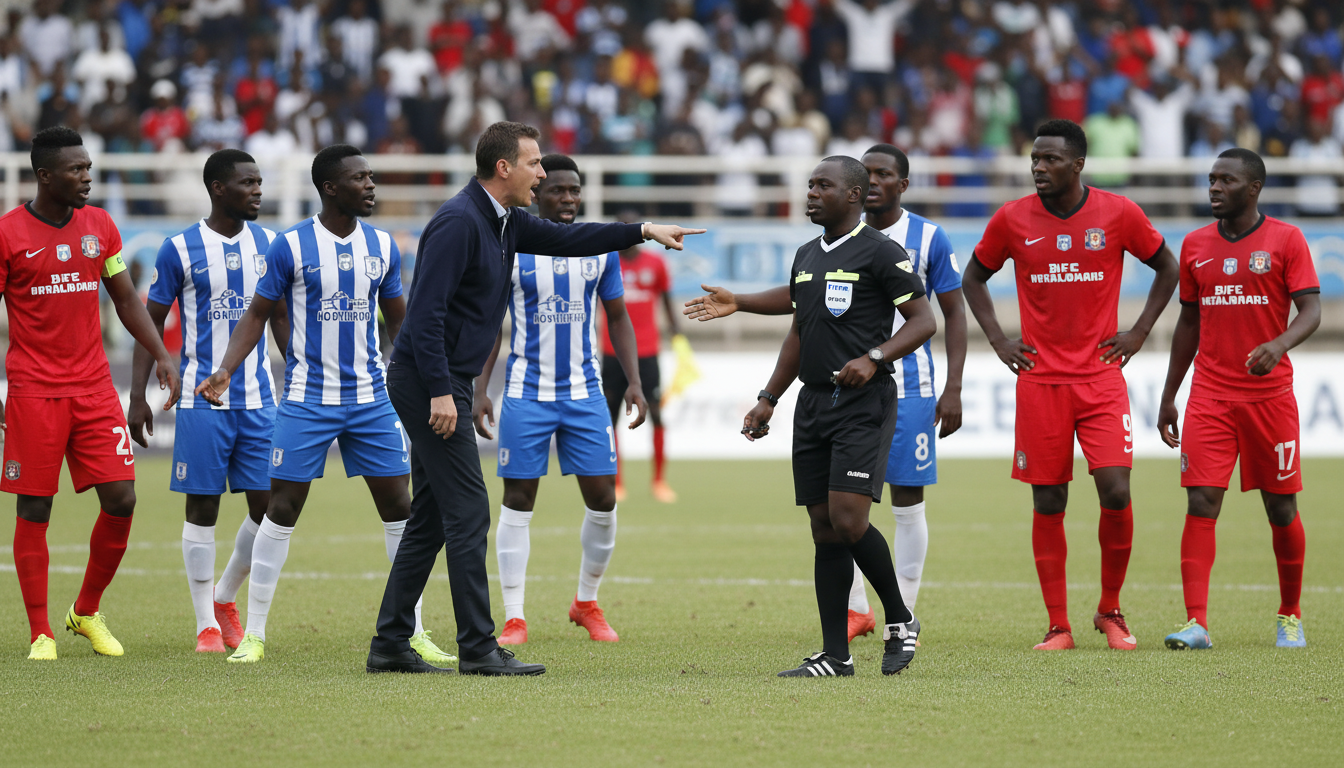
Ambani’s reaction focused on a specific incident in the second half, when striker Hassan Beja appeared to be impeded in the box and no penalty was awarded. The coach said the failure to punish the foul and the lack of disciplinary action against the defender were unacceptable in a game with such high stakes. His comments set the tone for a wider debate about referee appointments and impartiality across the league.
Ambani singles out centre referee Oyoo Diego
Fred Ambani was unambiguous in his post-match comments, naming centre referee Oyoo Diego and questioning the referee’s suitability for the fixture. Ambani said a decisive match involving AFC Leopards should not have been entrusted to an official he described as biased, and he urged the federation to consider referee origin when making appointments. The coach stressed that he rarely criticises officiating but felt compelled to speak out after what he termed "shoddy" decisions.
Ambani’s remarks included a suggestion that the referee’s tribal origin influenced his performance, a claim that raised concerns about the tone and implications of his criticism. He insisted his complaint was not a request for preferential treatment but a call for impartiality and higher officiating standards. The gaffer also highlighted that the foul on Beja, which he believed warranted a penalty and a booking, was the turning point of the game.
Key moments that swung the contest in Bomet’s favour
The game’s decisive sequence arrived shortly after the hour mark when Phillip Wasai struck twice in quick succession, scoring in the 60th and 63rd minutes to put APS Bomet in command. Those two goals proved the platform for Bomet to hold on, despite AFC Leopards’ late efforts to force an equaliser. An own goal by Daniel Odhiambo in the 87th minute further compounded Leopards’ misery and sealed the three points for the home side.
Earlier in the match Leopards had looked capable of applying pressure, especially with Hassan Beja causing problems for defenders, but their chances failed to translate into a favourable scoreboard position. Ambani’s central grievance revolved around one late incident in the penalty area where he believed Beja was clearly brought down. The absence of a penalty decision and a booking for the defending player remains the focal point of Leopards’ grievances.
Impact on the title race and Gor Mahia’s celebrations
Gor Mahia were not in action over the weekend, but their rivals’ slip meant K’Ogalo lifted the title without kicking a ball. The result in Kericho triggered scenes of celebration for Gor Mahia supporters in Homa Bay, where the team reportedly marked the achievement. With the title confirmed with a game to spare, Gor Mahia can now plan the remainder of the season with their domestic triumph secured.
The timing of the decisive matches intensified the stakes for Leopards, who had entered the fixture sitting second with 64 points and a realistic chance of closing the gap. A victory would have ratcheted up pressure on Gor Mahia and left the title race alive heading into the final round. Instead, the loss allowed K’Ogalo to claim the trophy and shifted the post-season narrative toward officiating and match assignments.
Leopards’ remaining fixture and the club’s immediate priorities
AFC Leopards face Bidco United in their final league fixture next Sunday, a match that will be a dead rubber after Bidco’s relegation was confirmed. The result offers Leopards an opportunity to finish the season on a positive note and to give fringe players valuable minutes ahead of the off-season. Coach Ambani and his staff will also use the short break to review the campaign and consider steps to strengthen the squad for next season.
The club must now balance the immediate need to recover morale with longer-term planning, including transfers and tactical adjustments. Ambani’s public criticism of officiating suggests the club may also pursue formal channels to register complaints and seek clarification on the contested decisions. The outcome of any review or appeal, if lodged, could influence how the federation manages similar disputes going forward.
Calls for improved officiating standards and federation scrutiny
Ambani’s assertion that officiating failures cost his team a title challenge resurrects long-standing concerns about referee quality and appointment transparency in the FKF Premier League. He argued that the league cannot grow if crucial matches are undermined by inconsistent officiating and that the federation must raise standards to ensure fair outcomes. Those remarks are likely to prompt discussion within the Football Kenya Federation and among other clubs that feel aggrieved by contentious decisions this season.
The controversy underscores the importance of robust referee training, clear assignment protocols and, where necessary, the use of independent review mechanisms to preserve competitive integrity. League officials have in past seasons faced pressure to professionalise officiating and reduce the perception of partiality. Whether the federation will respond with concrete changes or a review of assignments in response to Ambani’s comments remains to be seen.
Fans, players and the aftershocks in the dressing room
Supporters of AFC Leopards reacted angrily after the final whistle, with many echoing Ambani’s dissatisfaction about the non-awarded penalty and the referee’s overall handling of the match. Within the dressing room, players expressed disappointment at squandering a chance to intensify the title race, while also acknowledging that lapses on the pitch contributed to the defeat. The combination of missed opportunities and controversial refereeing left a bitter taste for a club that had invested heavily in mounting a challenge this season.
APS Bomet, by contrast, celebrated a landmark victory that will live long in the memory of their players and fans, and Phillip Wasai’s brace will be replayed as the defining contribution. For Gor Mahia, the result formalised a campaign of consistent performances across the season and rewarded their ability to maintain a points cushion at the summit. Both clubs move into the final week with different agendas: one to celebrate and consolidate, the other to regroup and plan for the next campaign.
What happens next will be watched closely by stakeholders across Kenyan football, from club executives to pundits and fans. AFC Leopards’ management may consider filing a formal protest or requesting a federation review of the match report and official assessments. At the same time, the FKF’s reaction — whether swift or measured — will influence perceptions of how seriously the governing body treats claims of bias or mismanagement.
The coming days will likely see public statements from club officials and possibly an internal assessment of officiating decisions on the day. If the federation opens a review, the process and its transparency will be key to restoring confidence among clubs that feel aggrieved. Meanwhile, player welfare and preparation for next season remain pressing matters for teams across the league.
AFC Leopards have one final match to play and a summer off-season to plan for a return to title contention, while Gor Mahia prepare to complete their fixture list as champions and begin celebrations that reflect a season-long campaign of results and resilience.