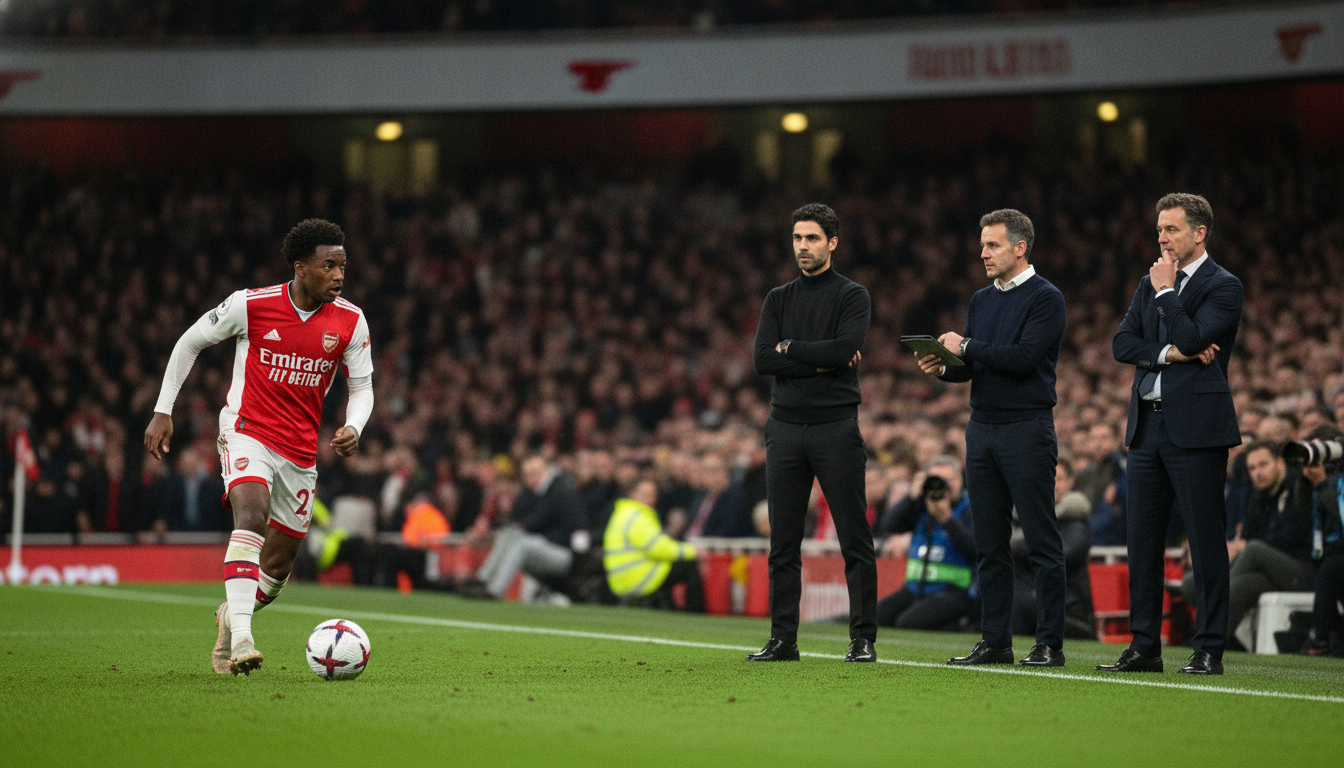
Arsenal target Morgan Rogers as Arteta prioritises left-wing rebuild
Arsenal target Morgan Rogers as Mikel Arteta moves to reshape his attacking options ahead of the summer window, with the England forward repeatedly linked with a move to the Emirates. Reports place Aston Villa’s valuation of Rogers near £100 million, a figure the Gunners are reportedly prepared to consider in their planning. The pursuit signals a clear priority: strengthening the left side of attack while adding a versatile creator who can operate behind the striker.


Arsenal step up interest in Morgan Rogers
Arsenal have opened the summer transfer picture by prioritising an attacking reinforcement, and Morgan Rogers has emerged as a primary target. The 23-year-old’s versatility — comfortable as a number 10 or deployed out wide — has made him attractive to clubs seeking multi-positional creativity in the final third. That profile fits a wider strategy under Mikel Arteta to supply more consistent goal contributions from wide and central attacking positions.
Rogers’s recent seasons in the Premier League and Championship have shown a steady output of goals and assists, boosting his stock among top-flight suitors. Arsenal’s reported willingness to pursue the player aggressively suggests the club views him as more than a rotational addition. Securing a player of Rogers’s age and potential would also be consistent with Arsenal’s mix of immediate impact signings and long-term investment.
Aston Villa valuation and transfer dynamics
Aston Villa’s price tag for Rogers is widely cited around the £100 million mark, reflecting the club’s valuation of a key creative asset. That kind of asking price places the transfer among the more expensive domestic moves and would require careful budget planning from any interested buyer. Villa have built a productive midfield contingent around their attackers and are likely to treat Rogers as an important asset rather than a straightforward sale.
The market dynamics for attacking midfielders and wide forwards complicate negotiations, with multiple clubs reportedly monitoring Rogers’s situation. Arsenal will need to balance valuation, squad needs and the timing of any approach if they are to avoid a protracted transfer saga. How Villa respond to formal offers and potential cut-price proposals will shape whether this becomes one of the window’s headline moves.
Tactical fit: left wing, number 10 or hybrid role
Rogers offers Arteta tactical flexibility, able to operate either as a traditional number 10 or on the left flank depending on match demands. Arsenal have shown in recent seasons a preference for fluid attacking shapes that require interchangeable attackers who can press, create and finish. A player who can drift into half-spaces and link play between midfield and forward lines would suit Arteta’s possession-driven approach.
Deploying Rogers on the left could offer Arsenal more direct running and variation from wide areas, while using him centrally would provide an alternative creative spark if form or fitness affects other playmakers. The coaching staff will assess whether Rogers’s strengths—dribbling, progressive passing and goal threat—best serve the side from wide or closer to the penalty area. Either way, his adaptability increases his value in a squad that seeks tactical unpredictability.
Financial implications for Arsenal’s transfer strategy
Meeting an asking price in the region of £100 million would represent a significant allocation of Arsenal’s transfer resources and influence recruitment across the rest of the squad. Any major outlay on a single attacker will likely require balancing sales, wage structure considerations and prioritisation of secondary targets. Arsenal’s recruitment model has combined marquee signings with younger, lower-cost additions; a large investment in Rogers would tilt that balance toward immediate reinforcement.
The club’s decision-makers will weigh the cost against projected returns: on-field impact, resale potential and commercial benefits. For a player still in his early twenties, there is an argument that an immediate premium could be offset by several years of high-level contribution and potential future transfer value. Financial prudence will remain a factor, however, and Arsenal’s handling of alternative approaches or phased payment structures could be decisive.
Contract situation and timeline for a potential deal
Any transfer involving Rogers will hinge on negotiations over fees and the player’s own contract preferences, but reports indicate personal terms should not be an obstacle. Arsenal’s recruitment team will aim to conclude talks early enough to integrate a new signing before pre-season begins. Bringing a target into training ahead of the campaign is often prioritised to ensure tactical acclimatisation and physical preparation under the new club’s regime.
Timing also interacts with squad planning: Arsenal may seek clarity on departures and loan returns before finalising a signature, and they will consider how Rogers fits alongside existing attacking options. A swift agreement could allow Arteta to test combinations in friendlies and refine his system, while delays risk missing the optimal window to embed a new creative influence.
Consequences for Arsenal’s attacking group and Ødegaard
The arrival of Rogers would add competition across Arsenal’s forward and midfield lines and could relieve pressure on key figures who have endured dips in form or injury. In particular, having an additional creative outlet would diversify Arsenal’s attack and reduce the dependence on a single playmaker. That redistribution of responsibility could benefit the team’s consistency across a long season.
For captain Martin Ødegaard, the addition of another high-calibre attacker could prompt tactical adjustments rather than a direct replacement scenario. Ødegaard’s influence as a playmaker and leader would remain central, but a new acquisition would allow Arteta to experiment with roles that conserve the captain’s energy while preserving his creative output. The broader squad depth would also provide cover for injury and allow rotation across multiple competitions.
Arsenal’s pursuit of Morgan Rogers, if pursued to conclusion, would mark a clear statement about the club’s priorities this summer. The combination of tactical fit, reported valuation and squad implications makes any move a consequential one for both clubs involved. Time, negotiation and the club’s broader transfer blueprint will determine whether Rogers becomes the next high-profile arrival at the Emirates.