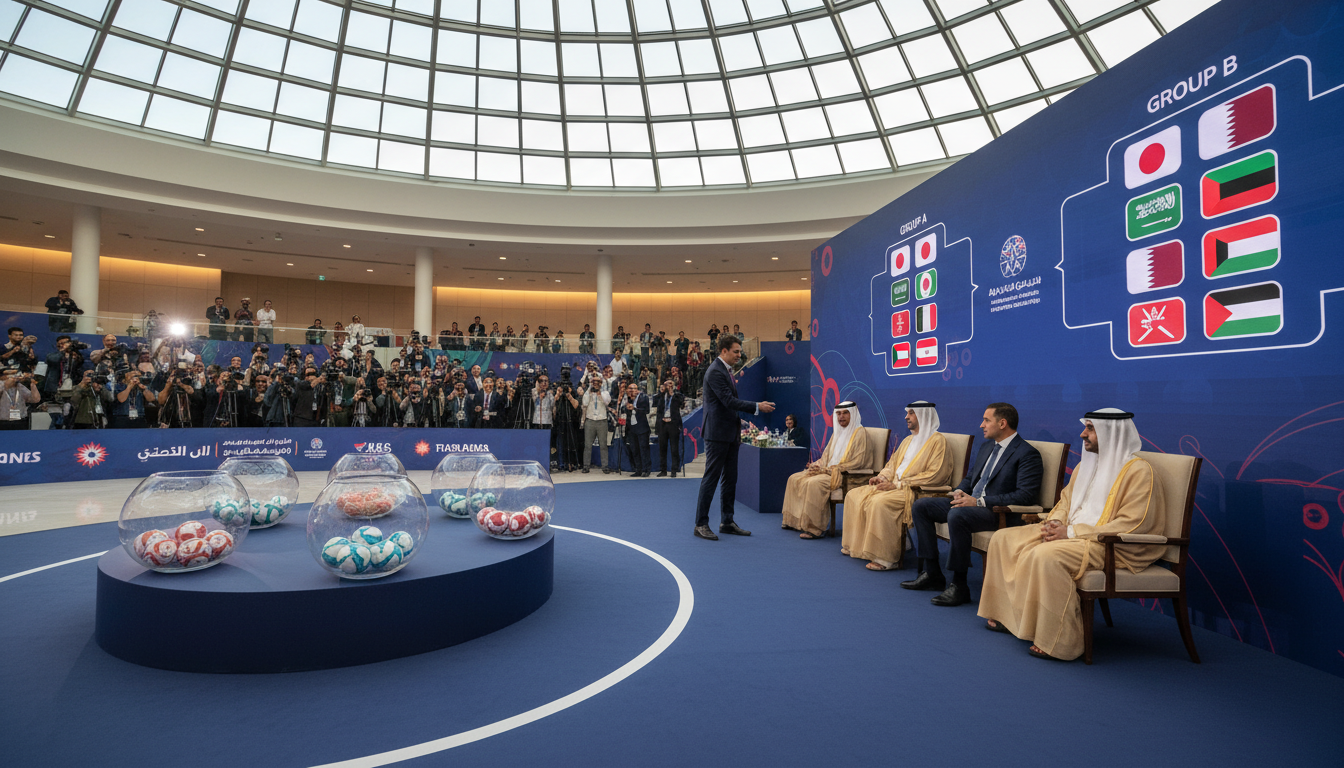
2027 AFC Asian Cup draw pairs Japan with Qatar as Saudi Arabia opens at home
2027 AFC Asian Cup draw: Japan paired with reigning champions Qatar while hosts Saudi Arabia face Kuwait, Oman and Palestine in Diriyah Jan 7-Feb 5, 2027.


The 2027 AFC Asian Cup draw delivered a high-profile headline as record winners Japan were placed in the same group as reigning champions Qatar, setting up an early tournament showdown announced in Diriyah. The 2027 AFC Asian Cup draw also confirmed hosts Saudi Arabia will face Kuwait, Oman and Palestine when the competition opens on January 7, 2027. The groupings emerged during Saturday’s draw on the outskirts of Riyadh and now frame the path for 23 confirmed participants in the continent’s premier national-team competition. With the tournament running until February 5, Saudi Arabia will stage the event for the first time as it prepares for a broader role on the world stage.
Japan paired with reigning Qatar in eye-catching match-up
Japan, the continent’s most decorated side, were paired with Qatar, who arrive as the defending Asian Cup champions after their 2023 victory. The draw immediately raised questions about which continent heavyweights could emerge from the pool stage, with Japan and Qatar both possessing depth and recent pedigree at major tournaments. Analysts and supporters will now be watching team preparations closely, as managers balance competitive priorities while assessing group opponents. The pairing ensures a marquee fixture early in the competition and increases stakes for both nations before knockout rounds begin.
Saudi Arabia drawn with Kuwait, Oman and Palestine for group play
Hosts Saudi Arabia were drawn alongside Kuwait, Oman and Palestine, providing a diverse mix of regional and tactical challenges in the opening phase of the tournament. Saudi officials have emphasized home advantage as a key asset, and the group schedule will allow local fans to attend multiple high-profile fixtures across stadiums in and around Riyadh. For Saudi Arabia, the group represents a test of consistency and squad management as the team seeks to harness home support and navigate expectations. The mix of opponents brings varying styles of play that should test the hosts’ defensive organization and attacking balance.
Draw held in Diriyah with tournament scheduled for January–February
The official draw took place in Diriyah, just outside Riyadh, underscoring Saudi Arabia’s role as tournament host and the focal point for event logistics. The competition is scheduled to run from January 7 to February 5, 2027, and will feature 24 nations for the third consecutive edition of the Asian Cup. Organizers confirmed that 23 teams have already secured their places, leaving one final slot to be decided through remaining qualification pathways. The timing and location of the draw reflect broader plans to stage the event as both a continental celebration and a rehearsal for future global hosting ambitions.
Hosts view tournament as test run for 2034 World Cup bid
Saudi officials have positioned the 2027 Asian Cup as a strategic stepping-stone toward the kingdom’s ambition to host the 2034 FIFA World Cup. Staging a major continental event will put venue readiness, transport networks, and hospitality services under operational scrutiny, while giving local organizing bodies a chance to refine procedures. Saudi head coach Giorgos Donis acknowledged the unique pressures of hosting, noting the dual nature of advantage and expectation that comes with playing at home. The tournament therefore carries significance beyond the trophy, as it will offer tangible lessons in stadium operations and fan management ahead of any future global bidding commitments.
Tournament format, confirmed teams and remaining qualification place
For the third edition in succession, the Asian Cup will operate with a 24-team format, a structure intended to deepen participation across the confederation. To date, 23 teams are confirmed, reflecting the results of regional qualifying cycles and play-off outcomes completed this year. One final berth remains open and is expected to be settled through a concluding qualifying fixture or playoff, which will determine the complete field ahead of the draw’s group stage narrative taking shape. The expanded format preserves multiple pathways to the knockout rounds and ensures that group-stage dynamics will play a decisive role in shaping the last-16 matchups.
Competitive implications for leading nations and regional contenders
The draw’s matchups have immediate tactical and strategic implications for favorites and emerging sides alike, with group composition determining the difficulty of each team’s passage to the knockout phase. For established powers such as Japan and Qatar, an early clash will influence squad rotation and injury management, as coaches weigh the desire for group-stage dominance against conserving energy for later rounds. For mid-tier and developing national teams drawn against hosts or regional giants, group play presents an opportunity to challenge established hierarchies and to gain valuable international exposure. The Asian Cup’s format rewards both consistency and timely peaks in performance, placing a premium on planning and adaptability.
Reactions from coaches and organizing bodies
Following the draw, Saudi head coach Giorgos Donis emphasized the mixing of opportunity and pressure that comes with hosting, saying the home advantage will be balanced by expectation and stress that the squad must manage. Tournament organizers highlighted the significance of Diriyah as the location for the draw and reiterated plans to deliver a smoothly run event across multiple venues within the kingdom. National federations affected by the draw will now expedite logistics and finalize training camps, travel plans, and friendly matches to ensure squads arrive at the tournament in peak condition. Broadly, the reaction was one of anticipation as federations turned attention from the draw to preparation.
Teams and coaches will use the coming months to refine player selection and tactical approaches in light of the draw outcomes. Friendlies and regional competitions scheduled before January 2027 will take on added importance as coaches test formations and evaluate player fitness. For fans, the draw provides a framework to plan travel and ticketing while shaping expectations about the tournament’s most compelling fixtures. Media coverage and commercial partners will likewise calibrate promotional plans around key matchups such as Japan versus Qatar and the hosts’ group-stage fixtures.
The 2027 AFC Asian Cup draw has set the stage for a high-stakes continental tournament that doubles as a showcase for Saudi Arabia’s event-hosting ambitions and a competitive testing ground for Asia’s top national teams. As preparations intensify over the coming months, managers will balance squad rotation, injury management, and strategic planning to navigate the tournament’s group and knockout phases. The full list of qualified teams will be finalized as the remaining qualification spot is decided, and all eyes will be on match schedules, venue assignments, and the opening matches that begin on January 7, 2027.