Belgium 0-0 Iran leaves Group G wide open after VAR overturn and late red card
Belgium 0-0 Iran – VAR rules out Taremi’s free-kick and Ngoy’s red card leaves Belgium to hang on; both teams sit on two points in Group G ahead of final matches.


Belgium were held to a 0-0 draw by Iran on Sunday in a World Cup Group G clash that featured a disallowed Mehdi Taremi goal and a decisive sending-off, leaving both teams on two points and qualification unsettled. The match, which saw Belgium dominate possession but struggle to break down a disciplined Iranian defence, featured a late VAR intervention that erased what looked like a deserved lead for Iran and a 66th-minute red card for Belgium’s defender Ngoy that forced Rudi Garcia into a defensive reshuffle. The result leaves doubts over Belgium’s defensive solidity and confirms Iran as a serious counter-attacking threat as both sides prepare for a winner-takes-all final matchday.
VAR cancels Taremi free-kick in dramatic reversal
Iran celebrated briefly when Mehdi Taremi finished off a meticulously worked free-kick routine that appeared to put them ahead, igniting joyful scenes among players and travelling supporters. The celebration was cut short after the VAR review showed Taremi in an offside position at the crucial moment, prompting the referee to rule the goal out and leaving Iran to rue a fine margin. That overturn shifted momentum and left both teams scrambling for control in a match where moments, rather than sustained pressure, dictated the narrative.
Ngoy’s red card reshapes the game in the 66th minute
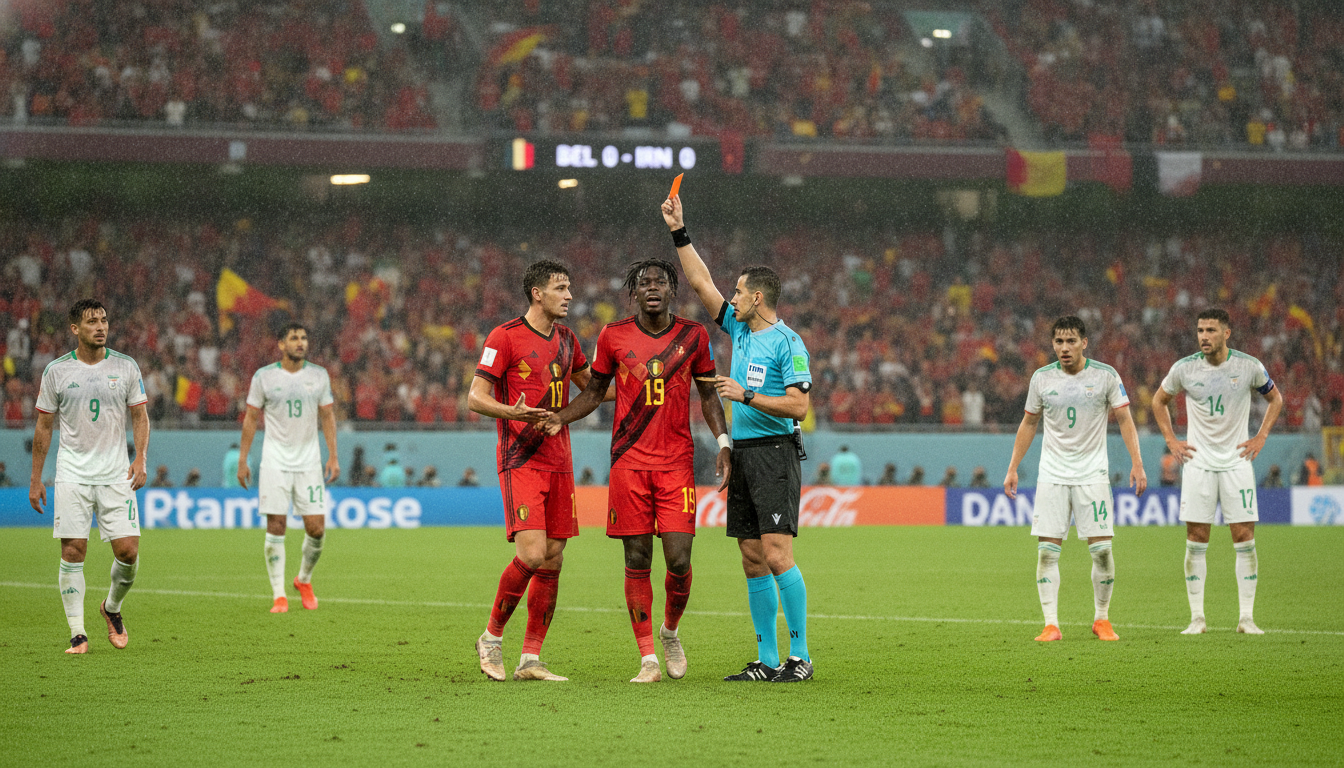
The contest took a sharper turn when Belgium were reduced to ten men after Ngoy brought down Taremi on a dangerous breakaway, an intervention that earned an immediate straight red and left Belgium to defend a long period with one fewer player. The dismissal forced Rudi Garcia to prioritise defensive stability and to rethink his attacking approach, as sustaining a numerical disadvantage against Iran’s quick transition play represented a clear danger. The red card also highlighted Belgium’s vulnerability to counter-attacks and raised questions about discipline and decision-making at crucial moments.
Garcia turns to Arthur Theate and sacrifices firepower
In response to the sending-off, Garcia replaced Romelu Lukaku with Arthur Theate, sacrificing a central attacking option for additional defensive cover and height at the back, a move designed to blunt Iran’s threat on the break. Theate, a Bundesliga and Eintracht Frankfurt defender, provided immediate physical presence and helped Belgium reorganize into a more compact shape that made it harder for Iran to find clear opportunities inside the penalty area. The substitution underlined Garcia’s willingness to protect a single point rather than chase an all-out victory from an already fragile defensive platform.
Iran’s counter-attacks repeatedly test Belgium’s midfield and backline
Throughout the match Iran looked most dangerous when they exploited space behind Belgium’s full-backs, using quick passing and direct runs to create promising moments that repeatedly unsettled the Red Devils’ midfield screen. Belgium controlled possession for long periods but lacked the incisive final pass or quick combination play to pierce Iran’s organised block, and every time the home side committed numbers forward they exposed gaps that Iran tried to exploit. Those counter-attacking phases, combined with set-piece threats, made Iran the more likely candidate to find a winner for long stretches of the game despite being on the away side.
Match control and statistical edge failed to translate for Belgium
Belgium enjoyed a territorial and possession advantage that rarely translated into clear-cut chances, with their attacking talents blunted by Iran’s compact defensive structure and frequent fouls that stopped promising moves. The Red Devils’ attacking output was further compromised by the forced substitution and the need to sit deeper after the red card, and although they retained the ball, their crosses and through-balls often lacked precision or were snuffed out by disciplined Iranian marking. The match illustrated a recurring problem for Belgium at this tournament: possession without consistent attacking purpose leaves them vulnerable to teams that thrive on counter-play.
Group G now heads to a decisive final matchday with both teams vulnerable
The draw leaves Belgium and Iran level on two points and sets up a tense final round of fixtures in Group G where both nations will be under pressure to secure a result to advance, with little margin for error. The outcome means there is still everything to play for, and both teams will spend the intervening days analysing weaknesses exposed in this match — Belgium on transitions and defensive positioning, Iran on finishing and set-piece discipline. Coaches and players alike must balance risk and pragmatism in their preparation, knowing that the final group games are likely to demand tactical clarity and mental resilience.
Belgium will return to training focusing on defensive cohesion and game management while Iran will seek to convert playing momentum and counter-attacking chances into goals, with both teams aware that small margins and individual moments will decide their World Cup fates.