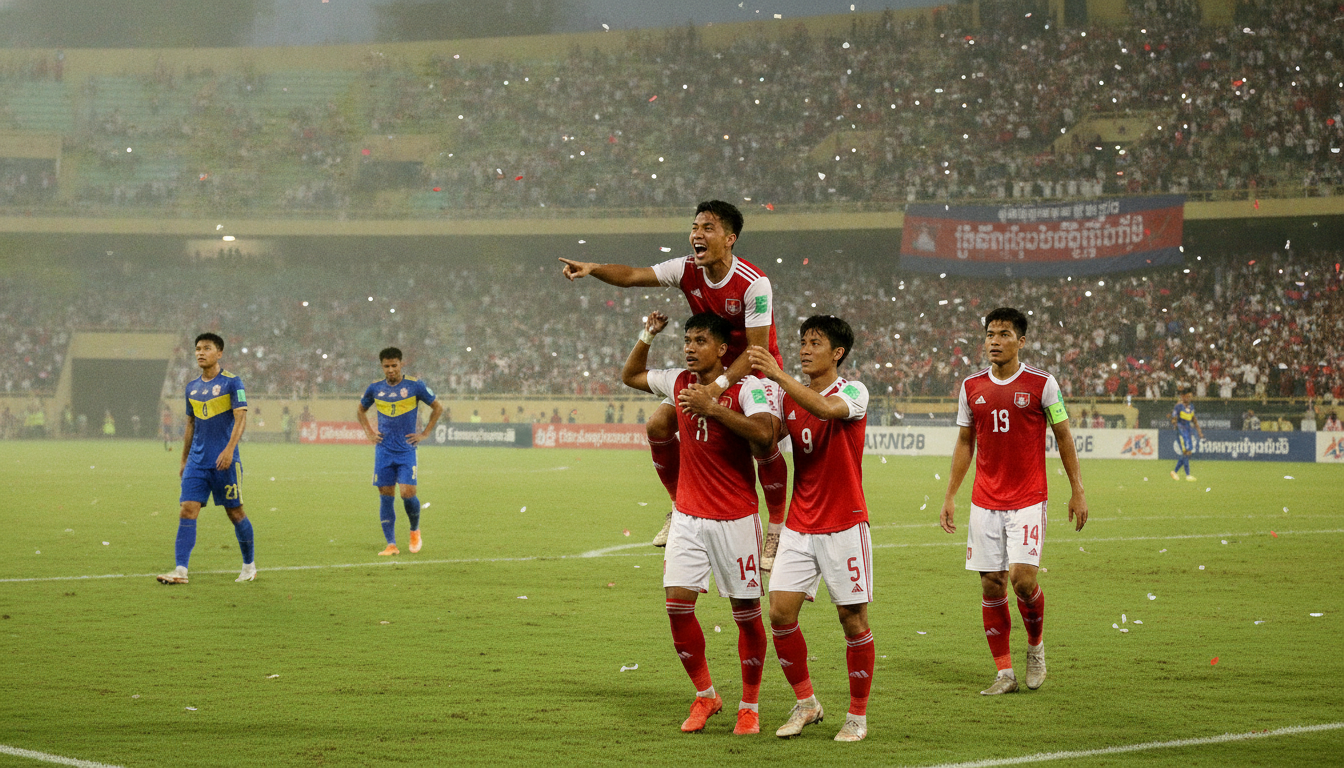
Cambodia U19 Hold Australia to 2-2 Draw and Advance to ASEAN U19 Bank Sumut Semifinals
Cambodia U19 drew 2-2 with Australia on June 9, 2026, in Deli Serdang to reach the ASEAN U19 Bank Sumut semifinals, while Australia finished top of Group C.


Australia struck early and twice to lead 2-0 inside 18 minutes, but Cambodia U19 mounted a second-half fightback to level the score and secure the point needed to advance from Group C at the Sumatera Utara Main Stadium in Deli Serdang. Marcus Edward Neil opened for Australia in the third minute and Alexandro Diogo Nunes extended the lead in the 18th minute, but Sokea Sreng pulled a goal back at the hour mark and an own goal by Lewis Domenic Marinucci in the 82nd minute completed the turnaround. The draw left Australia clear at the summit of Group C and sent Cambodia into the knockout phase, with the semifinals scheduled for June 11, 2026. Thailand will face Cambodia and host Indonesia will meet Australia in the last four.
Australia take early control with two quick goals
Australia stamped their authority on the match from the outset, exploiting space in the Cambodian back line to win the ball high and convert chances inside the opening quarter-hour. Marcus Edward Neil capitalised on a swift attacking move to poke home the opener in the third minute, setting a brisk tone that forced Cambodia onto the back foot. The visitors built on that momentum and doubled the lead when Alexandro Diogo Nunes finished a composed build-up in the 18th minute, leaving Cambodia with a steep mountain to climb. Possession and tempo favoured Australia through the first half, and their early clinical edge suggested they would finish the group stage unbeaten.
Australia’s opening salvo was effective because they combined direct forward runs with measured possession out wide, creating overloads that unsettled Cambodia’s defensive structure. Cambodia struggled to keep hold of the ball in central areas and were frequently forced into clearing headers or hurried passes that relinquished territorial control. The Australian midfield managed transitions cleanly, allowing the front line to remain a constant threat on the break. Despite the two-goal cushion, Australia were pressed to manage the game intelligently in the second half as Cambodia reorganised.
Cambodia rally in second half to force the draw
Cambodia responded at the interval with tactical adjustments that narrowed the gaps between their lines and invited more pressure into Australia’s defensive third. The home side’s persistence was rewarded when Sokea Sreng reduced the deficit around the hour mark with a well-timed run into the box and a precise finish that belied the earlier imbalance. That strike energised Cambodia and reshaped the contest, forcing Australia to retreat into deeper defensive pockets and inviting sustained waves of pressure for the final half hour. The equaliser arrived from misfortune for Australia when Lewis Domenic Marinucci turned a cross into his own net in the 82nd minute, handing Cambodia the 2-2 result they required.
Cambodia’s second-half response was notable for its collective intensity rather than individual brilliance, as midfielders pressed more aggressively and full-backs supported overlaps to stretch the Australian defense. The team displayed improved composure on the ball and chose quicker forward passes that created pockets of danger in transition. While the own goal was ultimately decisive, it was Cambodia’s sustained belief and tactical tweaks that precipitated that pressure. The finishing phase demanded concentration from Australia, and Cambodia’s late reward underscored the thin margins in youth international knockout qualification.
Tactical shifts and key performers
Australia’s early setup emphasised width and forward penetration, with wingers tasked to stay high and deliver crosses into a probing center-forward. That approach produced both opening goals but left them vulnerable to counter-pressing once Cambodia tightened their midfield lines after halftime. Goalkeeper and defensive roles were tested repeatedly in the second period as Cambodia forced crosses and set-piece opportunities, highlighting the importance of disciplined marking in the closing stages. For Cambodia, Sokea Sreng emerged as a decisive influence, providing energy between the lines and an attacking output that pressured the opposition’s rearguard.
The match underlined both teams’ developmental strengths and exposed areas for improvement ahead of the semifinals. Australia will want to refine their concentration when defending crosses and set-piece sequences, areas which nearly cost them an unbeaten group record. Cambodia’s backline showed resilience under extended pressure but must ensure better defensive coordination against teams that sustain possession for long spells. Midfield control and ball retention will be central talking points for both coaching staffs as they prepare for the knockout phase on June 11, 2026.
Group C table implications and qualification context
The draw confirmed Australia as the winners of Group C, sealing top spot through a blend of early striking power and overall consistency across the group stage. Cambodia’s result ensured they finished second and progressed to the semifinals, a significant achievement in a competitive pool that included higher-ranked regional opponents. The outcome reshuffles the route to the title in a tournament where momentum and match management are often decisive across successive fixtures. With semifinals two days away, both advancing sides must now balance recovery protocols with tactical planning for single-elimination matches.
Beyond the immediate advancement, the group stage results carry ramifications for seeding and preparation that could influence the remainder of the championship. Australia’s position at the top grants them the nominal advantage of facing the host nation’s side in the last four, while Cambodia must contend with a Thailand team that arrives with its own set of expectations and strengths. Coaches will evaluate not only the physical condition of key players but also the psychological readiness to handle high-stakes youth competition. The compressed tournament schedule amplifies the value of squad depth and the capacity to adapt quickly to different tactical scenarios.
Semifinals schedule and immediate outlook
Semifinal fixtures are set for June 11, 2026, at venues designated by the tournament organisers, with Thailand drawn against Cambodia and Indonesia meeting Australia in the other last-four tie. Cambodia’s preparation window will emphasise recovery, set-piece practice, and scenario-based rehearsals to counter Thailand’s technical profile. Australia, meanwhile, must address defensive concentration while preserving the attacking fluency that produced early goals throughout the group stage. Both semifinals will be played under intense scrutiny as nations vie for a berth in the final and the chance to lift the ASEAN U19 Bank Sumut trophy.
The scheduling offers limited turnaround time, placing a premium on effective medical and training routines over the next 48 hours. Coaches are likely to rotate where necessary but also retain trusted starters who can influence knockout matches decisively. Tactical briefings will be tailored to opponent tendencies, with scouting information and video sessions playing a key role in final preparations. The knockout stage represents a different competitive environment, and teams that adjust most efficiently to its tempo and pressure will have the best chance of progressing to the final.
Cambodia U19’s progression from Group C will be remembered for a determined second-half revival that overturned an early deficit and secured a place in the semifinals of the ASEAN U19 Bank Sumut Championship 2026.