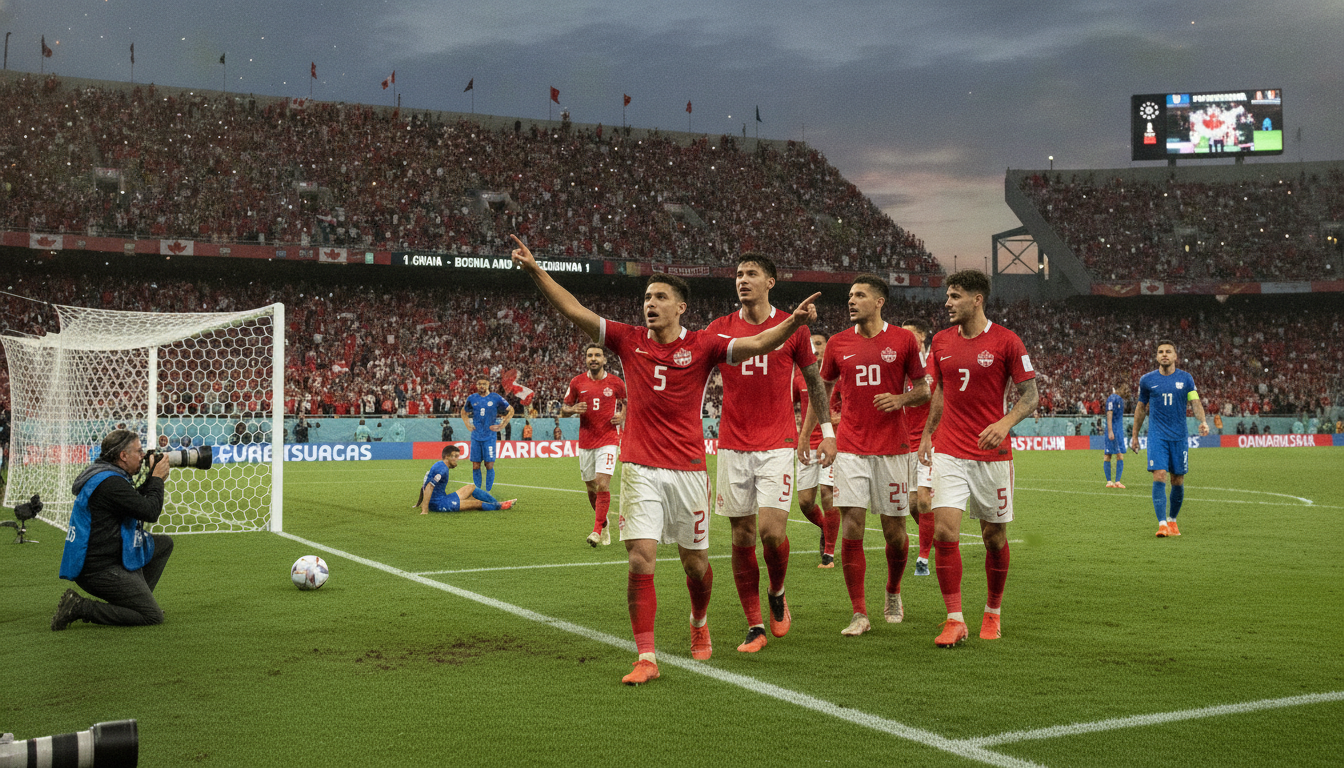
Canada secure historic 1-1 World Cup draw with Bosnia and Herzegovina
Canada earned a landmark 1-1 draw with Bosnia and Herzegovina at the World Cup, claiming their first ever point at the tournament amid a celebratory opening ceremony.


Historic first World Cup point for Canada
Canada had not recorded a World Cup point until Friday, making the 1-1 result against Bosnia and Herzegovina a watershed moment for the men’s national team. The draw ended a sequence of tournaments without a point and marked a positive start as the nation hosts the competition. The result will be measured not only in standings but also in the boost it provides to Canadian soccer momentum at home.
The match carried particular weight because Canada qualified automatically as one of the hosts after a 36-year absence from the finals following their debut in 1986. Fans filled stadium precincts early, buoyed by the sense that the national side was finally taking its place on football’s biggest stage. The partisan atmosphere and symbolic weight of hosting helped give the result added significance beyond the scoreboard.
Larin’s strike and match action
Cyle Larin supplied the goal that put Canada ahead and drew loud reactions from the crowd, converting to give his side a lead that tested Bosnia’s resilience. The strike was pivotal — not just for the scoreboard but for the belief it instilled in a team still building its major-tournament pedigree. Bosnia mounted pressure in the second half and eventually found an equaliser, leaving both teams to share the points.
The game featured end-to-end moments, with Canada creating notable chances and Bosnia responding with set-piece threats and probing attacks. Defending and midfield battles shaped large stretches of the match, and substitute interventions on both sides altered rhythms late on. Ultimately, the 1-1 scoreline reflected a contest in which both teams had spells of control but neither could press home a late winner.
Alanis Morissette headlines opening ceremony
The evening’s proceedings were lifted by a rousing rendition of the Canadian national anthem from Alanis Morissette, whose performance capped a sparkling opening ceremony. The artist’s appearance provided a high-profile homecoming moment and underscored the cultural dimension host nations often bring to World Cup kickoffs. Moments like these helped channel excitement from the stands into a palpable sense of occasion on the pitch.
Organisers sought to balance spectacle with sporting gravitas, and the ceremony’s success eased some pre-match nerves for a team playing before a home crowd. For many supporters it was an emotional bridge between national pride and a long-awaited return to the World Cup stage. The entertainment program set a celebratory tone that matched the significance of Canada registering a result in the tournament.
Logistical hiccups clouded parts of the opening day
The opening day was not without controversy, as reports emerged of border officials denying visas to some players and team staff, complicating preparations for certain delegations. Those incidents drew criticism from teams and observers who argued that delays and administrative barriers undercut the smooth staging expected at a tournament of this scale. The issues highlighted how off-field logistics can have competitive consequences even before a ball is kicked.
FIFA also faced scrutiny after offering an explanation for banks of empty seats at another match that many observers described as unsatisfactory. Fans and media called attention to the visual impact of sparse attendance on global broadcasts and questioned how seating allocations and ticket distribution were being managed. Tournament organisers and governing bodies now face pressure to respond quickly and transparently to avoid a lingering narrative that could overshadow on-field achievements.
Tactical takeaways and player performances
Canada’s setup combined defensive organisation with quick transition play that created the platform for Larin’s strike and other meaningful openings. The full-backs pushed high at times to supply width, while midfield rotations aimed to disrupt Bosnia’s rhythm and feed balls into attacking channels. The balance between defensive compactness and attacking intent will be a tactical thread to monitor as Canada navigates the rest of the group stage.
Individual performances provided mixed but generally encouraging signs for the hosts, with standout moments from attackers and a steadying presence in goal. Younger players showed composure in pressure moments, and more experienced campaigners offered leadership on the field. Coaches will pore over footage to refine set-piece defending and closing-out strategies after seeing Bosnia rally in the second half.
Implications for the group and next fixtures
The draw gives Canada a foothold in the group table but leaves qualification far from assured, as the campaign will demand consistency and points against all opponents. Bosnia and Herzegovina leave with a share of the spoils and will look to build on the comeback as they prepare for their next fixture. Both teams must now recalibrate quickly, with group dynamics likely to shift after every gameday.
For Canada, the immediate focus will be recovery and tactical work ahead of the next match, while also managing the expectations of a home support keen for further milestones. The coaching staff will have to weigh squad rotation against the desire to maintain momentum, with fixture scheduling and travel logistics playing a role in selection decisions.
The crowd’s reaction and the national mood suggest the result will reverberate beyond the stadium, energising grassroots interest and media attention across the country.
Canada’s 1-1 draw with Bosnia and Herzegovina represented more than a point on the board; it was a symbolic breakthrough in a return to the World Cup stage that opens fresh questions about how the team will build on this moment.