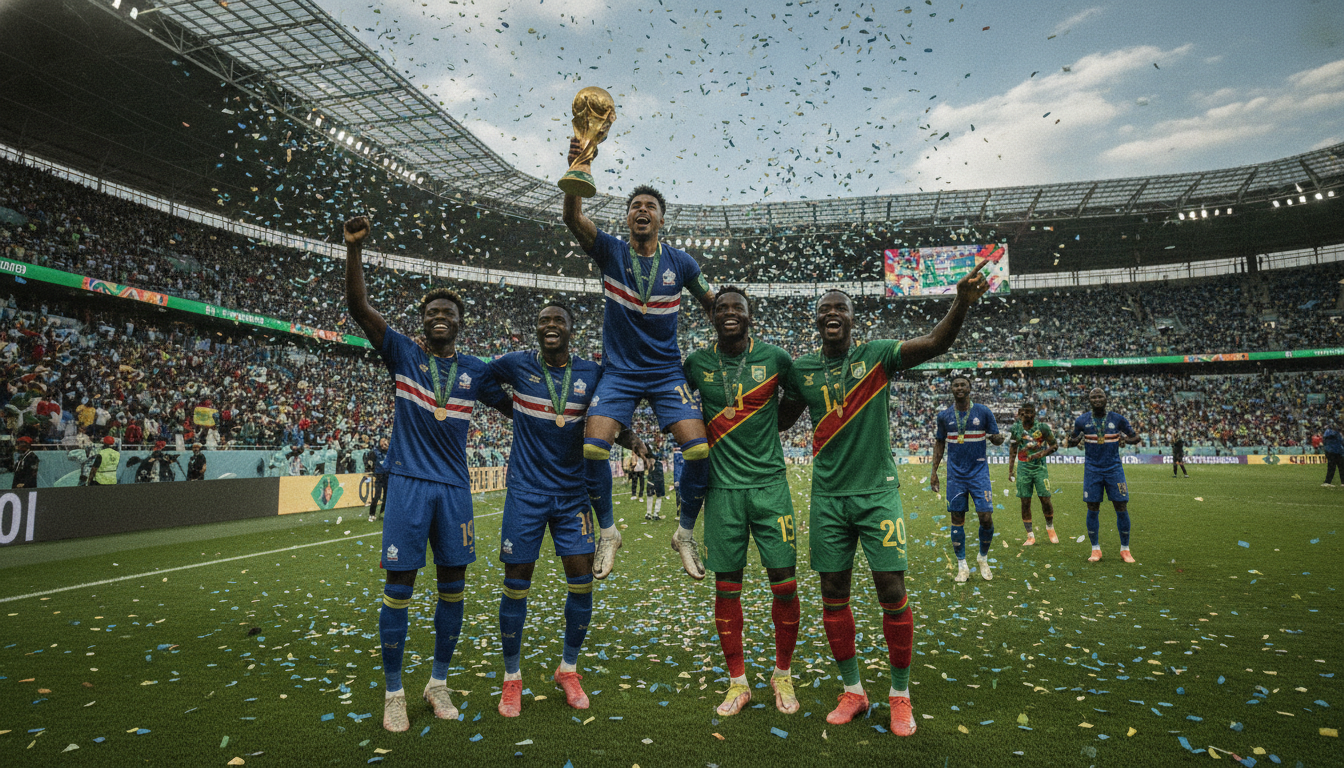
Cape Verde World Cup debut and Congo DR run earn praise from Stoichkov and Forlán
Stoichkov and Forlán praise Cape Verde World Cup debut and Congo DR’s run, showing how the expanded 2026 tournament is opening opportunities for African teams.

Cape Verde and the Democratic Republic of Congo have emerged as two of the most compelling stories of the 2026 FIFA World Cup, with both nations progressing to the round of 32 and drawing public acclaim from former stars Hristo Stoichkov and Diego Forlán. Cape Verde’s unbeaten performance in Group H — their first World Cup appearance — and Congo DR’s qualification from a tough Group K underlined how the expanded 48-team format has widened access to global competition. The performances have been hailed not only for their results but for the belief, organisation and resilience displayed by squads with limited World Cup pedigree.
Cape Verde’s debut defies expectations
Cape Verde finished second in Group H after drawing with Spain, Uruguay and Saudi Arabia, a group many predicted they would struggle in. The Blue Sharks combined tactical discipline with physical robustness, allowing them to keep pace with more established nations and secure advancement on their maiden World Cup outing. Players with experience in Portuguese leagues provided a backbone that helped the side maintain composure under pressure, while their goalkeeper emerged as a defining figure of the campaign. That mix of structure and fearless approach turned Cape Verde from a pre-tournament curiosity into a legitimate knockout-stage qualifier.
The result has resonated across the footballing world because it challenged assumptions about which nations can compete on football’s biggest stage. Cape Verde’s progression was not driven by one moment of luck but by consistent performances across three matches against diverse opponents. The team’s ability to manage games, close spaces and convert set-piece opportunities stood out as hallmarks of their approach. For a country making its World Cup debut, those attributes signalled careful preparation and a clear game plan from the coaching staff.
Congo DR’s return underlines long-term progress
Congo DR’s journey back to the World Cup marked a significant national milestone, the country having last appeared at the tournament in 1974 when it competed as Zaire. Qualification was secured via the playoff route, and the Leopards then navigated a challenging group that included Colombia, Portugal and Uzbekistan to finish among the best third-placed teams. The campaign showcased a blend of youthful energy and experienced leadership, and it provided a platform for players who now have the attention of clubs and scouts worldwide. For the Congolese football federation and domestic supporters, the return to the World Cup represented decades of incremental work finally reaching a global stage.
Beyond the symbolism of reappearance, Congo DR’s performance hinted at structural improvements in coaching, scouting and player development within the country. The side’s defensive organisation and counter-attacking threat allowed them to compete effectively in matches where they were not favourites. That competitive spirit translated into results and respect, and it underscored that long-term investment in national programs can yield returns even after prolonged absence from major tournaments. Their advancement also delivered an emotional boost for a nation accustomed to underrepresentation at the World Cup.
Voices from the game: Stoichkov and Forlán
Former Bulgaria international Hristo Stoichkov praised the Cape Verde story as one of the tournament’s most remarkable narratives, pointing to the squad’s organisation and apparent happiness as keys to their success. Stoichkov emphasised that such achievements are rarely accidental, crediting years of preparation and collective commitment rather than one-off fortune. The veteran’s perspective framed both African teams’ successes as the product of planning and belief, while also celebrating the human side of their campaigns.
Diego Forlán, reflecting on Cape Verde’s upcoming knockout tie with Argentina, described the team as playing with freedom and without the heavy burden of expectation. Forlán noted that when a squad approaches a high-profile match with nothing to lose, it can play with increased confidence and seize moments that more burdened opponents might not. His assessment captured the broader appeal of underdogs at the World Cup and underlined why neutral fans often rally behind teams that arrive with humility, structure and clear purpose.
Tactical foundations and standout performers
Both Cape Verde and Congo DR built their campaigns around compact defensive structures and efficient transitions from defence to attack. Cape Verde’s set-piece discipline and organised defence allowed them to absorb pressure against technically superior sides, while quick, direct outlets created scoring opportunities on the break. Tactical calmness and the ability to preserve clean sheets or score timely goals were consistent themes across their group matches.
Congo DR combined physical presence with tactical flexibility, shifting between narrow defensive shapes and wider pressing when circumstances demanded. Their midfield balance was critical in controlling tempo and launching counters at opportune moments. Individual performers in both teams stood out for their leadership and work rate, with goalkeepers and central defenders receiving particular praise for making decisive saves and interceptions in key moments. Those individual contributions amplified team cohesion and underpinned results that, taken together, formed credible paths into the knockout stage.
Expanded World Cup format delivering opportunities
The 2026 World Cup’s expansion to 48 teams was designed to broaden representation and give emerging football nations exposure at the highest level, and the progress of Cape Verde and Congo DR is a tangible example of that policy in action. By increasing the field, the tournament has allowed teams that previously had little chance of qualification to contest World Cup football and benefit from the attendant financial, developmental and reputational gains. For African football, the expanded format has produced new narratives and provided national federations with arguments to sustain investment in youth systems and domestic competitions.
The effect goes beyond a single tournament cycle; World Cup participation often leads to increased sponsorship, higher youth engagement and improved pathways for player migration to competitive leagues. Smaller nations that perform well can alter perceptions about their footballing infrastructure and invite interest that accelerates growth. Cape Verde and Congo DR’s presence in the round of 32 therefore matters both for immediate sporting reasons and for the longer-term evolution of football on the continent.
Upcoming challenges: Argentina and England ties
Cape Verde will face defending champions Argentina in Miami on July 3, a match that represents one of the steepest tests possible for a debutant nation. Argentina arrive with form and a roster led by Lionel Messi, making Cape Verde clear underdogs on paper. Yet single-elimination football has a history of upsets and closely contested matches when an underdog plays with confidence and tactical clarity. Cape Verde’s task will be to remain compact, frustrate Argentina’s attacking rhythm and exploit transitional moments when they arise.
Congo DR’s round-of-32 fixture against England presents a similarly daunting assignment, pitting the Leopards against a side with considerable depth, pace and attacking quality. England’s tactical flexibility and array of attacking options will demand disciplined defensive work and clinical counter-attacking from Congo DR. Both African teams enter their knockout ties having already achieved milestones, but the upcoming fixtures will test whether their form, organisation and mental resilience can translate into historic results against elite opponents.
The immediate outcomes of those matches will shape perceptions, media narratives and potential trajectories for several players and coaches, but even regardless of results the tournaments’ broader significance is clear. Cape Verde and Congo DR have provided compelling case studies in how smaller football nations can prepare, adapt and compete on football’s largest stage.
Cape Verde’s World Cup run and Congo DR’s return have already left an imprint on the 2026 tournament, prompting praise from former world-class players and energising supporters across Africa and the wider global football community. Their stories reinforce the idea that careful planning, collective belief and disciplined execution can produce surprising achievements at the highest level. As knockout football approaches, both teams will aim to build on what they have started and to extend the legacy of their campaigns for players, coaches and national programs back home.