Carl Starfelt to Join Sweden at World Cup After Recovering from Lumbar Disc Hernia
Carl Starfelt will join Sweden at the World Cup after recovering from a lumbar disc hernia, avoiding surgery; Celta de Vigo expects him fit for next preseason.

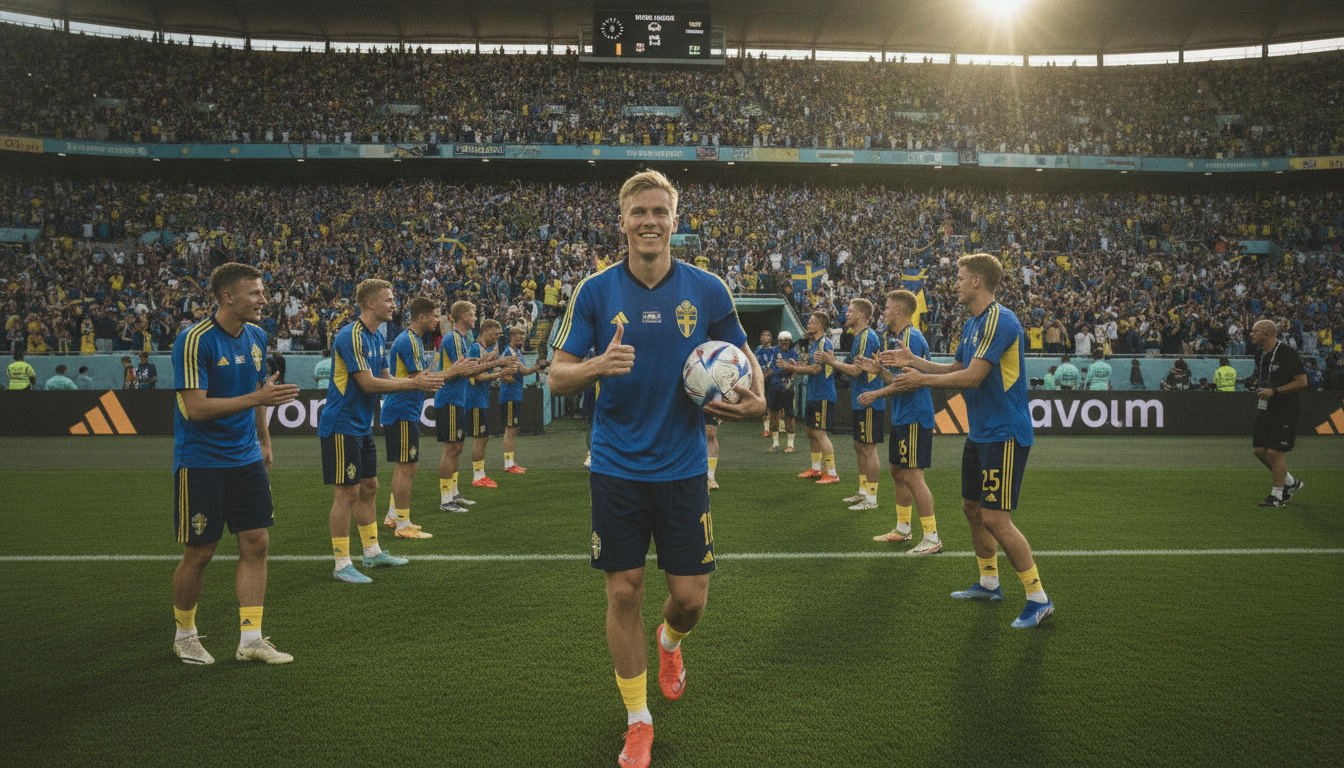
Carl Starfelt will travel to the World Cup with Sweden after a two-month absence from club action caused by a lumbar disc hernia. The Celta de Vigo defender confirmed he aimed to reach the tournament and ultimately avoided an operation that would have ended any chance of participating. His return provides Sweden with reinforcements at the centre of defence and gives Celta a confidence boost ahead of the coming season. The Vigo club will also be represented at the World Cup by striker Borja Iglesias, who joins Starfelt as Celta’s delegates to the finals.
Starfelt’s recovery timeline and fitness status
The central fact is straightforward: Starfelt missed the final two months of the club season because of a lumbar disc hernia but will be fit to join Sweden for the World Cup. Club sources indicate the decision to forgo surgery was taken to preserve his availability for the tournament. Medical staff and coaching personnel have been managing a tailored rehabilitation program aimed at restoring core strength and spinal stability ahead of international duty.
That rehabilitation focused on controlled load, physiotherapy, and progressive on-field conditioning rather than immediate surgical intervention. The player himself acknowledged disappointment at missing Celta’s season-ending matches but made the World Cup his priority. By reaching the tournament, he will have passed the minimum fitness thresholds required by both his national team and club medical teams.
Role at Celta de Vigo and importance to Claudio Giráldez
At Celta de Vigo Starfelt occupies a pivotal role in the dressing room and on the pitch, serving as one of the club’s captains and a defensive mainstay for coach Claudio Giráldez. His presence offers organizational stability at the back and leadership during transitions from defence to attack. Celta’s hierarchy has publicly expressed confidence that his managed recovery will allow him to arrive at preseason training ready to contribute.
The club’s expectations underline how central Starfelt is to Giráldez’s plans, both tactically and as a figure for younger players to follow. Losing him for an extended period would have forced a reshuffle of defensive responsibilities, so his timely return preserves continuity. The coaching staff will nevertheless monitor minutes and workload carefully when he resumes full training.
Why surgery was avoided and the calculated risk
Starfelt and his medical advisers opted to avoid spinal surgery because an operation at this stage would likely preclude World Cup participation and could have required a lengthy recuperation. Choosing conservative management—rehabilitation, stabilization exercises, and careful match-readiness assessments—was a calculated gamble intended to balance short-term availability with long-term career health. The club noted that surgery would have “closed doors” to the tournament, so minimizing invasive intervention became the priority.
Such decisions are inherently individualized, and the success of this approach will depend on his response to incremental load and contact work in the weeks ahead. The player’s willingness to take that path reflects the personal significance of a World Cup appearance as well as the mutual agreement between national team and club medical teams. Both parties will maintain close communication to protect Starfelt’s welfare while maximizing his availability.
Celta’s World Cup representation and squad implications
Celta de Vigo will send two players to the World Cup: Carl Starfelt with Sweden and Borja Iglesias with Spain. Having multiple representatives at a global tournament underscores the club’s recent capacity to develop and attract international-level talent. For Celta, the timing of the tournament and players’ involvement will factor into preseason preparations, rotation planning, and early-season match availability.
Borja Iglesias’s inclusion with Spain complements Starfelt’s role in Sweden by highlighting the club’s spread of talent across positions, from defence to attack. The club must now prepare contingency plans for different return-to-play timelines and consider workload management on a case-by-case basis. Celta’s technical staff will use the World Cup period to finalize fitness programs and integrate returning internationals into their tactical framework.
Potential impact on Sweden’s World Cup campaign
Sweden will welcome the return of an experienced centre-back in Starfelt, whose availability strengthens options in the heart of defence. His physical presence and leadership were cited by team staff as factors in squad balance and selection strategy. Avoiding surgery means Sweden can retain a tried defensive partnership and depth, especially important in tournament play where quick recovery and rotation can determine progression.
Starfelt’s inclusion also offers the national coach flexibility when selecting between different defensive pairings and systems. He brings familiarity with international competition and an ability to coordinate defensive lines during set pieces and transitional moments. Sweden’s defensive stability could be a decisive factor in navigating the group stage and potential knockout ties.
What to watch before the tournament starts
Attention will turn to the next public assessments of Starfelt’s condition during Sweden’s training camp, where he will need to demonstrate capacity for repeated sessions and contact. Monitoring will include fitness testing, progressive on-field minutes, and clearance from both national team and club medical teams. Celta and Sweden will likely agree phased exposure to full training and match minutes, reducing the risk of relapse.
Observers should also watch how quickly Starfelt reintegrates into team drills and whether the coaching staff manages his minutes conservatively in the early stages of the tournament. Any signs of discomfort will prompt immediate reassessment and cautious management. The broader context will be how the club uses return-to-play data from internationals to calibrate preseason plans and early competitive fixtures.
The return of Carl Starfelt to Sweden’s World Cup squad is a notable development for both his club and country. It resolves uncertainty about his availability and allows Celta de Vigo to anticipate his presence at the start of next season, while Sweden gains a defensive option with leadership qualities. The coming weeks of monitoring and controlled training will determine how effectively he can contribute at the global stage and how Celta will manage his reintegration upon their return.