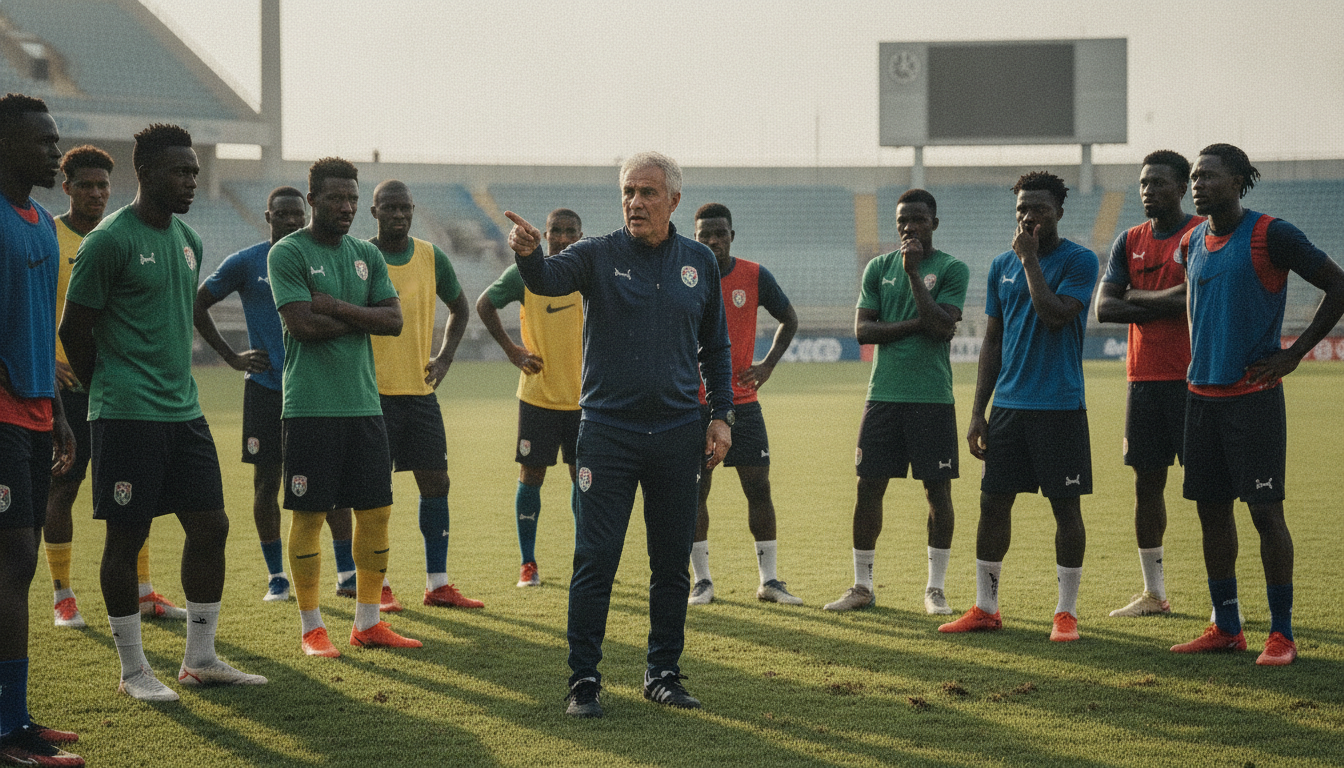
Queiroz: African football “far from” World Cup title after Ghana’s last-32 loss
Carlos Queiroz says African football is distant from World Cup glory after Ghana’s 1-0 defeat to Colombia; Morocco and Egypt remain the continent’s deepest challengers. (159 characters)

Carlos Queiroz warned that African football still has a long way to go in its quest for a World Cup crown after his Ghana side were beaten 1-0 by Colombia in the last-32 in Kansas City.
The Portuguese coach used the defeat to underline his view that raw talent on the continent is not yet matched by the infrastructure, coaching and playing environments needed to sustain a title challenge.
His remarks follow a mixed World Cup for African nations, with a record nine teams advancing from the group stage but only two — Morocco and Egypt — navigating the opening knockout round.
Ghana’s exit and Queiroz’s immediate reaction
Carlos Queiroz took charge of Ghana in April and his tenure began with high expectations that were dented by the narrow loss to Colombia.
Ghana produced competitive moments in Kansas City but were outplayed in key phases and failed to find an equaliser after Colombia’s decisive strike.
After the match Queiroz framed the result as evidence that talent alone will not deliver a World Cup winner from Africa without better development pathways and resources.
Record African presence, limited knockout returns
A record nine African teams progressed from the group phase, underscoring the continent’s wider depth of talent at this tournament.
That optimism, however, was tempered in the knockout rounds when only Morocco and Egypt survived the initial elimination stage, both through penalty shoot-outs against the Netherlands and Australia respectively.
The early exits of several favored sides highlighted a recurring pattern: competitive teams capable of qualifying and progressing but struggling to bridge the final margin in high-pressure knockout fixtures.
Morocco’s momentum and a looming rematch with France
Morocco, who reached the World Cup semi-finals in Qatar in 2022, consolidated their claim as Africa’s leading side by beating Canada 3-0 in the last-16.
The emphatic win sets up a heavyweight quarter-final in Boston against France, the same nation that ended Morocco’s run four years ago.
That rematch will be watched closely across the continent as a barometer of whether North African football can sustain deeper tournament runs and finally convert promise into a title push.
Queiroz’s critique of development, facilities and coaching
Speaking in the aftermath of Ghana’s defeat, Queiroz pointed to uneven development structures across Africa as a major constraint on the continent’s long-term prospects.
He argued that football success requires more than gifted individuals; it depends on quality coaching, reliable training surfaces and an overall environment that nurtures talent from youth levels onward.
The former Real Madrid manager, who has previously led South Africa and Egypt and was appointed in April after Otto Addo’s two-year spell, used his international experience to contrast African conditions with those found in Europe and South America.
Infrastructure and investment: the missing pieces
Queiroz’s comments focused attention on investment gaps in stadiums, pitches and coaching education that many federations still face.
Experts and administrators have long argued that sustainable progress requires systematic spending on grassroots facilities and a clearer pathway for coaches to develop and stay within national systems.
Those structural challenges, critics say, make it difficult for African teams to convert intermittent tournament runs into consistent title contention against nations with deeper resources and domestic leagues.
Lessons from penalties and knockout experience
The fact that Morocco and Egypt advanced through penalty shoot-outs underlines another theme: handling knockout-stage pressure often comes down to composure and preparation rather than raw ability.
Penalty shoot-outs magnify the importance of psychological preparation, goalkeeper coaching and match-readiness under tension — areas where national programs can focus improvement.
For other African teams eliminated early, the narrow margins and late-game management issues will prompt internal reviews on strategy and preparation for tournament football.
Pathways forward for African football ambitions
Queiroz’s stark assessment may be uncomfortable, but it highlights a route forward: targeted investment, coach development and better playing surfaces could help turn potential into consistent success.
Federations, confederations and governments will need to coordinate more effectively to channel resources into youth academies, domestic league stability and coaching curriculums.
International partnerships, club investment and exchange programmes could accelerate that process, but lasting change will depend on sustained commitment beyond a single tournament cycle.
There is no quick fix to transform the global balance of power in football overnight, but a focused, long-term approach to infrastructure and coaching is the clearest path to making African football a genuine contender for the World Cup title.