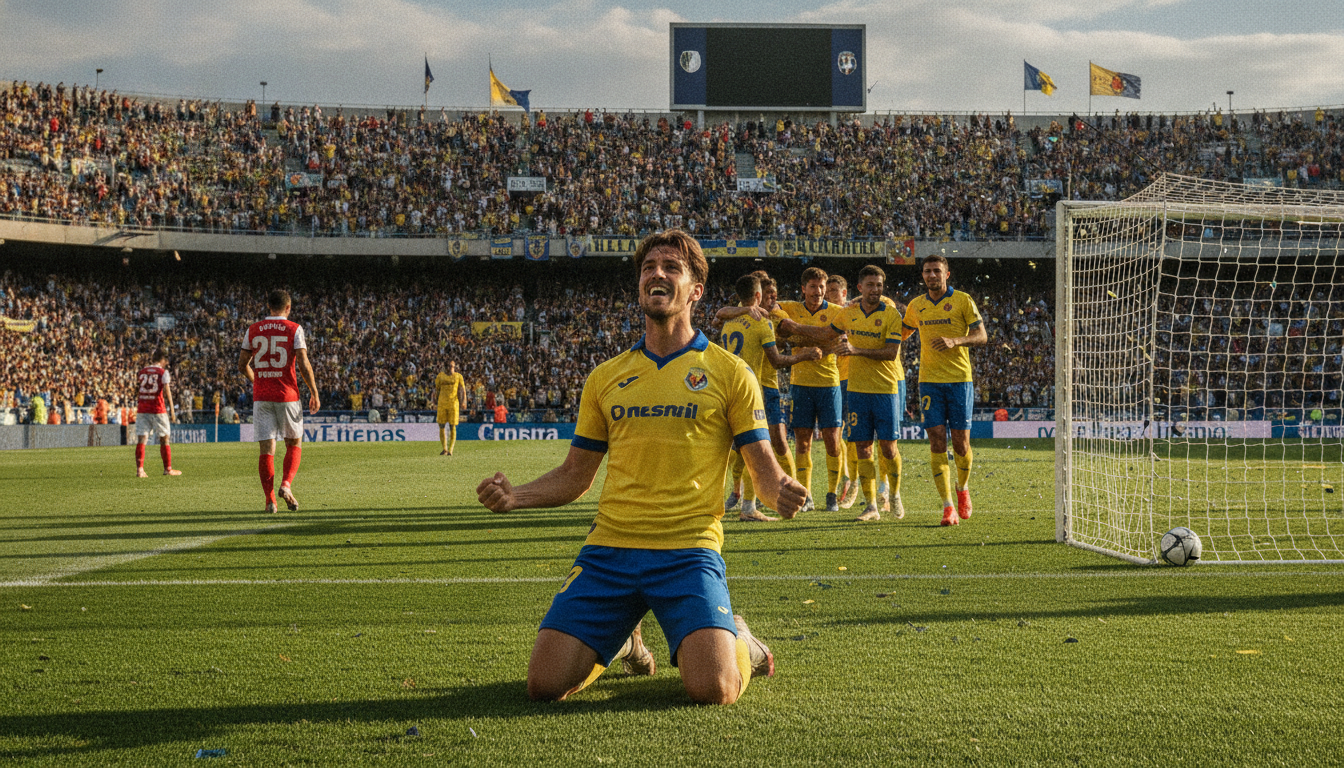
Alex Freeman ends Villarreal’s eight-year World Cup goal drought with USA strike
Alex Freeman’s goal for the United States against Australia ends an eight-year World Cup scoring drought for Villarreal-linked players and secures the hosts’ place atop Group D.


Freeman’s goal and the breaking of a long Villarreal drought
Alex Freeman’s header for the United States in the 2-0 win over Australia marked the first World Cup goal by a player connected to Villarreal since 2018. The strike not only helped the hosts secure qualification but also closed a dry spell that stretched back to the Russia tournament. For Villarreal, the moment carried symbolic weight as several current and former squad members have been representing their countries at this World Cup. The goal reinforces the club’s presence on the global stage after quieter years in international tournaments.
Match impact and Group D consequences
The 2-0 victory ensured the United States finished top of Group D and advanced from the opening phase with momentum. Freeman’s goal arrived at a pivotal point, improving the hosts’ goal difference while stabilizing defensive responsibilities for the remainder of the match. The result eases pressure on the U.S. coaching staff and gives the team a clearer path into the knockout rounds. For Villarreal, the immediate takeaway is the reassurance that one of its winter signings is contributing on the biggest international stage.
Tie back to the 2018 Russia World Cup
The last Villarreal-affiliated scorer at a World Cup was Denis Cheryshev, whose four goals powered a memorable campaign in 2018. Cheryshev’s run of form in Russia included a pivotal goal in the quarterfinals, even though his side ultimately exited the competition. The 2018 contributions remain the benchmark for Villarreal-linked players at the World Cup, and Freeman’s strike now updates that narrative. The gap between those moments—exactly eight years—highlights how sporadic international tournament scoring has been for players associated with the Spanish club.
Freeman’s profile and Villarreal’s winter transfer gamble
At 21 years old, Freeman arrived at Villarreal during the winter transfer window as a direct investment in the club’s right-back position. The move followed a breakout spell in Major League Soccer where he earned recognition as one of the league’s top young talents. Adapting to the tactical and physical demands of European football has been the immediate challenge for the youngster, and his World Cup goal signals encouraging progress. Villarreal’s recruitment of Freeman was presented as part of a longer-term plan to blend youthful athleticism with the club’s established tactical framework.
Freeman’s playing time and early adaptation at club level
Since joining Villarreal, Freeman has featured in nine matches as he acclimates to a faster, more nuanced style of play. Those appearances have offered glimpses of his pace on the flank, his ability to overlap in attack, and his improving defensive positioning. Club staff have described his first months as a period of adjustment, with training priorities focused on tactical awareness and consistency. The World Cup stage has provided a different, high-pressure environment in which Freeman has shown composure and effectiveness.
Tactical implications for Villarreal’s right flank
Freeman’s development adds a direct option for Villarreal on the right-hand side, where balance between defensive solidity and forward thrust is essential. His capacity to join attacks and deliver crosses complements a system that values full-backs as auxiliary attackers. At the same time, the club will measure his defensive reads and recovery speed against established teammates when competitive fixtures resume. If Freeman builds on his international exposure, Villarreal could manage rotations more dynamically, reducing wear on senior players and introducing tactical flexibility.
How World Cup exposure affects Freeman’s trajectory
Performing at a World Cup can accelerate a young player’s growth curve and market visibility, and Freeman is no exception. Regular minutes against high-caliber opposition help sharpen decision-making and endurance, while scouts and analysts often re-evaluate prospects in tournament settings. For Villarreal, the short-term benefit is clear: a more battle-tested player returns to the club. In the longer term, sustained international performance could raise Freeman’s profile and attract broader interest, which the club will weigh against its squad-building objectives.
Connection to other Villarreal-linked internationals at the tournament
The World Cup has featured a handful of players with recent or past ties to Villarreal across various national teams, creating layered storylines beyond Freeman’s goal. Those connections underline Villarreal’s role as a club that supplies talent to international competitions, even when the club itself is navigating transitional seasons. The presence of multiple players with La Plana experience highlights the scouting and loan strategies that have placed talent in diverse leagues. Observers will watch how each player’s tournament form reflects back on Villarreal’s recruitment and development policies.
Club expectations under Iñigo Pérez and squad planning
Villarreal’s coaching hierarchy, with Iñigo Pérez involved in tactical direction, has signaled that younger signings must blend quickly into the club’s structure. The plan for Freeman is to move beyond an adaptation phase and assume greater responsibility as the team’s tactical demands increase. Club leaders expect incremental integration, with international experience accelerating readiness for domestic and continental competitions. Management will monitor fitness, form, and tactical cohesion before expanding the youngster’s minutes in crucial matches.
Commercial and sporting considerations for Villarreal
A player performing on the World Cup stage carries both sporting promise and commercial implications. Increased recognition can boost merchandising, club visibility, and negotiating leverage in future contract or transfer discussions. Sportingly, the club benefits from a player hardened by elite competition, which can translate into more reliable contributions under pressure. Villarreal will balance the incentive to showcase Freeman’s talent with the strategic goal of building a competitive squad for the season ahead.
Potential challenges returning from tournament duty
Returning players often face tight timelines to rejoin club training, potential fatigue, and the risk of injury after intense international competition. Villarreal’s medical and coaching teams will need to manage Freeman’s workload carefully to preserve his development trajectory. Tactical reintegration is another focus area; translating national-team roles back into the club framework requires deliberate coaching. These transitional steps will determine whether World Cup minutes become a net gain for Villarreal across the season.
Outlook for Villarreal in the post-World Cup period
As national team duties conclude, Villarreal will reassess squad depth and tactical priorities with fresh data from the tournament. Freeman’s performance has added a variable to team selection conversations, and the club will consider whether to emphasize rotational strategies or consolidate around established starters. The coming months will test Villarreal’s ability to convert international momentum into consistent domestic results. Strategic planning, fitness management, and tactical clarity will be central to turning World Cup exposure into competitive advantage.
The United States’ 2-0 victory over Australia provided a milestone that resonates beyond a single match, bringing Villarreal back into the World Cup scoring narrative after an eight-year absence. Alex Freeman’s goal offered the club a reminder of the value of youth investment and the potential payoff of targeted recruitment. For Villarreal, the immediate challenge is to harness the experience gained on the global stage and integrate it into a season-long project that balances development, performance, and ambition.