

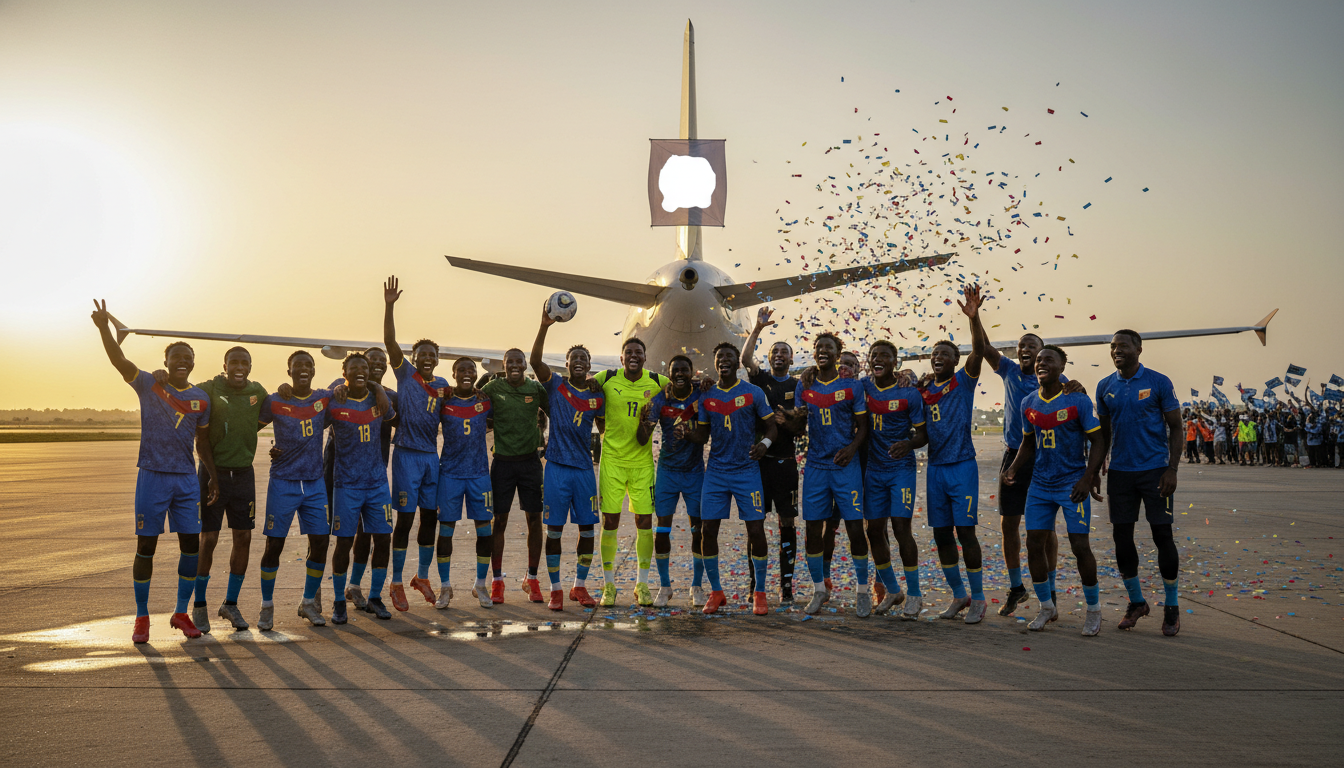
FIFA and FECOFA Say DR Congo Players Cleared to Enter U.S. for 2026 World Cup Despite Ebola Concerns
FIFA and FECOFA state DR Congo players and staff met U.S. sanitary rules and are eligible for the 2026 World Cup despite an Ebola outbreak in Ituri province.

The world governing body FIFA and the Congolese Association Football Federation (FECOFA) on Monday confirmed that DR Congo’s national team and most of its coaching staff met sanitary protocols required for entry into the United States for the 2026 World Cup. FECOFA said players followed health measures and that the technical team left Kinshasa on May 20 for a training camp in Belgium, where they will remain for at least 21 days before traveling to North America. The federation and FIFA said the delegation is focused on sporting preparation while monitoring public health guidance tied to the Ebola outbreak centred in Ituri province.
FIFA and FECOFA confirm eligibility of players and staff
FECOFA’s statement said the federation informed FIFA that it had taken "every measure" to avoid risks associated with the epidemic and to comply with sanitary protocols introduced by U.S. authorities. Both organizations concluded after their meeting that the players and coaching staff adhered to required health measures and therefore would be permitted to enter the United States to participate in the tournament. FIFA also indicated it would work with FECOFA on any practical issues related to travel, accreditation and the wellbeing of the delegation while abroad.
FECOFA added that most members of the technical staff live and work in Europe, further reducing perceived risk of infection originating in the DRC. The federation noted that coaches who left Kinshasa on May 20 will complete a minimum 21-day period in Europe before heading to the United States, a precaution aligned with standard monitoring windows for Ebola exposure. FECOFA emphasized that the national delegation remains concentrated on training and tournament preparation.
Travel timeline and sanitary protocols explained
The technical staff’s departure on May 20 and the planned 21-day stay in Belgium were highlighted as central to FECOFA’s mitigation strategy. That period aligns with established public health monitoring windows for Ebola-like illnesses and was cited by FECOFA as evidence of compliance with U.S. requirements. FECOFA said it had kept detailed records of the movement and health status of players and staff to show full cooperation with both FIFA and international health guidance.
FIFA’s involvement included verification that the delegation’s sanitary procedures met the conditions set by U.S. authorities, according to the federation statement. The confirmation makes the squad eligible to travel to matches in the United States portion of the tri-nation tournament. FIFA and FECOFA also said they would continue liaising with public health officials and tournament organizers to ensure protocols are observed through the team’s travel and competition.
Ebola outbreak in Ituri: scope and public health response
The outbreak in the Democratic Republic of the Congo has been traced to the Ituri province, which shares a border with Uganda and has been identified as the epicenter by national authorities. The Congolese Ministry of Communication and Media reported on social networks that the death toll attributed to the outbreak has exceeded 200, with cases also recorded across the border in Uganda. The World Health Organization declared the DRC and Uganda situation a public health emergency of international concern overnight into May 17, reflecting the cross-border risk and the severity of the outbreak.
Public health officials have noted that the current outbreak involves the Ebola‑Bundibugyo strain, first identified in Uganda in 2007, and estimated to have a mortality rate in the range of 30–50 percent. Health services in the DRC began receiving alerts in early May and warned that the virus may have been circulating undetected for several weeks before official notification. Local and international health agencies have mobilized surveillance, treatment and community outreach efforts to slow transmission and identify contacts.
Group K draw and sporting stakes for DR Congo
On the sporting side, DR Congo are drawn into Group K for the expanded 48‑team 2026 World Cup alongside Portugal, Uzbekistan and Colombia. The group presents a major competitive challenge for the Congolese side, which will have to manage both the rigors of elite sport and the public health environment around the tournament. Qualification to the World Cup represents a significant achievement for the federation and a source of national pride at a time when the country is also addressing a public health emergency.
FECOFA stressed that the team’s focus remains on tactical preparation and match readiness for the opening fixtures. Players and staff were reported to be following training plans and logistical preparations for travel once final steps on sanitary approvals and visa arrangements are confirmed. The federation’s public comments framed the situation as manageable from a sporting perspective while acknowledging the broader context of the outbreak at home.
Fans, visas and FIFA’s ticket refund consideration
FECOFA drew attention to another sensitive issue: fans from the DRC who purchased World Cup tickets but were denied U.S. entry visas. The federation said FIFA pledged to "consider" refunding those supporters who cannot join the team in person because of visa refusals. The matter raises questions about travel access for overseas fans from affected countries and the administrative burdens they face in securing visas and complying with health requirements.
Tournament organizers and national federations will need to coordinate on ticketing, refunds and stadium allocations if any group of supporters is unable to travel. FIFA’s tentative offer to consider refunds was presented by FECOFA as a commitment to the rights of fans while the organization negotiates the practicalities of large-scale global attendance during a public health event. Both FIFA and FECOFA said they will provide guidance to ticket holders and supporters as situations develop.
International coordination and surveillance measures
International health coordination has been central to decision-making about travel and participation in international events involving affected countries. The World Health Organization’s emergency declaration and cross-border case reports prompted heightened surveillance measures, contact tracing and community engagement in the DRC and neighbouring states. FECOFA said it worked with health authorities to ensure the team followed recommended testing and monitoring procedures before departure and during the European training camp.
Public health experts emphasize that layered mitigations — case finding, isolation of confirmed cases, tracing of contacts and community-level education — are essential to control transmission. Tournament organizers and host governments have also developed entry requirements and sanitary protocols to reduce risk at mass gatherings. FIFA’s confirmation that the DR Congo delegation complied with U.S. protocols reflects an operational decision grounded in those combined health and administrative measures.
The DR Congo team now prepares to complete its European training period and finalize travel plans for the 2026 World Cup, with FECOFA and FIFA maintaining ongoing communication with public health authorities and tournament hosts. The situation will require sustained coordination to balance the team’s sporting objectives with the international community’s public health responsibilities.