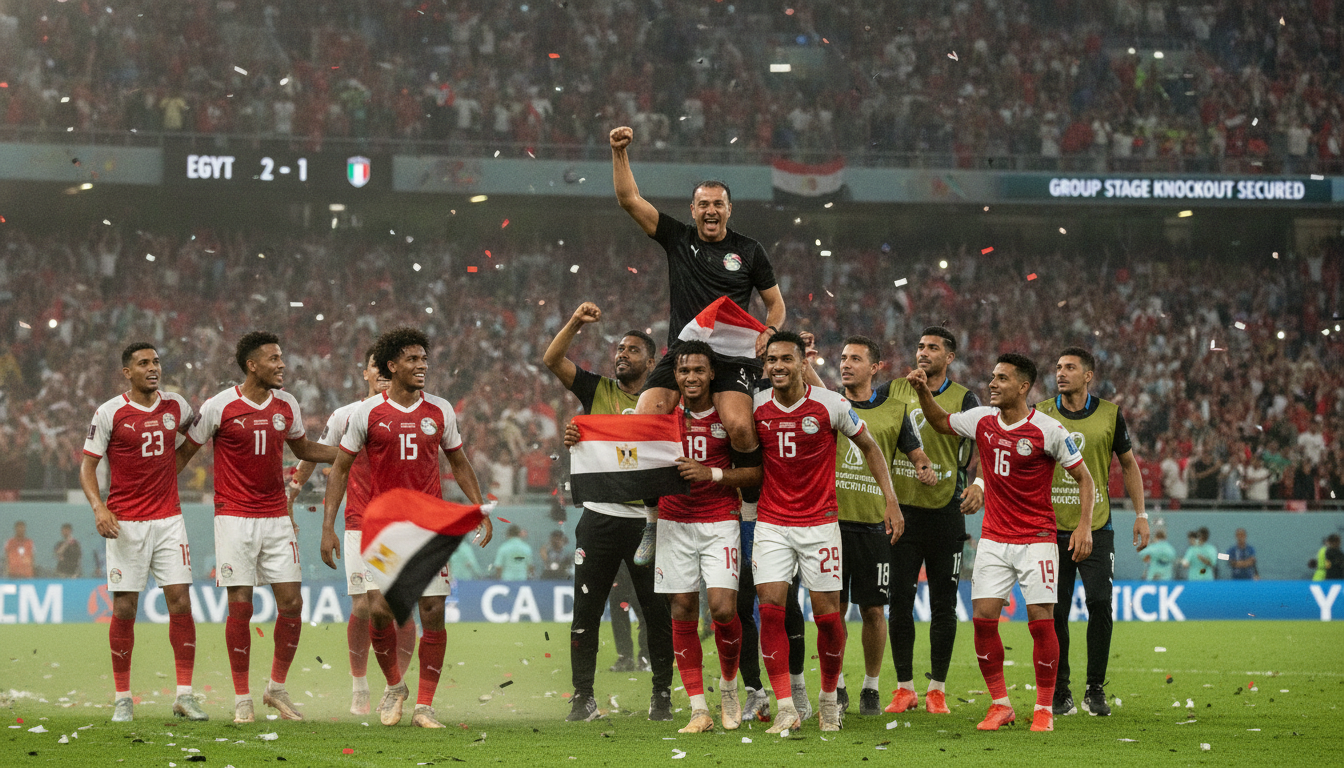
Egypt target breakthrough as Egypt at the 2026 World Cup sees Group G showdown with Belgium, Iran and New Zealand
Egypt target breakthrough at the 2026 World Cup with Mohamed Salah leading a squad drawn with Belgium, Iran and New Zealand in Group G.

Egypt arrive at the 2026 World Cup determined to rewrite their tournament narrative after a lengthy absence from knockout-stage success. The nation, seven-time Africa Cup of Nations winners, will begin Group G action against Belgium on June 15, 2026, before facing New Zealand on June 22 and Iran on June 27. Expectations will focus on Mohamed Salah and a refreshed squad under coach Hossam Hassan as the Pharaohs pursue their first World Cup match victory and a historic run beyond the group stage.
Hossam Hassan’s task: restore belief and scoring pedigree
Hossam Hassan returned to the national team hot seat with a clear brief: inject attacking confidence and convert Egypt’s continental pedigree into World Cup results. A former record scorer for his country, Hassan took charge in February 2024 and has since overseen a qualifying campaign that emphasized consistency and attacking options. His presence is intended to bring both tactical clarity and a psychological lift to players accustomed to carrying the weight of national expectation.
The coach’s experience as a goalscorer shapes his management style and selection priorities. Hassan favors forward-minded approaches and has reinforced the squad with players who can combine with Mohamed Salah to unlock tight defences. Translating that philosophy to the World Cup stage will hinge on balancing Salah’s influence with collective movement and set-piece discipline.
How Egypt reached North America: a dominant qualifying run
Egypt’s route to the 2026 World Cup was marked by sustained domestic superiority in qualifying Group A, where they finished top with an unbeaten record. The Pharaohs collected eight wins from ten fixtures and amassed 26 points, a run that included multiple victories over regional rivals and resilient away results. That consistency underpins the optimism surrounding the squad heading into Group G.
Key phases of the campaign featured early momentum against Burkina Faso and crucial wins over teams such as Ethiopia, Sierra Leone, Guinea-Bissau and Djibouti. Those results allowed Hassan to experiment with attacking combinations while preserving defensive shape, producing a side that looks comfortable on the ball and capable of grinding out results when required. The qualifying form gives Egypt a statistical foundation from which to approach their World Cup fixtures.
Group G fixtures and immediate challenges
Egypt’s Group G presents a mixed set of challenges: a technically gifted Belgium, a disciplined Iran side and an organized New Zealand team. The calendar begins with Belgium v Egypt on June 15, 2026, a match that will test Egypt’s ability to cope with high-tempo combinations and elite individual quality. A positive result in the opener would greatly improve Egypt’s prospects of reaching the knockout phase.
On June 22 Egypt face New Zealand, an opponent that has shown defensive organization and an ability to frustrate more fancied sides. That fixture is widely viewed inside the Egyptian camp as a prime opportunity to secure maximum points and build momentum. The group concludes with Egypt v Iran on June 27, a confrontation that carries historic overtones given Iran’s unbeaten record in previous friendly encounters; it is likely to be decisive for qualification hopes.
Players to watch: Salah’s final dance and the new attacking options
Mohamed Salah remains the central figure in Egypt’s hopes at the 2026 World Cup, combining experience, finishing and leadership in the attacking third. Widely regarded as one of Africa’s finest exports, Salah’s World Cup résumé is notable for individual brilliance but short on team silverware on the global stage. This tournament is being framed by many inside Egyptian football as Salah’s last realistic opportunity to push the national side into a first-ever knockout appearance.
Alongside Salah, Omar Marmoush has emerged as a complementary forward option capable of producing moments of brilliance. Marmoush’s mobility and directness provide a different threat profile, and he has been integrated into plans to stretch defences and create space for Salah. The supporting cast also contains midfield operators tasked with linking play and a defensive unit that must manage set-piece vulnerabilities against technically superior opponents.
Tactical outlook: how Egypt can navigate set-pieces and transitions
Tactically, Egypt’s path through Group G will depend on a pragmatic blend of possession control and rapid vertical transitions. Against a side like Belgium, controlling the tempo and limiting turnovers in midfield will be key to avoiding sustained pressure. Hassan’s probable approach is to maintain compact defensive lines out of possession while allowing attackers freedom to exploit counterattacks and one-on-one situations.
Set-pieces may play an outsized role in tight matches, making aerial organization and delivery quality areas of intense focus during preparations. Egypt’s coaching staff have emphasized rehearsed routines in training and the need for defenders to mark tightly and attackers to offer varied finishing angles. If Egypt can combine disciplined defending with clinical moments up front, they will be well placed to challenge for one of the two qualifying spots from Group G.
Historical context and what a breakthrough would mean for Egyptian football
Egypt’s World Cup history is modest in volume but rich in symbolic moments, dating back to their tournament appearance in 1934. The Pharaohs have appeared at the global finals on only a handful of occasions — in 1934, 1990 and 2018 — and they have yet to progress past the opening phase in the modern era. For a nation that dominates African football with seven Africa Cup of Nations titles, translating continental success to a World Cup knockout run would represent a major milestone.
A first World Cup match victory or a place in the knockout rounds would have wide-ranging implications domestically, boosting grassroots interest and strengthening the argument for sustained investment in coaching and youth development. It would also cement Mohamed Salah’s legacy in international play should he be pivotal to any historic outcomes. The wider footballing community will be watching to see whether Egypt can convert regional dominance into a memorable global campaign.
Egypt’s campaign in Group G is a blend of opportunity and challenge, defined by a clear objective: secure results early and build momentum. With Mohamed Salah leading the front line and Hossam Hassan at the helm, expectations are high and tangible. The draw against Belgium, New Zealand and Iran gives the Pharaohs a pathway to make history if they combine tactical discipline with moments of attacking brilliance.
The coming weeks of preparation will be crucial as Egypt fine-tune their selections, sharpen set-piece delivery and complete the mental work required for a high-stakes World Cup group. The squad’s ability to handle pressure, adapt game plans and execute in key moments will determine whether they leave North America with a breakthrough or another near miss.