Fabio Cannavaro hails Uzbekistan after late Mexico City arrival ahead of World Cup debut
Cannavaro praises Uzbekistan’s academy investment as key to their World Cup debut after arriving late to a Mexico City press conference before Colombia.


Fabio Cannavaro used a delayed press conference in Mexico City to underline why Uzbekistan’s emergence at the World Cup is no accident. Cannavaro, who arrived late after a flight from Atlanta and heavy traffic, highlighted the federation’s spending on youth academies and facilities as central to the nation’s progress. The comments came as Uzbekistan prepared to make its first appearance at the finals against Colombia.
Late arrival in Mexico City and a tense press room
Cannavaro arrived 75 minutes late to a marquee that had been converted into a temporary press room, a delay he attributed to traffic after a transcontinental flight. Reporters endured the chilly air conditioning and a brief flare of tension when one attendee confronted a volunteer over the order of questions. Despite the rocky start, the Italy World Cup-winning captain quickly settled into a composed briefing once it began.
The delay did not overshadow the substance of Cannavaro’s remarks, which focused on long-term development rather than short-term tactics. He fielded questions in a calm, measured manner, repeatedly returning to the theme of infrastructure and youth development as the engine behind Uzbekistan’s success. The scene underscored how even routine media duties can become talking points when a team makes a historic tournament debut.
Cannavaro’s message on academies and long-term planning
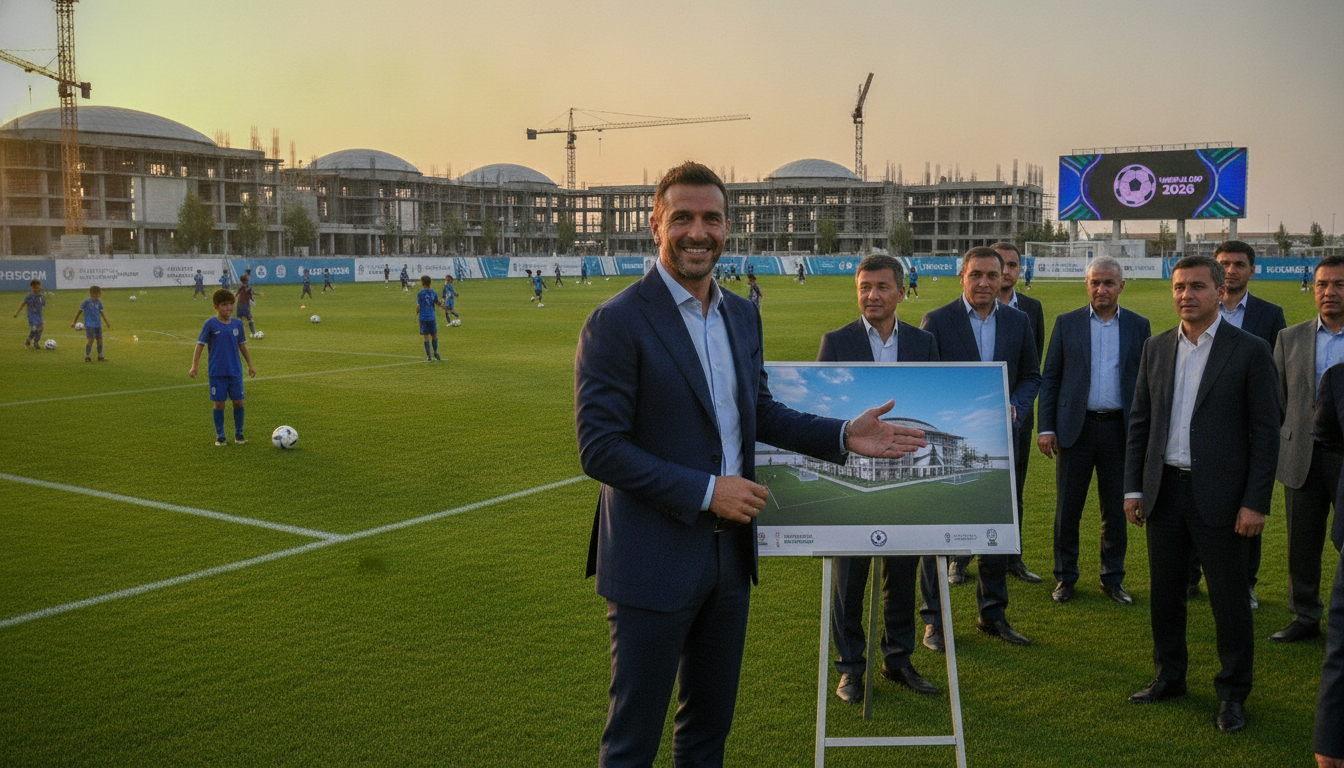
At the heart of Cannavaro’s comments was praise for Uzbekistan’s recent investment in youth academies and a national football centre opened last year. He said those resources are producing players with the mentality and technical grounding needed to compete on the global stage. Cannavaro suggested that continued attention to facilities and coaching would lead to more Uzbek players moving to European leagues in the coming years.
The coach framed the federation’s spending as a strategic foundation rather than a quick fix, arguing that results at youth level and improved environments for training create sustainable pathways. That emphasis aligns with modern football models that prioritize talent identification and player development programmes. Cannavaro’s public endorsement gives weight to Uzbekistan’s approach as they take their place among more established football nations.
Context: Uzbekistan’s path to a first World Cup
Uzbekistan secured qualification in convincing fashion in the Asian qualifiers and arrive in the finals buoyed by momentum and confidence. As a team ranked around the 50s in FIFA lists, they have shown a capacity to grow beyond regional expectations thanks to a generation of players matured within improved local systems. Their presence in this World Cup represents years of incremental change, not a sudden breakout.
For a country making its tournament debut, the match against Colombia offers both a marquee test and a global platform to showcase the fruits of those investments. Cannavaro repeatedly framed the fixture as an opportunity for his squad to measure itself and for players to attract attention from clubs abroad. The stage also brings scrutiny, and the coach emphasized the need for focus and discipline amid the external noise.
Cannavaro’s recent managerial trajectory examined
Cannavaro’s appointment as Uzbekistan coach last October followed a mixed coaching career that includes stints in the Chinese Super League and successful spells with Tianjin Quanjian and Guangzhou Evergrande. His most recent role with China was short-lived—lasting six weeks and two matches—yet his broader résumé includes domestic trophies and experience managing in Asia. That background gave the federation a high-profile figure with regional familiarity and a global reputation.
At the press conference Cannavaro did not dwell on his past setbacks but instead highlighted learning and adaptation as constants in coaching. He framed the Uzbekistan role as an opportunity to apply lessons from club and national assignments and to work with a federation willing to invest in the future. His presence gives the team tactical credibility while the federation’s investments underpin player development.
Tactical preview and Colombia challenge
Cannavaro refrained from revealing detailed game plans but stressed that Uzbekistan will approach the Colombia match with organised defending and quick transitions. He acknowledged Colombia’s experience and individual quality while insisting his side’s preparation has focused on structure and mental readiness. The coach signalled that Uzbekistan will aim to be compact without sacrificing opportunistic play on the break.
Analysts forecast a contest that will test Uzbekistan’s tactical discipline against Colombia’s attacking instincts and transitional speed. Cannavaro’s pragmatic tone suggested he will set up his team to contain danger and exploit space, a common template for underdog sides seeking points at major tournaments. The game will also be a litmus test of how well Uzbekistan’s academy-produced players handle high-stakes international pressure.
Wider implications for Central Asian football and China
Cannavaro’s public praise of Uzbekistan’s academies carries significance beyond a single match, offering a model for neighbouring federations and emerging football nations. By pointing to concrete investments in facilities and youth, he provided a clear example of how structural change can translate into competitive advances. For Central Asia, Uzbekistan’s qualification may stimulate regional ambitions and greater federation spending on grassroots projects.
Conversely, Cannavaro’s comments highlighted the absence of China from the World Cup, a notable contrast given his brief stint as their coach. China’s long wait for finals football—last appearing in 2002—remains a talking point in Asian football circles and underscores differences in developmental outcomes between federations. The juxtaposition invites reflection on governance, talent pathways, and the patience required to build sustained success.
Uzbekistan’s World Cup debut under Fabio Cannavaro will be watched closely not just for on-pitch results but for what it signals about the value of long-term investment in youth and facilities. The Mexico City press conference was delayed and imperfect, yet the message that emerged was unequivocal: the federation’s planning is starting to pay off, and the players are ready to be tested on the biggest stage.