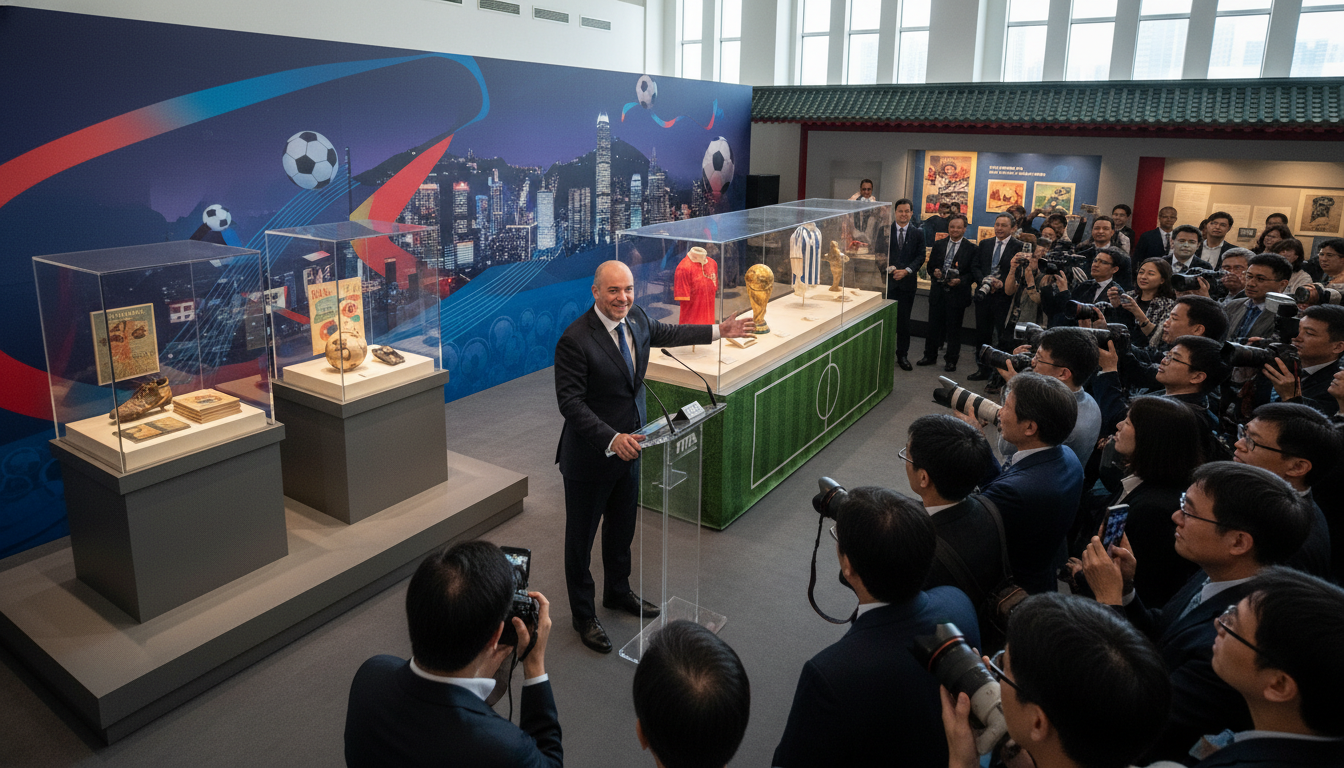
FIFA Museum Hong Kong Opens in Times Square as First East Asia Venue
FIFA Museum Hong Kong launches in Causeway Bay’s Times Square, bringing iconic trophies and exhibits to the city as part of FIFA’s global museum tour for the 2026 World Cup.


The FIFA Museum Hong Kong opened with a ceremony in Causeway Bay, establishing the city as the organization’s first official museum location in East Asia. The short-term venue will run for six months and forms part of a network of exhibition sites staged around the 2026 World Cup. FIFA officials highlighted Hong Kong’s international connectivity and cultural mix as key reasons for selecting the city for this regional debut.
FIFA Chooses Hong Kong as East Asia Launch Site
FIFA executives said Hong Kong’s status as an international hub made it an ideal springboard for activities in East Asia. The city’s concentration of business, culture and transport links were cited as central to the decision to stage an official FIFA Museum in Times Square.
Managing director Marco Fazzone, present at the opening, emphasized the strategic value of Hong Kong for reaching a broad audience across the region. He described the city’s infrastructure and local partnerships as enabling factors that would help FIFA present the history and spectacle of the sport to new visitors.
Exhibition Details and Key Objects on Display
The pop-up museum occupies the fourth floor of Times Square in Causeway Bay and features a range of artifacts curated to tell football’s global story. Among the headline items are replicas of the Women’s World Cup trophy and the historic Jules Rimet Trophy, both positioned as focal points for visitor engagement.
Displays combine historical interpretation with elements designed to appeal to fans of all ages, linking trophy stories with archival material and visual narratives. The Jules Rimet exhibit acknowledges its role in early World Cup history, including the period when Brazil retained the original trophy following their third championship in 1970.
Event Attendance and Notable Guests at the Opening
The launch event attracted international football figures and local partners to mark the museum’s arrival in Hong Kong. Former Italy defender and 2006 World Cup winner Marco Materazzi attended the opening alongside FIFA leadership, lending a high-profile presence to the debut.
Organizers framed the ceremony as both a celebration of football heritage and a platform to build connections with regional football associations and commercial partners. The gathering underscored FIFA’s intent to use the exhibition as a bridge between its Zurich base and fans across Asia.
Integration with the 2026 World Cup Museum Network
The Hong Kong installation is one of five temporary FIFA Museum sites operating in conjunction with the 2026 World Cup schedule across North America. Alongside the central FIFA Museum in Zurich, additional locations have been established in Miami, New York and Vancouver to broaden access to the organisation’s collections.
FIFA officials described the network as a touring approach meant to bring curated content closer to diverse fan bases during a major international tournament. In Hong Kong, the six-month run is positioned to coincide with heightened global interest in the sport, offering residents and visitors a chance to engage with football’s material culture outside of Europe and North America.
FIFA’s Expansion Ambitions and Long-Term Outlook
Visitors and officials heard that the Hong Kong initiative is part of a wider plan to grow FIFA’s museum presence worldwide in the coming decade. Executives signalled an expectation that additional permanent or temporary sites would be introduced in other regions as part of a longer-term strategy to share football heritage broadly.
The museum’s organisers framed the project as outreach as much as exhibition, seeking to foster local programmes and partnerships that can sustain engagement beyond the initial six months. By placing a curated collection in a high-traffic commercial centre, FIFA aims to both attract casual visitors and catalyse interest in deeper, programme-based collaborations with local football bodies.
The pop-up format also allows FIFA to test audience response to different exhibits and presentation styles, which can inform future decisions about where and how to invest in permanent museum infrastructure. Officials stressed that results from Hong Kong will help shape the organisation’s plans for growth and community engagement across Asia.
The presence of replica trophies and historic artefacts is intended to provide accessible touchpoints for fans, while ancillary programming is expected to include talks, guided tours and localised content. These activities are designed to translate the museum’s global story into experiences that resonate with Hong Kong’s multicultural audience.
The Hong Kong opening reinforces FIFA’s aim to present football as a global cultural phenomenon, connecting sporting triumphs with social and design histories. By situating the museum in a major urban retail and entertainment complex, organisers have sought to intersect football’s heritage with the everyday movements of a cosmopolitan city.
The initiative also offers an opportunity for local stakeholders to harness increased footfall and media attention to promote youth participation and community events tied to the World Cup calendar. FIFA’s approach in Hong Kong balances exhibitionary spectacle with a stated intention to support local football ecosystems and fan development.
The temporary museum will remain accessible to the public for six months, giving residents and visitors an extended window to experience the collection and associated programming. FIFA representatives said they expect the Hong Kong site to inform future planning for permanent museums or rotating exhibits in other Asian cities.
Beyond its immediate cultural remit, the museum functions as a visible sign of FIFA’s global outreach during the World Cup cycle, complementing on-field competition with curated storytelling about the sport’s icons and milestones. Organisers framed the project as part of a larger narrative about football’s ability to connect communities across geographic and cultural boundaries.
For visitors eager to see the trophies and learn more about football history, the Causeway Bay venue offers a compact but curated encounter with the game’s past and present. FIFA’s choice of Hong Kong highlights the city’s continued role as a crossroads for international events and cultural exchange.
The arrival of the FIFA Museum in Times Square marks a deliberate step by the organisation to bring its collections into closer proximity with fans in East Asia, and it sets a precedent for future expansions that officials say will unfold over the next decade.