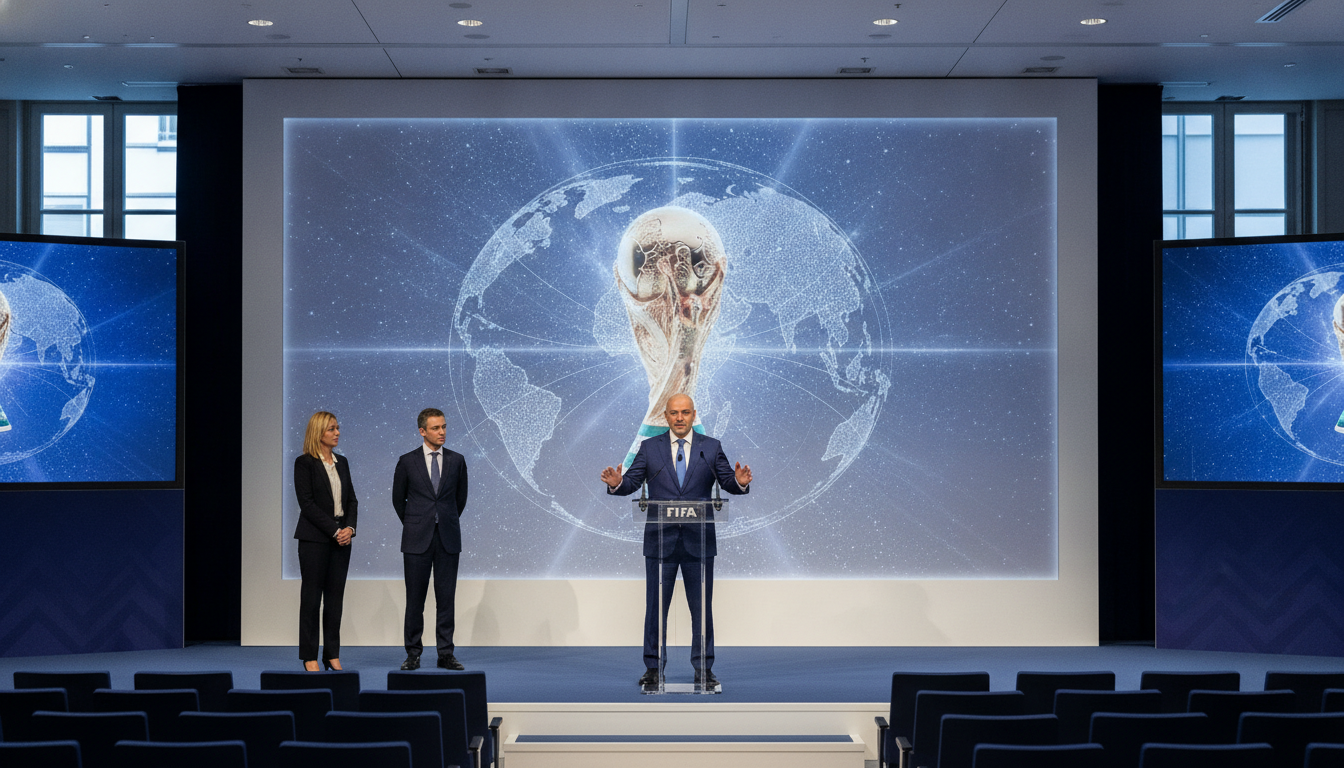
FIFA to sell stake in World Cup through new FIFA Forward Enterprise vehicle
FIFA plans to raise up to $4.2bn by selling minority stakes in a new commercial arm, FIFA Forward Enterprise, to private investors while retaining majority control.


FIFA announces minority-stake sale plan for major competitions
FIFA said on July 28, 2026, it will create a commercial subsidiary named FIFA Forward Enterprise (FFE) and seek long-term investors to buy minority, non-controlling interests as part of a plan to monetise the business operations of the World Cup and other tournaments. The organisation said it will retain a majority share and exclusive authority over governance and the match calendar. (ipt.fifa.com)
The move follows media reports that details of the proposal were leaked to British newspapers, prompting a rapid public response from FIFA clarifying the scope of investor involvement and the amounts it hopes to raise later this year. FIFA framed the initiative as a way to expand development funding for member associations while keeping sporting control within the federation. (uk.sports.yahoo.com)
FIFA Forward Enterprise structure and fundraising target
FFE is described by FIFA as a new, FIFA-owned and controlled subsidiary consolidating the organisation’s commercial and events operations, including broadcast, sponsorship, ticketing and tournament rights. FIFA officials say outside investors would be offered only minority, non-controlling equity positions and would not take part in operational decision-making. (ipt.fifa.com)
The organisation has publicly stated a target to raise about $4.2 billion “later this year” by selling these minority stakes, based on an initial equity valuation reported in press coverage to be roughly $20 billion. FIFA says proceeds would significantly expand available development money for member associations. (ipt.fifa.com)
Named advisers and potential investors
Media reports and multiple news agencies identified JPMorgan as a banking adviser already engaged in discussions and named Thrive Capital — through an affiliate linked to Joshua Kushner — among potential investors that have been approached. Reports also mention that former commercial executives and advisers have been consulted as part of the planning phase. (investing.com)
FIFA confirmed it has been in discussion with financial advisers and potential backers but emphasised investor roles would be limited to minority ownership and long-term investment, not regulatory or governance control. The federation signalled that investor returns would derive from any increase in FFE’s commercial value rather than direct influence on sporting matters. (ipt.fifa.com)
Allegations about future roles for officials and FIFA denials
British press coverage suggested the plan included provisions that could allow FIFA president Gianni Infantino to take on a commissioner-style role within the commercial vehicle after his presidential term concludes in 2031. FIFA has denied that creating such a post for its president was part of the discussions it authorised. (apnews.com)
FIFA’s public statement stressed that governance, regulatory authority and the match calendar would remain with FIFA, and that any external investors would have no operational role or control over football decisions. The federation sought to distance itself from media speculation about personnel arrangements while defending the commercial rationale. (ipt.fifa.com)
Reactions from European federations and football stakeholders
The proposal immediately drew criticism from UEFA and several European officials, who said the move “crossed a line” and risked treating football as a tradable commodity. UEFA issued a forceful reaction stating that nobody “owns the game” and that selling stakes in flagship tournaments raises deep concerns for sport’s custodians. (ansa.it)
National associations and regional confederations will be asked to consider the proposal and any governance changes, since member associations effectively own FIFA and must approve major structural reforms. Early commentary from veteran administrators expressed alarm at the idea of private capital taking financial claims on competitions that are collectively owned. (ipt.fifa.com)
Political and reputational implications
The naming of potential investors with political links in some countries has amplified the controversy, with commentators warning of reputational risk for football’s governing body if transactions are perceived as politically entangled. Critics argued that proximity between bidders and political figures could erode public trust in tournament stewardship. (apnews.com)
FIFA’s leaders, aware of heightened scrutiny after the 2026 World Cup’s commercial success, framed the deal as a pragmatic next step to convert that momentum into long-term capital for football development. Supporters of the plan argue the funds could dramatically increase assistance to smaller associations and accelerate infrastructure, women’s football and grassroots programmes. (ipt.fifa.com)
Financial context and what the proceeds would fund
FIFA’s commercial haul from the 2026 World Cup, held across the United States, Canada and Mexico, has been described as record-breaking, and federation officials say monetising future revenue streams will unlock one-off capital support for member associations. FIFA has proposed that the new structure could enable member associations to access larger, sometimes single-instance, development grants. (apnews.com)
The federation has pointed to the promise of tripling development funding where necessary and creating the capacity to release up to $20 million one-off capital packages to national associations. Proponents say those funds would be targeted at projects such as coaching, facilities, domestic competitions and the women’s game. Skeptics caution that long-term revenue-sharing arrangements and valuation assumptions must be transparent before member associations agree to bind future income. (ipt.fifa.com)
Governance, legal and regulatory questions ahead
Legal experts and governance critics say the proposal raises complex questions about the separation between sport regulation and commercial interests, especially in a structure where a non-profit governing body retains control while creating a commercially valued subsidiary. Observers will be watching for the terms of investor rights, exit mechanisms and safeguards to prevent conflicts between profit incentives and sporting integrity. (investing.com)
Any transaction of this scale would also trigger regulatory reviews in several jurisdictions, potential scrutiny from competition authorities and detailed due diligence by prospective backers. Member associations will likely demand full legal and financial disclosure before any vote is taken, and some may push for independent oversight provisions or caps on investor influence. (investing.com)
Precedents and comparisons in sport business
Sports rights have been monetised in varied ways—long-term media deals, joint ventures and private equity investments—but creating a semi-private vehicle that isolates and sells minority ownership of a federation’s flagship events is unusual at this scale. Previous proposals in world football, including private investment plans for expanded club tournaments, have faced resistance from stakeholders concerned about competitive balance and governance. (sportsbusinessjournal.com)
Industry executives note that while private capital can deliver efficiencies and growth, the specific governance arrangements here will determine whether the deal enhances the game or introduces tensions between commercial returns and football’s broader social responsibilities. Comparisons to other major sports transactions will be inevitable as stakeholders parse the structure and valuation assumptions. (straitstimes.com)
Next steps and timeline for member approval
FIFA has indicated the programme is subject to member approval and that detailed proposals will be circulated to the 211 member associations for consideration. The federation’s published materials suggest a timeline aiming for investor selection and fundraising “later this year,” but exact dates and the sequence of governance votes remain to be set. (ipt.fifa.com)
Member associations will face a choice between the immediate financial benefits of new development capital and the longer-term implications of partially monetising future commercial revenues. Several confederations have already signalled they will scrutinise the plan closely and voice their positions at upcoming governance meetings. (ansa.it)
What to watch: valuation, control protections and public transparency
Key milestones to watch are the final valuation of FFE, the percentage of equity offered to external investors, the specific minority protections included in investor agreements, and transparency measures around how proceeds will be allocated. Independent auditing, clear ring-fencing of sporting governance, and explicit conflict-of-interest rules will be essential to secure broad support. (investing.com)
If FIFA can demonstrate that investor involvement is strictly financial and that governance and regulatory prerogatives remain untouched, some resistance may soften. Conversely, any perception that sporting control could be diluted or that officials stand to gain personally will intensify opposition and could provoke legal and political pushback. (apnews.com)
FIFA says commercial drive aims to expand development spending
FIFA’s public case is that creating FFE and attracting long-term capital will allow it to significantly increase funding for development programmes around the world, supporting infrastructure, coaching and the growth of the women’s game. The federation has framed the move as a strategic reinvestment of commercial success into football’s global ecosystem. (ipt.fifa.com)
That argument will form the centrepiece of FIFA’s engagement with member associations as it seeks the necessary approvals, but the federation will also need to assuage concerns about transparency, political entanglement and the wider implications of commodifying parts of the sport. How FIFA balances those priorities will determine whether the plan is adopted, amended, or set aside. (straitstimes.com)
FIFA plans to sell a stake in World Cup competitions through the FFE vehicle to raise roughly $4.2 billion, but the outcome will hinge on member votes, investor terms, and the federation’s ability to convince stakeholders that sporting control, integrity and broad public interest will remain paramount. (ipt.fifa.com)