Germany vs Curaçao: Nagelsmann to Start Neuer as Germany Open World Cup Campaign in Houston
Germany vs Curaçao World Cup opener in Houston on June 14, 2026 sees Manuel Neuer start in goal, with Nagelsmann opting for a youthful outfield mix.


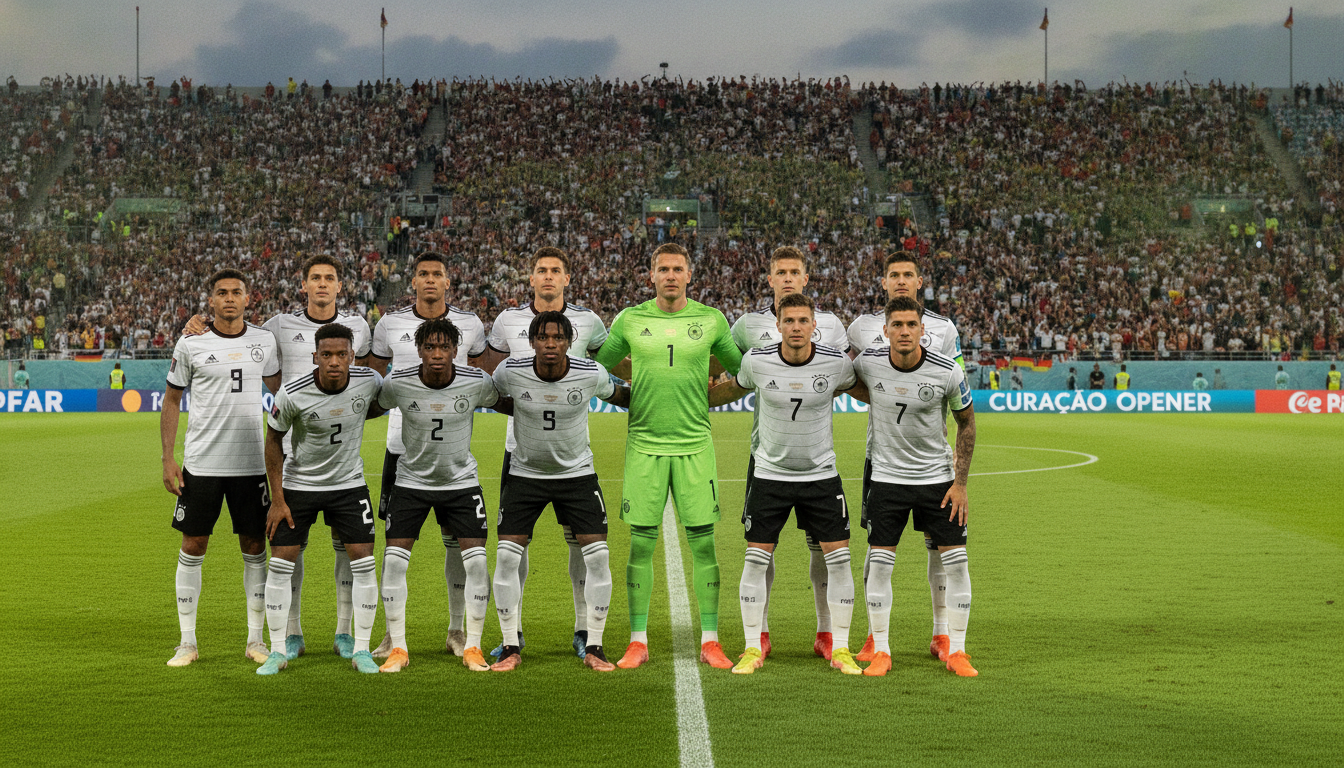
Germany vs Curaçao will kick off Germany’s 2026 World Cup campaign at NRG Stadium in Houston on June 14, 2026, with Julian Nagelsmann confirming Manuel Neuer as his starting goalkeeper for the Group E opener. The match marks a high-profile start for a group that also contains Côte d’Ivoire and Ecuador, and it is Curaçao’s first appearance at a World Cup finals. Germany travel after a short warm-up programme that left Nagelsmann with selection questions in several positions across the pitch. (whensport.com)
Nagelsmann confirms Neuer will start
Julian Nagelsmann has publicly stated that Manuel Neuer will reclaim the No.1 spot for Germany at the tournament, even though Oliver Baumann had started in qualifiers and friendlies while Neuer recovered. The coach framed the decision as a vote of confidence in Neuer’s experience and leadership, while stressing that fitness checks will determine match availability on a day-to-day basis. The confirmation ends a brief goalkeeping debate and signals that Nagelsmann intends to lean on established figures when the tournament begins. (sports.yahoo.com)
Houston hosts Germany’s opening fixture
Germany’s first World Cup match is scheduled for Sunday, June 14, 2026 at NRG Stadium in Houston, with kickoff timed for local afternoon hours. The venue will host seven tournament games and is prepared for a significant influx of supporters for Group E fixtures. Organizers and local authorities have highlighted the logistical scale of the event, and Germany’s opening match is expected to draw heavy attention given the team’s status as one of the tournament favourites. (whensport.com)
Karl ruled out; Ouédraogo added to the squad
Germany suffered a late blow when teenage attacking midfielder Lennart Karl was ruled out of the tournament after sustaining a muscle tear in training during the final preparation phase. The German Football Association confirmed the injury and Nagelsmann moved quickly to replace Karl by calling up RB Leipzig midfielder Assan Ouédraogo under the tournament’s injury-replacement rules. Nagelsmann described the loss as painful for the player and the squad but cited Ouédraogo’s form and familiarity with the national set-up as reasons for the late inclusion. (thestar.com.my)
Left-back and defensive shape: Brown, Kimmich, Tah and Schlotterbeck
Nathaniel Brown has emerged as Nagelsmann’s preferred left-back following the final warm-up fixtures, with the Eintracht Frankfurt full-back starting in the run-up to the tournament. Alongside Brown, a central spine of Joshua Kimmich at right-back (or right-sided defensive pivot), Jonathan Tah and Nico Schlotterbeck is expected to provide Germany with both athleticism and aerial presence. The defensive setup prioritises balance between forward full-backs and centrally disciplined centre-backs to limit transitions from compact opponents like Curaçao. (tagesschau.de)
Midfield double pivot: Pavlović and Nmecha likely starters
In midfield Nagelsmann looks set to trust the young double pivot pairing of Aleksandar Pavlović and Felix Nmecha, who started in Germany’s recent warm-up wins and provided control in central areas. The pairing combines Pavlović’s tendency to sit and distribute with Nmecha’s mobility and ball-carrying into the half-spaces, giving Germany several ways to construct attacks while maintaining defensive cover. Backup options such as Nadiem Amiri, Leon Goretzka and Angelo Stiller remain in the squad and represent different tactical profiles Nagelsmann can call on depending on game flow. (bundesliga.com)
Attacking selection after Karl’s absence
Lennart Karl’s absence opens a space in the attacking unit that is likely to be filled by experienced campaigners and versatile forwards. Leroy Sané, Jamal Musiala and Florian Wirtz are expected to operate as the principal creative outlets behind a central striker, with Kai Havertz pencilled in as the nominal No.9. Nagelsmann also retains options on the bench including Deniz Undav and Nick Woltemade, players who can offer direct runs and late-game energy if Germany need to break down stubborn defences. The coach’s selection shows a preference for combinations that can unlock compact blocks through individual skill and intelligent movement. (skysports.com)
Predicted Germany XI and tactical outlook
A likely starting XI for the opener reads: Neuer; Kimmich, Tah, Schlotterbeck, Brown; Felix Nmecha, Aleksandar Pavlović; Leroy Sané, Jamal Musiala, Florian Wirtz; Kai Havertz. That eleven suggests a 4-2-3-1 shape with fluid interchanges among the attacking three and a single striker who can drop to link play. Tactically Germany will aim to dominate possession, probe down the flanks, and use quick combinations in the final third while keeping a compact defensive base to limit Curaçao’s counter opportunities. (bundesliga.com)
Germany will be expected to carry most of the ball and to press high in phases, but Nagelsmann must guard against complacency in a tournament opener. Curaçao will likely adopt a low block and seek to frustrate through compact lines and set-piece threat, which makes concentration and finishing crucial for Germany’s progression. The match is as much a test of Germany’s squad depth and game management as it is a chance to post a statement of intent to the rest of Group E.
Germany’s group also contains Côte d’Ivoire and Ecuador, teams that pose different tactical problems and ensure that Nagelsmann will need to manage minutes across the group stage. A convincing result in Houston would allow rotation for the Canada and USA legs that follow, while an underwhelming start would ratchet up pressure in the tightly scheduled group window. The early dynamics of Group E make the opening match more than ceremonial; it is a practical step toward qualification for the knockout rounds. (fifa.com)
The decision to reinstate Manuel Neuer highlights Nagelsmann’s preference for experience in high-stakes moments, even as the coach blends several younger players into the starting setup. Injuries and fitness concerns have already altered selection options this month, and the squad’s capacity to adapt will be tested over the tournament’s first ten days. For players called into action because of late changes, the World Cup offers both a challenge and an opportunity to stake a claim on the international stage.
Germany’s supporters will arrive in Houston expecting control in midfield, creativity from the wide channels and clinical finishing inside the penalty area. Curaçao arrive in their first World Cup campaign with nothing to lose and an incentive to defend resolutely and upset the pre-tournament hierarchy. The match on June 14 stands as a litmus test for Germany’s tournament plan and will shape perceptions of Nagelsmann’s squad choices as the group stage unfolds.