-
FC Magdeburg brace for fifth straight 2. Bundesliga season after turbulent 2025/26
- FC Magdeburg prepare for a fifth straight 2. Bundesliga season after a turbulent 2025/26; analysis of coaching, transfers, preseason and early fixtures.
Magdeburg enter their fifth consecutive campaign in the 2. Bundesliga following a season that mixed late recovery with long spells in the relegation zone. The club’s survival, sealed on the final day, sets the frame for a summer focused on consolidation, with Mateusz Żukowski’s breakout form and a strategic coaching partnership at the center of their plans. Stability in key contracts and targeted recruitment have been prioritized as the Blue-Whites aim to build on a campaign that ended in 14th place.


Season review: from early struggles to late recovery
Magdeburg struggled out of the blocks in 2025/26, languishing near the bottom after eight games and prompting a change of leadership. The interim promotion of Petrik Sander and Pascal Ibold halted the immediate slide and eventually set the team on a path to survival. A midseason revival and a late run of five wins in seven matches provided the points necessary to secure another year in the division.
A singular individual performance defined much of the late turnaround, with Mateusz Żukowski scoring prolifically after a delayed start. Despite missing the opening weeks through injury and only debuting on matchday 13, Żukowski finished with 17 goals from 21 appearances, a tally that attracted attention across the top flight. The team’s ability to avoid relegation despite prolonged time in the drop positions underlines both the volatility of the season and the importance of timely form.
Coaching structure: Sander and Ibold partnership
Magdeburg operate under a dual head-coach arrangement that pairs the experienced Petrik Sander with the much younger Pascal Ibold. Sander, a coach with a long history in German football who once led Energie Cottbus to the Bundesliga, brought calming seniority and a pragmatic approach to a team in crisis. Ibold, in his mid-30s and a club figure since 2018, provides a contemporary complement, offering fresh ideas and a close rapport with younger squad members.
The two men have split responsibilities in practice, with Sander taking charge of overall structure and experience-led decisions, while Ibold has overseen training intensity and matchday adaptability. That blend of veteran oversight and youthful energy proved decisive in stabilizing performances across the season. The club’s decision to formalize the partnership reflects a deliberate strategy: combine continuity with innovation rather than pursue a single, sweeping managerial change.
Transfer business: securing stars and plugging holes
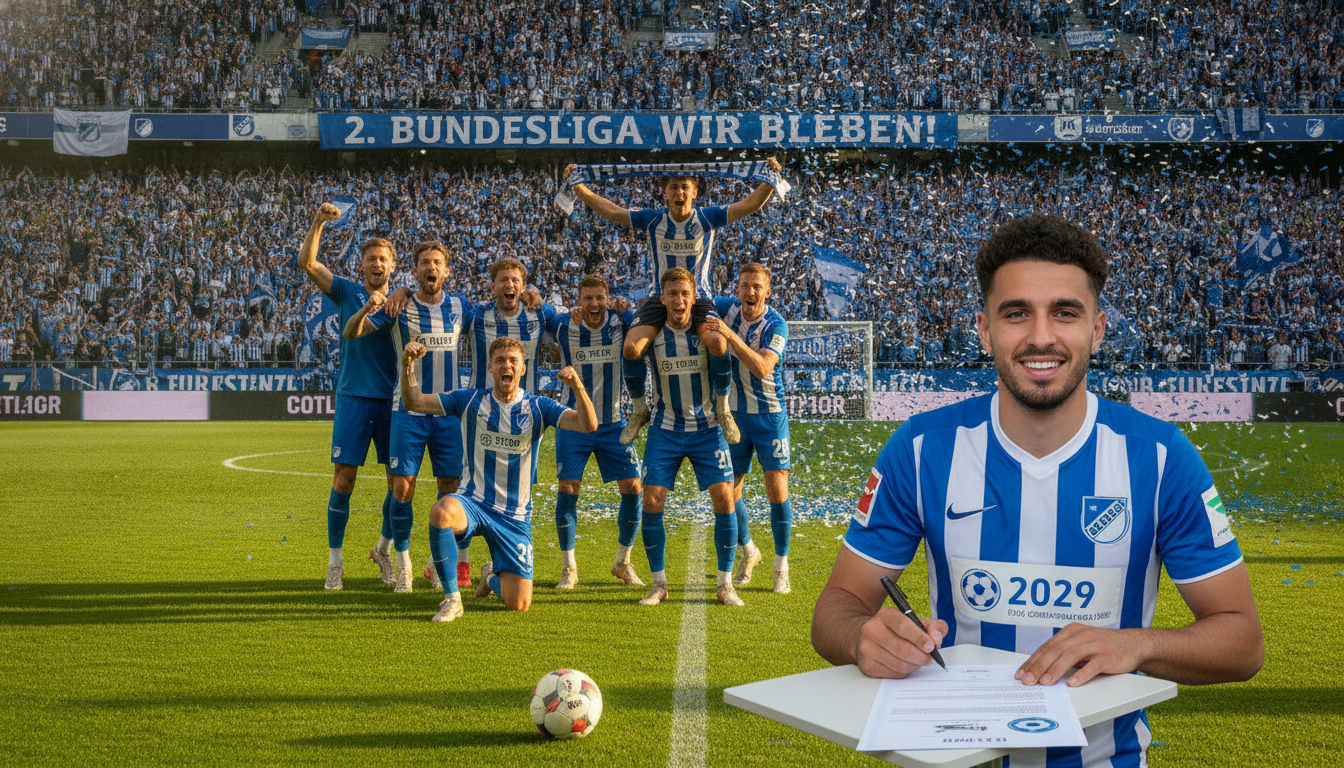
Magdeburg’s summer transfer window was defined less by headline arrivals and more by contract renewals for vital contributors. The club secured Żukowski on a long-term deal until 2029, a contract that both rewards his late-season breakthroughs and protects Magdeburg’s position should Bundesliga suitors emerge. Barış Atik, captain Dominik Reimann and center-back Tobias Müller also extended their stays, underpinning the spine of the squad.
Departures were handled with pragmatic replacements. Marcus Mathisen’s move to St. Pauli and Silas Gnaka’s exit required defensive reinforcement, and the arrivals of Paul Jaeckel and Anselmo García MacNulty were aimed directly at shoring up the back line. Midfield and wide areas saw experienced options brought in too, with Emmanuel Iyoha, Moritz-Broni Kwarteng and Torben Müsel adding proven minutes in the division. The club also supplemented youth prospects with loan signings from South Korea to broaden attacking options.
The unresolved future of loaned playmaker Laurin Ulrich remains a potential talking point, with the player returning to parent club Stuttgart and Magdeburg publicly acknowledging the situation as open. Sporting director Peer Jaekel indicated the matter would be handled carefully, suggesting Magdeburg would not rush a permanent move without the right terms. The overall transfer approach shows a clear preference for retention and measured replacement rather than wholesale overhaul.
Pre-season results and tactical themes
Magdeburg enjoyed a largely positive pre-season, winning five straight friendlies before holding Premier League side West Ham to a 1-1 draw at Avnet-Arena. That result, earned through a late equalizer, gave the coaching staff confidence in the squad’s ability to respond under pressure. A 2-0 victory over newly promoted SC Paderborn showcased the team’s capacity to control matches with the new additions contributing decisively.
On the training ground, Sander and Ibold emphasized a flexible 4-3-3 that can shift into a compact block when defending and stretch opponents with width when attacking. Atik’s creativity and Żukowski’s forward movement remain the fulcrum of offensive plans, while new center-back pairings aim to provide a stronger foundation from which the midfield can operate. Pre-season also highlighted the potential for rotation, with younger loanees and fringe players given minutes to push for first-team roles.
Predicted starting XI and key tactical questions
The likely starting eleven projects Reimann in goal with Iyoha, Müller, MacNulty and Bockhorn across the back four, forming a blend of physical presence and technical ability. In midfield, Hyryläinen, Müsel and Michel are expected to provide balance between ball progression and defensive cover. Up front, Atik’s creation and Żukowski’s finishing power make them the principal attacking partnership, supported by Nollenberger’s movement down the right.
Key tactical questions remain over how Magdeburg will handle sustained pressure from stronger opponents and whether the full-backs can provide sufficient support without exposing central spaces. The coaching staff must decide how often to deploy a high press versus a more conservative mid-block, and which personnel combinations offer the best protection for the defense. Matchday rotations will also test the depth of the squad, particularly during congested fixture periods and domestic cup commitments.
Fixture list and early-season hurdles
Magdeburg open the league campaign at home against Eintracht Braunschweig and then travel to newly promoted VfL Osnabrück, starting the season with a balance of familiarity and early road tests. The DFB-Pokal first-round draw against Bahlinger SC presents a winnable cup tie but also a trap that has cost the club on several occasions in recent years. Early points will be crucial to avoid the pressure that dogged last season’s start.
The calendar includes two high-profile Elb-Clásico fixtures against Dynamo Dresden on matchdays 8 and 25, encounters that carry both local significance and potential atmosphere-driven swings in momentum. The end-of-season run, with games against Wolfsburg, Nürnberg, Bochum and Heidenheim, could be demanding if Magdeburg reach the closing stages needing points. The scheduling underlines the importance of accruing a cushion early on to avoid a repeat of late-season tension.
Expectations, targets and realistic objectives
For the coming campaign, the primary objective is clear: remain in the 2. Bundesliga. The board and coaching staff have prioritized stability above ambitious targets, arguing that consolidation offers the best platform for sustainable progress. A finish in the top half remains a plausible upside if the team maintains form and avoids the injuries that disrupted last season.
Realistically, Magdeburg will measure success by consistent performances, positive home displays and the continued development of Żukowski and other emerging talents. The club’s recruitment and contract strategy suggests a medium-term plan to build value and competitiveness rather than chase short-term splurges. Supporters will hope the mixture of experience, youth and measured reinforcements can convert narrow survival into a steadier league status.
Looking ahead, 1. FC Magdeburg’s summer has set a pragmatic tone: protect the core, address immediate weaknesses and entrust a hybrid coaching duo to extract the best from a squad that showed both resilience and fragility last season. The first weeks of competitive football will reveal whether the balance struck in Avnet-Arena is enough to keep the Blue-Whites comfortably above the relegation dogfight.