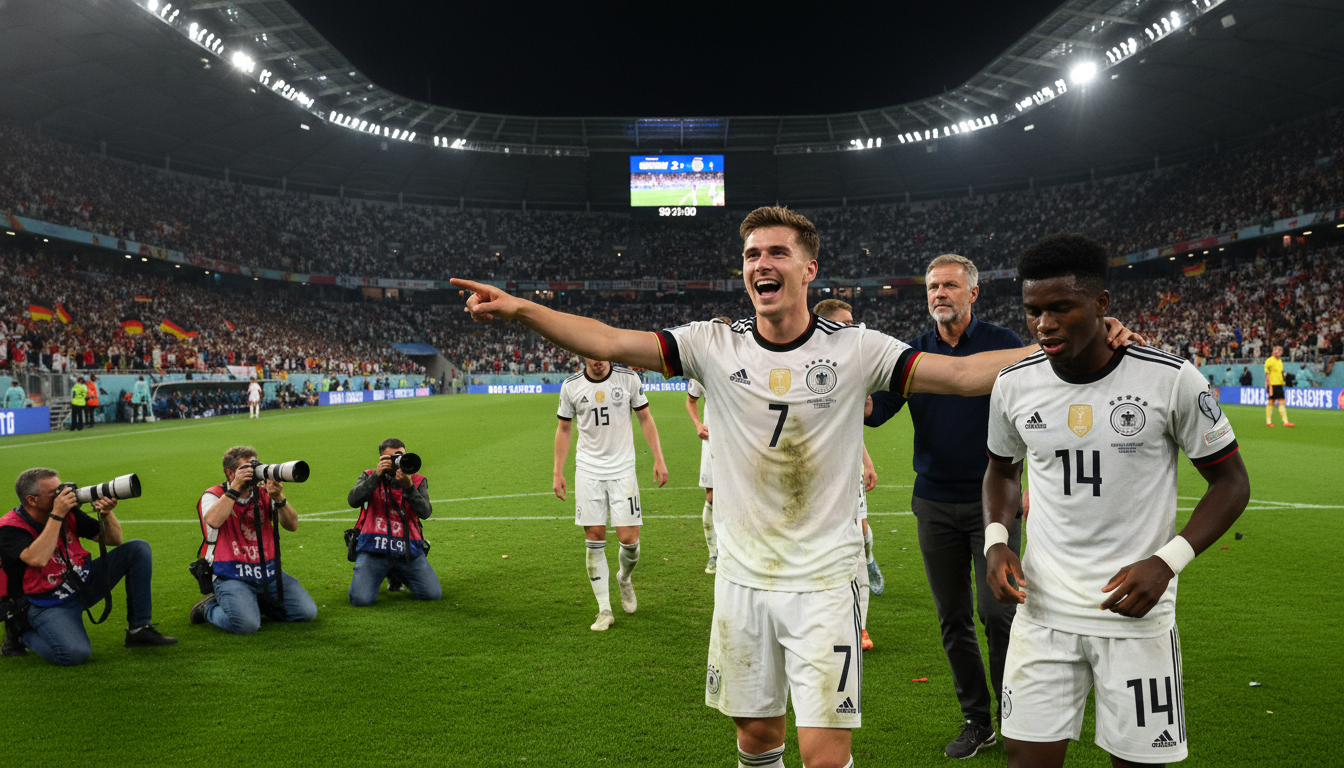
Germany player ratings after 2-1 friendly win over the United States
Germany player ratings and analysis after a 2-1 friendly victory in Chicago ahead of the World Cup show strengths up front and questions in midfield


The Germany player ratings from Saturday night in Chicago underline a mixed performance ahead of the World Cup with Kai Havertz the clear standout and a midfield that failed to impose itself. Germany scraped a 2-1 friendly win over the United States in their final tune up match, a result that offered confidence but left tactical questions for manager Julian Nagelsmann. The headline performers and the underwhelming displays will shape selection conversations in the days that follow.
Havertz delivers decisive impact for Germany
Kai Havertz was the most influential figure on the pitch, returning to the starting lineup after a late arrival to camp and playing a defining role in both goals. He opened the scoring with a headed finish and later set up the winning strike, finishing with a 7.5 rating that reflected his central influence. Havertz combined mobility and timing to punish spaces Germany found between the lines, giving the side a cutting edge it often lacked in the first half. His contribution offered a timely reminder that his presence can change the balance of this Germany team.
Havertz played just over an hour and his influence was immediate and measurable in the attacking third. His ability to connect play and get into scoring positions provided a blueprint for how Germany might unlock opponents who sit deep. For Nagelsmann the takeaway will be that Havertz can be trusted to lead the line and to create chances for teammates when asked to occupy that hybrid attacker role.
Germany player ratings reveal bright spots and clear concerns
Goalkeeper Oliver Baumann posted a steady performance and earns a 6.5 rating for making routine saves and maintaining composure in a low pressure game. The backline largely did its job with right back Joshua Kimmich and centre backs Jonathan Tah and Nico Schlotterbeck combining for steady, if unspectacular, displays. Nathaniel Brown on the left stood out more than expected and received the highest defensive rating at 7 for his energy and willingness to support attacks.
In midfield the ratings dip more noticeably and paint a picture of a unit that struggled to dominate possession or to create consistent tempo. Felix Nmecha and Aleksandar Pavlovic recorded 5 and 5.5 respectively reflecting limited influence and a lack of control in central areas. The creative engine failed to fire with Jamal Musiala and Florian Wirtz both receiving a 4 rating, a result that will concern Germany given those players are counted on for chance creation.
On the right Leroy Sané posted a 5.5 rating for work rate and moments of threat but not enough end product to lift his mark. The substitutes offered little to change the course of evaluation with Deniz Undav and Waldemar Anton recorded at 5 while David Raum finished at 4. Several squad members were unused or without a rating and will now be assessed on training and fitness in the run up to the tournament.
Musiala and Wirtz fail to provide expected creativity
Jamal Musiala and Florian Wirtz arrived at Soldier Field with big reputations but neither could assert themselves on the night, and their low ratings reflect that shortfall. Both players struggled to find rhythm and were closed down effectively, preventing them from linking midfield and attack as Germany needed. Musiala in particular looked subdued when receiving the ball between the lines and was unable to cause the defensive balance problems he has produced at club level.
Wirtz offered glimpses but lacked consistent penetration and final passes that would have opened the game earlier. The pair will need tactical adjustments or different roles to thrive against higher quality opponents in the World Cup group stage. Nagelsmann faces a selection dilemma because these two are among Germany’s most creative talents yet showed they can be neutralized by disciplined defensive setups.
Defensive setup and individual performances assessed
Germany’s defensive unit delivered a largely controlled performance and limited the United States to few clear cut chances, a positive sign ahead of the tournament. Jonathan Tah and Joshua Kimmich combined for a 6.5 rating each and provided leadership and positional discipline, shielding the backline from sustained pressure. Nico Schlotterbeck at 6 and Nathaniel Brown at 7 provided balance, with Brown notable for his transition play and ability to push forward down the left flank.
Goalkeeper Oliver Baumann produced reliable distribution and decision making, avoiding mistakes that can prove costly in friendlies close to tournament kick off. The low number of serious threats faced allowed Germany to manage the match rhythm and test tactical variations later in the game. Overall the defensive showing will be one of the more reassuring aspects for the coaching staff.
Substitutes and tactical adjustments during the friendly
Nagelsmann used substitutions to probe different midfield combinations and to manage player minutes with the World Cup looming, yet the changes had limited positive effect on the game flow. Havertz’s early involvement set the tone before he left the field, and the substitutes that followed were unable to consistently sustain pressure or add a new dimension. Deniz Undav and Waldemar Anton were given chances and recorded ratings of 5 as they searched for impact moments.
The coaching staff also introduced Leon Goretzka and other squad members late in the contest without changing the result but gaining fitness and match sharpness for their World Cup plans. Tactical tweaks were subtle and focused on protecting the lead while attempting to keep the ball higher up the pitch. The experimental phase of the friendly schedule continues to reveal which players can offer short term solutions and which will need further work to fit the manager’s preferred system.
What the result means for Germany heading into the World Cup
The 2-1 win over the United States will be welcomed for the confidence it brings but it does not erase unresolved tactical questions, particularly in midfield. The performance underscores that Germany possess match winners and finishing quality through players such as Havertz, yet creating chances remains inconsistent. The coaching staff will take positives from the defensive stability and from the fact the team found a winning formula against an organized opponent.
Selection and role definitions will likely dominate training sessions from now until the squad submission, with Nagelsmann under pressure to decide how to deploy his creative players most effectively. The match also underlined the importance of squad depth and the need for alternatives who can change games when starters are contained. Ultimately the victory answers some questions about resilience but raises others about how Germany will generate sustained attacking rhythm under tournament conditions.
Germany must now translate this narrow but important friendly win into sharper cohesion and more reliable creativity in attack. The player ratings provide a snapshot of who performed and who must now respond in training. With the World Cup opening rounds approaching, improving midfield control and ensuring consistent service to forwards must be the immediate priorities for the coaching staff.
The final warm up in Chicago offered both reassurance and a reminder of unfinished business as Germany head to the World Cup.