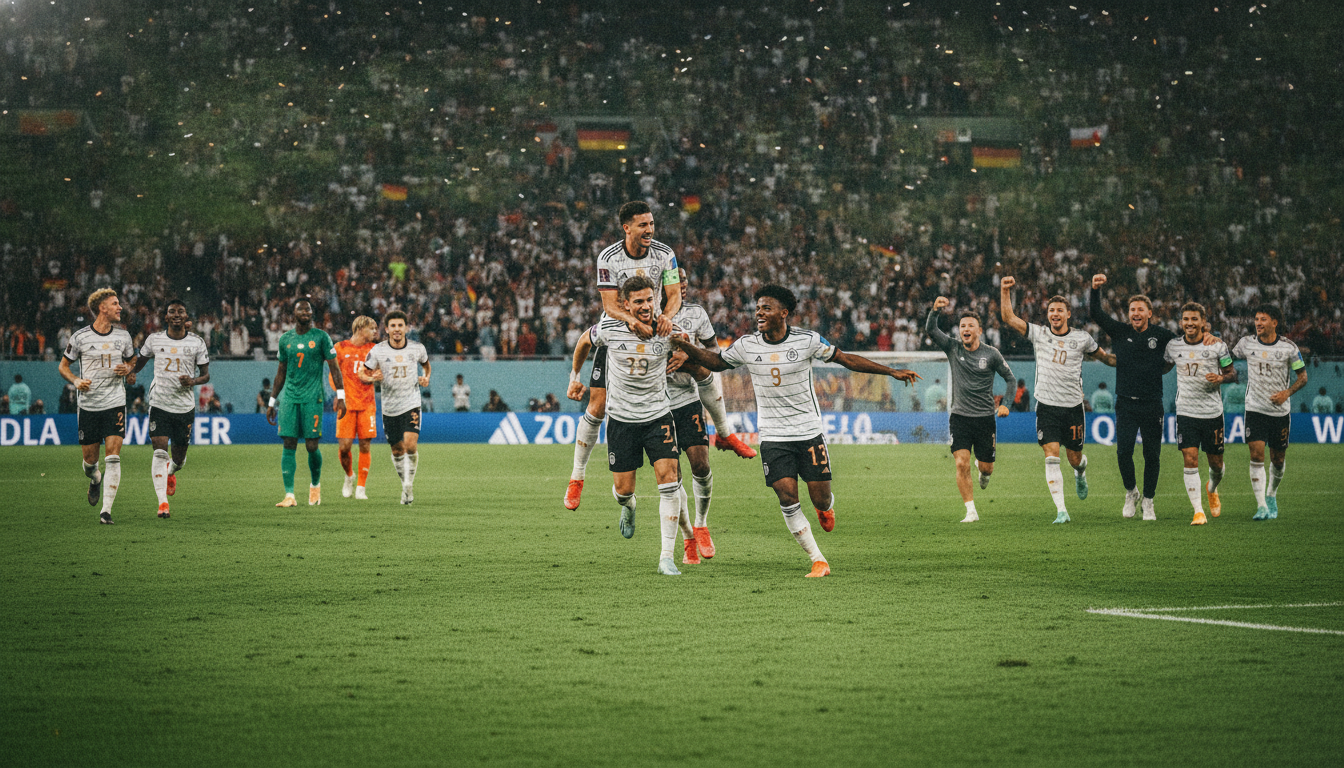
Kimmich hails Germany bench after 2-1 comeback in Germany vs Côte d’Ivoire match in Toronto
Joshua Kimmich praises Germany’s bench after a 2-1 World Cup win over Côte d’Ivoire in Toronto, with Nadiem Amiri and Deniz Undav changing the match late.


Germany recovered from a goal down to beat Côte d’Ivoire 2-1 in Toronto, a match defined by Julian Nagelsmann’s aggressive substitutions and late intervention from the bench.
The headline moment came when Nadiem Amiri’s pass freed Deniz Undav for an equaliser, and the same substitute later netted a decisive second goal to secure victory for Germany.
Midfielder Joshua Kimmich singled out the impact of the replacements after the win, saying the team had known the "bench would be very, very important" going into the tournament.
The result in the Germany vs Côte d’Ivoire fixture offered early confirmation that depth and in-game management will shape Germany’s World Cup campaign.
Nagelsmann’s tactical shift
Germany trailed 1-0 at the hour mark, prompting coach Julian Nagelsmann to reshuffle his side with a triple substitution around the 60th minute.
The changes were designed to add energy, change the team’s structure and inject fresh attacking impetus ahead of a testing final half-hour.
Those tactical alterations immediately influenced the rhythm of the match, with the new personnel linking more quickly and finding forward pockets that had been closed earlier in the game.
Nagelsmann’s gamble was vindicated when those substitutes combined to produce the equaliser and later the match-winner.
Undav and Amiri deliver decisive moments
Deniz Undav turned in a second half cameo that swung the match, converting a well-timed assist from Nadiem Amiri to level the score before producing a late winner.
Undav’s two goals in the tournament so far underline his role as a decisive attacking option off the bench and his capacity to change a game in limited minutes.
Amiri’s contribution was more than the assist; his mentality and driving runs helped unsettle the Ivorian defence and created the space that Undav exploited.
Their combination offered a template for how Germany can use rotation to maintain intensity and find different attacking angles.
Kimmich on the bench’s role
Joshua Kimmich praised the substitutes’ influence, noting that having reliable options beyond the starting XI was a pre-planned strength for Germany.
He highlighted several arrivals who made a measurable impact, including Deniz Undav’s belief in his moments and Nadiem Amiri’s mentality after coming on.
Kimmich also commended defensive additions and midfield energy introduced later, saying those interventions were “very helpful” and helped close out the contest.
His remarks to Magenta TV reinforced the message that squad depth and player readiness will be central to Germany’s approach in group-stage matches.
Defence reshaped and game management
Toni Rüdiger was introduced as part of the halftime adjustments and provided immediate calm and organisation at the back when he entered the game.
The defensive reshuffle allowed Germany to recycle possession more safely and reduce vulnerabilities that had been exposed during Côte d’Ivoire’s opening phases.
Leon Goretzka’s late appearance added physical presence and helped Germany manage the closing stages, limiting the West African side’s ability to threaten on the counter.
Those changes illustrated how Nagelsmann balanced attacking intent with practical game management to preserve the lead.
Undav’s profile as a super-sub
Undav has now come off the bench in successive matches to score, supporting the notion that he thrives in short, high-impact spells.
His style—direct runs into the box, quick finishing and an aggressive mindset—makes him particularly dangerous against tiring defences.
Coaches prize players who can enter with belief and an immediate effect, and Undav’s composure in both the Curacao opener and the Toronto game strengthens his case.
Germany’s staff can now consider game scripts where introducing Undav becomes a planned tactic to unsettle opponents late on.
Group-stage implications and squad rotation
The win gives Germany three points and a platform to manage minutes across the squad in the coming fixtures, with rotation likely to remain a theme.
Nagelsmann will have to weigh the benefits of consistency against the clear value of a dynamic bench that can alter games after the break.
For opponents, the message is that Germany’s strength extends beyond the starting XI and that second-half match-ups may determine outcomes.
The result also offers reassurance about fitness depth, allowing the coaching staff to protect key starters while maintaining a high competitive level.
Germany’s 2-1 victory over Côte d’Ivoire in Toronto underscored the practical value of a well-stocked bench and decisive in-game management.
Julian Nagelsmann’s willingness to make bold changes and Joshua Kimmich’s acknowledgement of the substitutes’ influence framed the match as a team success built on collective contributions.
Deniz Undav and Nadiem Amiri emerged as the match’s protagonists, while defensive and midfield adjustments ensured Germany stood firm to preserve the late lead.
As the tournament progresses, Germany’s ability to blend starting XI stability with match-changing options from the bench will be a critical factor in how far the side can advance.