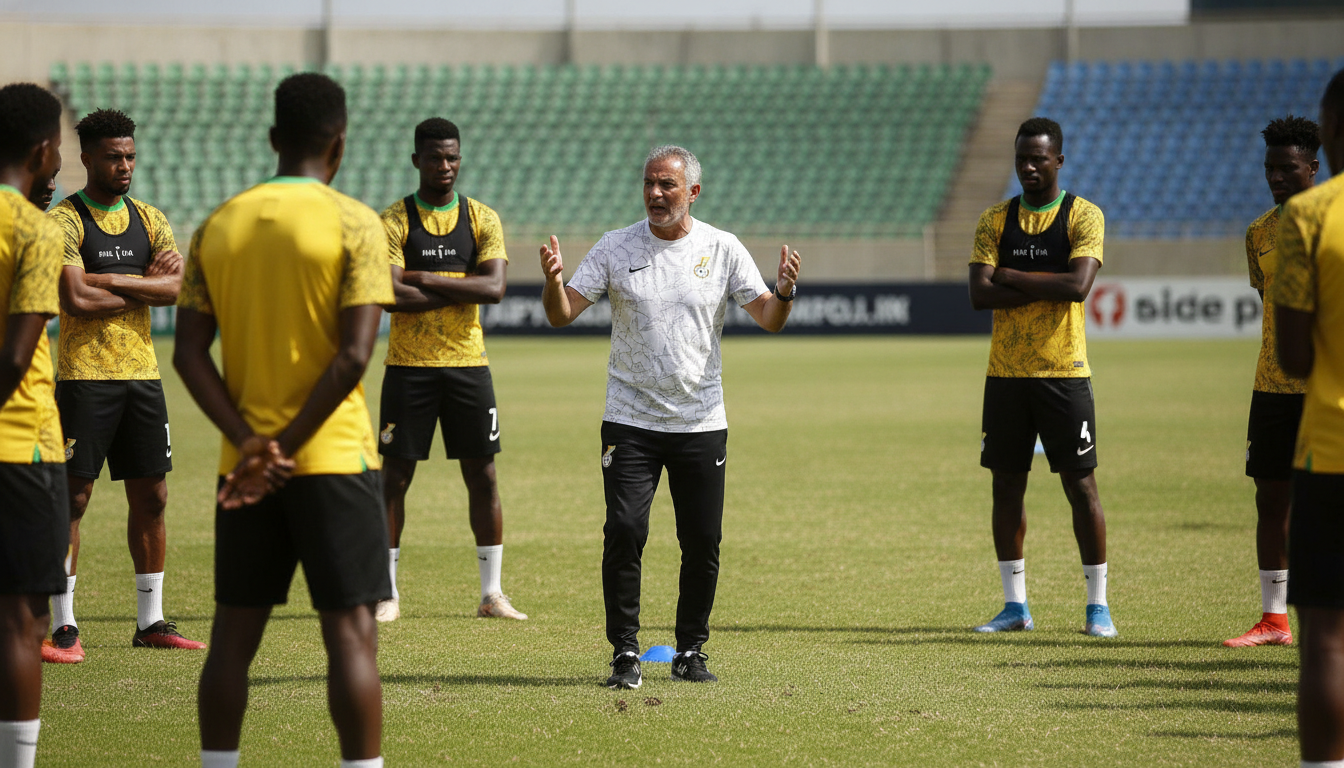
Queiroz Demands Commitment as Ghana World Cup Campaign Opens vs Panama in Toronto
Queiroz demands full commitment as Ghana start their World Cup 2026 campaign against Panama in Toronto, citing preparation, character and one aim: victory.


Ghana coach Carlos Queiroz said commitment on the day will be decisive as the Black Stars prepare to kick off their Ghana World Cup campaign against Panama in Toronto. The Portuguese tactician, making his fifth appearance at football’s global finals, set a measured but confident tone as he underlined preparation, character and focus as the essentials. Queiroz emphasized that while the outcome of any match can be unpredictable, the team’s readiness and mental resolve will define their opening fixture.
Queiroz places match-day commitment at the centre of the plan
Queiroz framed the campaign around a single, recurring question about performance under pressure. He asked whether his players would show the level of commitment required when the stakes are highest. The coach said experience and preparation create conditions for success, but it is the determination on the day that ultimately converts planning into results. His message was concise: tactics matter, but resolve on match day can be the difference between progression and disappointment.
Tactical assessment: Panama’s organization and Ghana’s response
In outlining Ghana’s approach to Panama, Queiroz described the Central Americans as well organized and competitive. He said his staff had identified ways to counter Panama’s strengths while looking to exploit their vulnerabilities. The coach insisted the team would not be mesmerized by stylistic debates, instead focusing on practical solutions to win the game. That approach suggests a pragmatic game plan built around structure, selective risk-taking and exploitation of specific match-up advantages.
Preparation grounded in experience, not certainty
Queiroz has amassed decades at the highest level of international football, and he framed that background as a source of lessons rather than guarantees. He reflected on the difference between decisions that look good in theory and those that prove right in outcome, noting that clarity often emerges only in hindsight. The veteran coach said his career has been about continuous learning from colleagues, players and challenging situations. He presented the World Cup as the latest test where accumulated knowledge must be applied flexibly and decisively.
Simplicity of objectives: winning is the only priority
Despite philosophical reflections on coaching and decision-making, Queiroz returned repeatedly to a straightforward objective: win. He dismissed overcomplication and said the method—whether aerial, wide or through the centre—was secondary to finding a path to three points. That clarity of purpose is intended to focus players on measurable outcomes rather than aesthetic debates. For a team entering a major tournament, a result-oriented mantra can sharpen preparation and reduce unnecessary risk in the opening match.
Toronto reception and the role of Ghanaian supporters
Ghana’s arrival in Toronto was met by a buoyant contingent of supporters whose presence underscored elevated expectations. The coach welcomed the atmosphere and said he hoped the distinctive rhythm of Ghanaian support would carry through the full 90 minutes. Queiroz alluded to the psychological lift a crowd can provide, urging fans to maintain intensity and help accelerate the team’s tempo when necessary. The presence of vocal supporters in the stadium could prove an intangible yet meaningful asset for the Black Stars.
Broader context: Africa’s expanded presence at the 2026 finals
The 2026 tournament features a larger African representation, and Ghana’s role is being watched as part of a wider continental narrative. Ten African teams will compete at the expanded finals, raising hopes that the continent can deliver memorable runs and notable upsets. Ghana, a four-time African champion, arrives with pedigree and expectations that extend beyond a single match. Queiroz acknowledged continental pride while emphasizing that the team must concentrate on its own preparations and immediate objectives.
Despite the focus on tactics and atmosphere, Queiroz also spoke to the human elements of tournament life: decision-making under pressure, learning from setbacks and seizing opportunities. He said he hopes to synthesize the lessons of a long career into practical choices that serve the team in crucial moments. The coach’s combination of pragmatism and respect for football’s unpredictability has been central to his message as the tournament begins.
Ghana’s squad will be judged initially on their opening performance, and a strong result against Panama would set the tone for the group stage. Queiroz has signalled a readiness to adapt his team’s plan as the match requires, indicating flexibility rather than rigid adherence to a single style. That blend of preparation and adaptability will be tested immediately in Toronto, where execution under pressure will determine whether the Black Stars can make an early statement.
The significance of the opener is heightened by the condensed nature of tournament scheduling and the amplified expectations carried by fans and media. A positive start would relieve immediate pressure and provide momentum, while a poor outcome would raise questions about tactical choices and mental resilience. For Ghana, the clarity of purpose articulated by Queiroz—prioritize winning, commit on the day, and let supporters’ energy lift performance—frames the challenge in practical terms.
Ghana’s tactical plan, Queiroz suggested, will balance defensive organization with purposeful transitions to exploit Panama’s weaknesses. Set-piece work, game management and exploiting match-up advantages were all cited as areas of focus during final preparations. The coach’s emphasis on solutions rather than spectacle implies a disciplined team structure aimed at controlling key phases of the match. That discipline will need to be matched by composure from the players when the game becomes stretched.
As kick-off approaches, Queiroz made a clear appeal to his squad and supporters alike to bring focus and intensity. He asked players to apply their training with conviction and urged fans to maintain their trademark noise and rhythm. The coach’s request for the crowd to “beat like a drum” for the full match is a vivid reminder of how the interplay between team and supporters can influence tournament moments. In that sense, the match will be as much a test of communal resolve as it is of tactics.
Queiroz’s broader commentary about decision-making—distinguishing good choices from those that turn out right—points to an acceptance of football’s inherent uncertainty. He conveyed that while preparation reduces risk, it cannot remove the element of chance that defines knockout-level tournaments. The coach framed this uncertainty as motivating rather than paralyzing, insisting that the team’s responsibility is to prepare as meticulously as possible and then perform with conviction when required.
Ghana’s opening fixture against Panama therefore represents both a tactical contest and an early measurement of the team’s tournament temperament. Queiroz has set expectations clearly: prioritize the win, apply solutions devised in training, and rely on both experience and the supporters’ energy to carry the team. As the Black Stars prepare to step onto the field in Toronto, the combination of preparation, decision-making and match-day commitment will determine whether they begin their World Cup campaign with momentum.
The immediate objective is unambiguous: secure a positive result and lay the groundwork for the rounds ahead, using pragmatic tactics, disciplined execution and the backing of a passionate fan base to fuel the challenge.