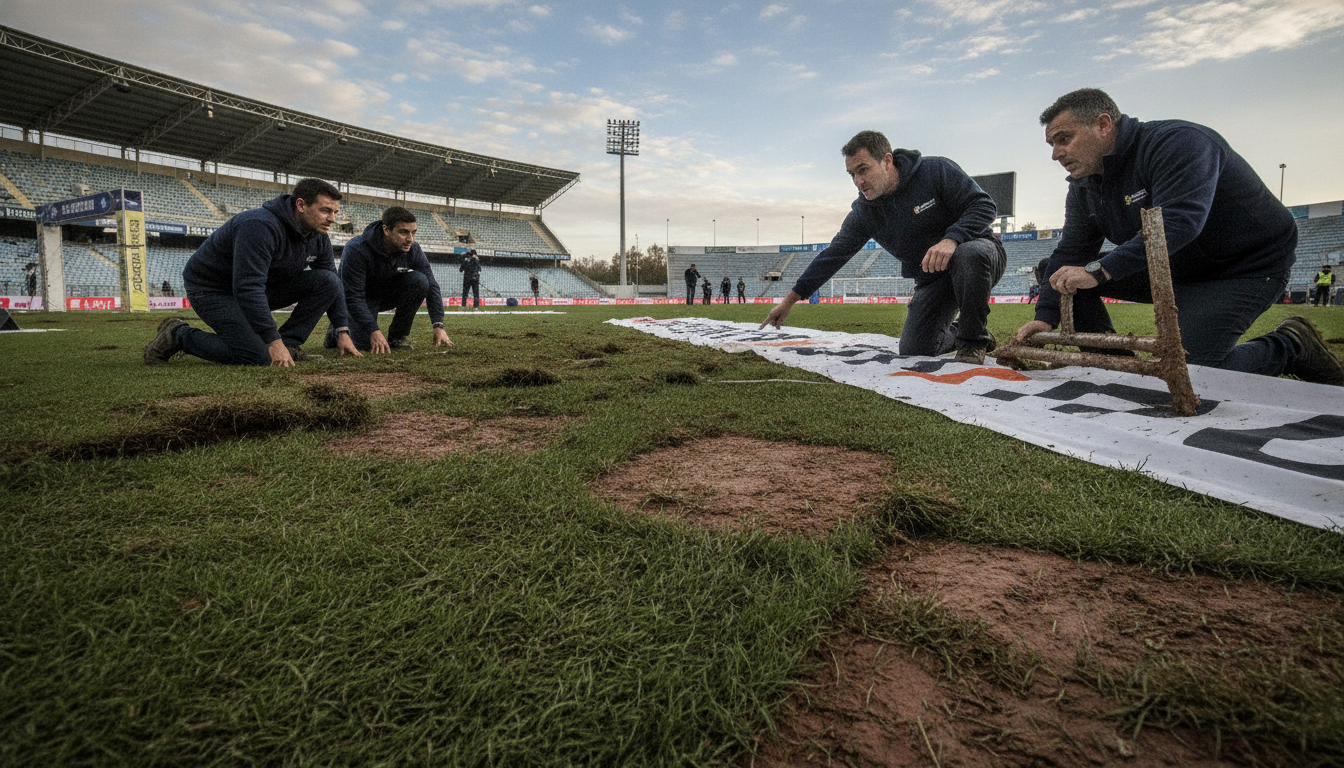
Rayo Vallecano accuses race organizers of breaching agreement after pitch damage at Estadio de Vallecas
Rayo Vallecano says event organizers allowed thousands onto the Estadio de Vallecas pitch during the VII Carrera del Rayismo, breaching a March agreement and prompting potential legal action.


Rayo Vallecano issued a formal rebuttal to online accusations and blamed race organizers for allowing runners onto the playing surface at Estadio de Vallecas during the VII Carrera del Rayismo.
The club says it had repeatedly warned regional authorities about the risks to the pitch and insists the breach caused material damage.
Rayo Vallecano has stated it reserves the right to pursue legal claims to recover economic and patrimonial losses tied to the incident.
Rayo Vallecano issues formal rebuttal
The club published an extensive statement in response to accusations circulated on the X account @carrerarayismo.
In that release Rayo Vallecano defended its actions surrounding the event and placed responsibility squarely on the organization that staged the race.
The communication framed the club as the principal victim of the episode and set out the factual timeline supporting its position.
Dispute over stadium access and commitments
Rayo Vallecano says the Community of Madrid formally requested use of the stadium on March 9 for the event scheduled on June 13 and 14.
The club claims it raised concerns at that time about allowing the race to finish inside the stadium, citing the need to protect the playing surface after a season of pitch problems.
According to the club, a June 2 communication from the Community of Madrid guaranteed that runners would enter via Gate 16 and conclude their route behind one goal, expressly avoiding the turf.
Alleged breach and mass access to the pitch
Despite the assurances Rayo Vallecano recounts, the club says the organizers breached the agreement and permitted thousands of participants to enter the playing area.
The club’s statement describes the access as “massive,” attributing resultant wear and damage directly to that breach.
Rayo Vallecano insists the deviation from the agreed route is the proximate cause of the harm it now faces to its facility.
Club warnings and risk assessment before the race
Rayo Vallecano says it alerted the Community of Madrid in advance to the potential consequences of staging the race finish inside the stadium.
The club’s warnings, it says, revolved around protecting the turf and preventing reputational and economic damage tied to deterioration of the playing surface.
Those pre-event communications form a central plank in the club’s argument that it sought to mitigate risk but was overruled by event organizers and regional authorities.
Damage described and concerns over club symbols
The club’s statement links the unauthorized entry to measurable damage to the pitch and also raises concerns about the improper use of Rayo Vallecano’s corporate symbols.
Rayo Vallecano frames both the physical harm and the alleged misuse of branding as part of the material prejudice it suffered from the event.
The club says these elements amplify the economic and patrimonial impact it believes is attributable to the organizers’ conduct.
Legal remedies and next steps signalled by the club
Rayo Vallecano has announced it “reserves the right to undertake any legal action” it deems appropriate to defend its interests.
The club indicated it will seek compensation for the economic and patrimonial losses it attributes to the breach and to the damage inflicted on the stadium.
That declaration signals a likely pathway of negotiations or litigation with event organizers and possibly with public authorities involved in permitting and oversight.
Public account allegations and club rebuttal
The dispute entered public view after posts from the X account @carrerarayismo alleged mismanagement by the club during the VII Carrera del Rayismo.
Rayo Vallecano’s detailed rebuttal sought to shift public scrutiny toward the race organization and toward the Community of Madrid’s role in authorizing stadium use.
Both the online accusations and the club’s response have now framed the story as a conflict over responsibility, arrangements and compliance with agreed safeguards.
Potential implications for stadium events and local partnerships
The incident highlights the operational tensions that can arise when sporting clubs host third-party events at match venues.
Rayo Vallecano’s deep concerns about protecting the playing surface underline how fragile relationships between clubs, regional authorities and civil-sporting organizers can be when logistics are not strictly adhered to.
Future permissions for non-sport events at professional stadia may face tighter conditions or more detailed contractual protections in response to this case.
Rayo Vallecano’s published timeline and assertions have placed the spotlight on the Community of Madrid’s role in event oversight, after the regional authority formally requested use of the facility on March 9.
The club says the June 2 assurances that runners would be routed behind a goal and not onto the pitch were decisive in its assessment of acceptable conditions for the race.
If those assurances were not honored, the club argues, liability for the resulting damage should rest with the parties who controlled access on the day.
Any forthcoming legal action will likely focus on documentary evidence of the March and June exchanges, the content of the June 2 commitment, and on demonstrable calculations of the pitch damage and associated costs.
Rayo Vallecano’s statement positions the club as prepared to quantify economic and patrimonial losses as part of any claim.
Recovery of repair costs, lost commercial opportunities and protection of branding are all potential components of a legal remedy the club may pursue.
The VII Carrera del Rayismo and the subsequent controversy underline the reputational stakes for community events held in professional arenas.
Organizers and public authorities typically rely on detailed operational plans, stewarding and enforcement of agreed routes to prevent precisely the type of outcome Rayo Vallecano now describes.
This dispute may prompt local authorities and event promoters to revisit protocols for ensuring compliance with stadium protection measures.
As the situation develops, Rayo Vallecano’s next steps — whether formal legal filings, negotiated settlements, or public mediation — will shape both immediate repair plans for Estadio de Vallecas and the longer-term terms under which outside events use the club’s facilities.
For now the club’s statement stands as a clear assertion of harm and intent to seek redress, while the specifics of responsibility remain contested between the club, the event’s organizers and regional authorities.
The coming days are likely to see heightened scrutiny of the documentation and communications the club cited in its rebuttal.
Rayo Vallecano has framed the episode as a preventable breach that caused concrete damage to its stadium and assets, and it has signalled a readiness to pursue compensation through all available channels.
The Community of Madrid’s role in requesting stadium use and in communicating access plans is a central element of the dispute that will require clarification.
Whether the matter resolves through negotiation or proceeds to the courts, the incident is likely to drive changes in how future sporting and community events are contracted and supervised at professional venues.