Hardrock FC Suspends CEO Kudzanai Hove After Arrest Over Violence at Chahwanda Stadium
Hardrock FC suspends CEO Kudzanai Hove after his arrest over violence that forced abandonment of the Dynamos match at Chahwanda Stadium; club to cooperate.


Hardrock FC suspends CEO Kudzanai Hove
Hardrock FC announced the indefinite suspension of Chief Executive Officer Kudzanai Hove following his arrest linked to the unrest that ended the club’s fixture against Dynamos FC prematurely. The club said the move is intended to allow law enforcement and internal investigators to carry out inquiries without interference. Hardrock’s statement emphasized that the suspension will remain in place until the outcome of the ongoing probes is known. Club officials described the decision as necessary to protect the integrity of the investigation and the reputation of the team.
Hardrock FC said it condemns all forms of violence and vandalism and that such behaviour is contrary to the values the club seeks to uphold. The statement underlined a commitment to cooperate fully with the Zimbabwe Republic Police and other relevant stakeholders. Club leadership said it will ensure that any individuals found to have contributed to the abandonment of the fixture are identified and held accountable. The suspension of the CEO marks a rare and significant step for the club as it navigates the fallout from the incident.
The CEO’s removal from active duties removes him from day-to-day club operations while investigations proceed, and places responsibility for communication and decision-making in the hands of interim management. Hardrock did not specify which executive would assume Hove’s duties during the suspension. The indefinite nature of the action leaves open both reinstatement and formal disciplinary processes depending on the findings. Supporters and sponsors will be watching closely as the club balances transparency with due process.
Zimbabwe Republic Police confirm arrest and allegations
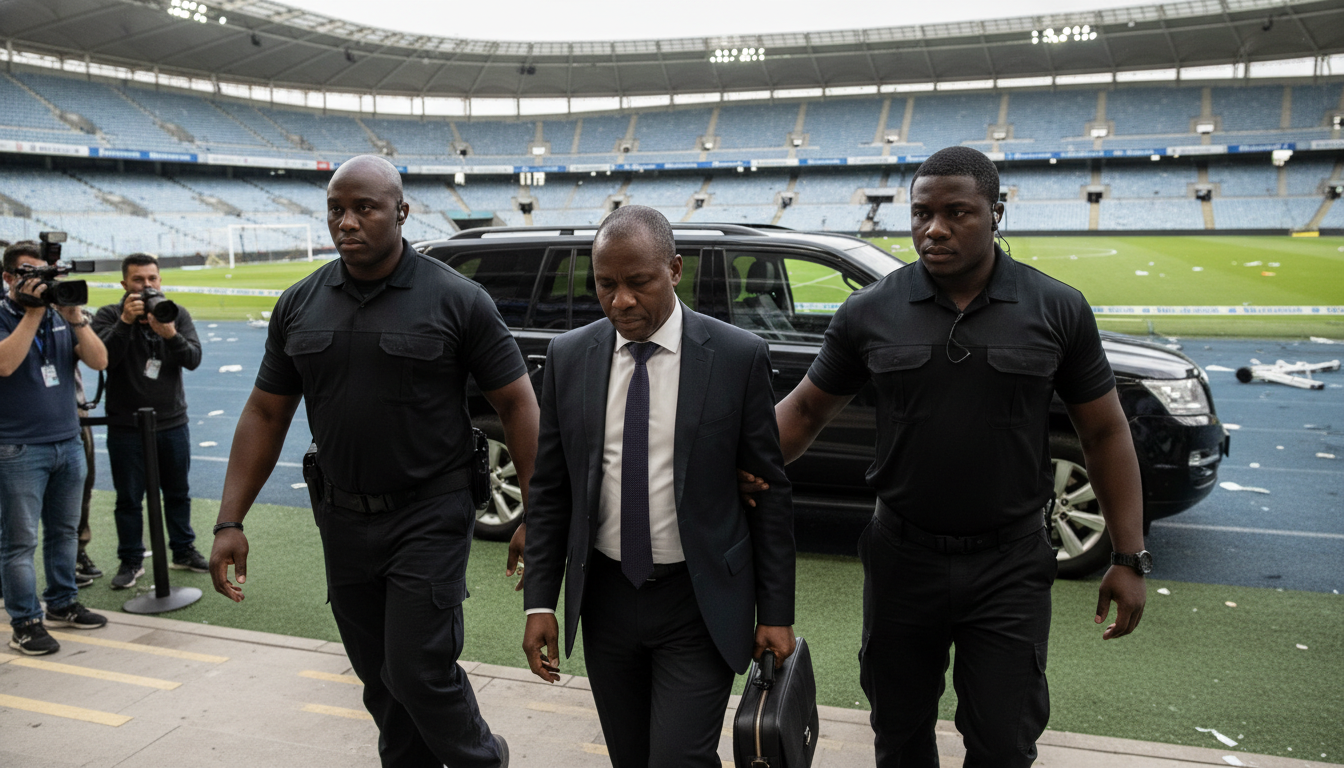
Zimbabwe Republic Police officials confirmed the arrest and said charges relate to public misconduct after footage reportedly emerged showing the CEO allegedly assaulting a spectator. Police statements framed the arrest as part of a broader inquiry into the disturbances that occurred at Chahwanda Stadium. Law enforcement emphasized that the matter remains under active investigation and that arrests and charges are subject to judicial processes. Authorities cautioned against drawing conclusions before formal charges are tested in court.
The confirmation from police followed the circulation of video material capturing parts of the chaotic scenes inside the stadium. Investigators are seeking to verify the provenance and context of those clips while also pursuing witness statements and official match reports. Police have not released detailed timelines for potential court appearances or further detentions, citing the need to preserve the integrity of the probe. Legal analysts say that public misconduct allegations can lead to criminal penalties if proven, and that any additional charges could complicate parallel disciplinary action by football authorities.
Officials have signalled that the probe will consider both criminal behaviour and breaches of stadium safety regulations, with investigators looking at how events escalated. The involvement of a senior club executive in alleged physical confrontations raises questions about leadership accountability and the responsibilities of match-day officials. Police and prosecutors face the task of assembling evidence that connects individual actions to specific offences beyond the general disorder that occurred. The outcome of those inquiries will shape potential criminal proceedings and inform any sanctions from the sport’s governing bodies.
Pitch invasion, damage and injuries at Chahwanda Stadium
The match at Chahwanda Stadium was abandoned before full time after supporters entered the playing area and caused damage to stadium property. Reports and eyewitness accounts describe scenes of objects thrown onto the pitch, clashes between fans and stewards, and widespread disruption to play. Match officials determined the environment had become unsafe for players, officials and spectators and decided to call off the fixture. Several fans were reported injured in the disturbances and required assistance from emergency responders.
Players and coaching staff were escorted from the field as security personnel attempted to restore order, according to multiple accounts. Television and phone footage circulated on social media showed pockets of violence and the destruction of perimeter fencing and seating. The abandoned fixture leaves the league with decisions to take regarding the final result, potential replay, or disciplinary measures against Hardrock and any other parties implicated. Stadium operators and local authorities will also review failures in stewarding and contingency planning that allowed the situation to escalate.
Medical teams attending the scene treated injured supporters and provided transport for those requiring hospital care, though full casualty figures have not been publicly confirmed. The incident has reignited debate about crowd control measures and the adequacy of policing at high-tension matches in the national league. Club officials acknowledged the scale of the damage and said they would assess the stadium infrastructure before future matches are held there. The disruption dealt a reputational blow to both clubs involved and raised immediate concerns about spectator safety.
Club vows cooperation and internal investigation
Hardrock FC said it will work closely with the Zimbabwe Republic Police and other stakeholders to ensure those responsible for the abandonment are brought to account. The club’s statement stressed a zero-tolerance stance toward violence and vandalism, and promised full assistance to official inquiries. Internally, the club has opened procedures to examine conduct by staff and match-day personnel. Management emphasised that disciplinary measures will follow where investigations uncover breaches of club rules or codes of conduct.
The club also committed to transparency in its handling of the matter, indicating it will update supporters and partners as inquiries progress. Hardrock stressed that protecting fans and players is a priority and that lessons will be learned from the failures that occurred. The club stopped short of predicting outcomes for individual staff members beyond the CEO’s suspension, noting that due process must run its course. For supporters and sponsors, the pledge of cooperation is intended to reassure stakeholders that the club seeks to remedy the situation rather than conceal it.
Legal counsel advising the club will likely coordinate with police and league officials to align timelines for internal hearings and any disciplinary tribunals. That coordination is essential to avoid prejudicing criminal proceedings while also fulfilling the club’s regulatory obligations. Hardrock’s approach mirrors standard practice in cases where alleged criminal conduct overlaps with workplace disciplinary issues. The result will determine not only employment outcomes but also any sporting sanctions that could affect league standings and fixtures.
Potential sporting and legal consequences
The incident exposes Hardrock FC to a range of potential sporting penalties, including fines, stadium bans, match forfeiture or points deductions depending on league regulations. Football authorities typically investigate abandoned matches to determine responsibility and appropriate remedies for competition integrity. If the league finds systemic failures in crowd control or governance, penalties could extend beyond club fines to include restrictions on hosting matches at the affected venue. Any sanctioning decisions will take into account the club’s cooperation and remedial measures.
On the legal front, the CEO’s arrest on public misconduct allegations could result in criminal charges that proceed to trial if prosecutors believe there is sufficient evidence. Convictions for offences tied to public disorder or assault carry criminal penalties and could also trigger employment consequences and disqualification from holding official positions in football. Separate civil claims from injured supporters are also a possibility, which could lead to compensation claims against organisers or stadium operators. The combined sporting and legal risks make this a multifaceted crisis for Hardrock FC and for those implicated in the events.
Sponsors and commercial partners will monitor developments closely as they assess reputational risk and contractual obligations. Companies that invest in clubs often have clauses addressing behaviour that brings the club or brand into disrepute. Hardrock’s management face the dual challenge of stabilising operations while managing external relationships that may be strained by allegations of violence and misconduct. The speed and transparency of the club’s response will influence how quickly those relationships can be repaired.
Calls for accountability and safety reforms across the league
The violence at Chahwanda Stadium has prompted calls from observers and fan groups for stronger safety protocols and clearer lines of responsibility at matches. Analysts say the episode highlights gaps in steward deployment, crowd segregation, and rapid-response procedures for volatile fixtures. Football stakeholders are likely to push for a review of security standards, including mandatory CCTV coverage, better training for match-day staff and clearer escalation protocols for police and stewards. Implementing those reforms will require co-operation between clubs, league administrators and local law enforcement.
Advocates for fan safety also urge transparent disciplinary processes and consistent enforcement of sanctions to deter future incidents. Measures such as tougher bans for individuals found to instigate violence and stricter liability rules for clubs could change incentives on and off the pitch. Community outreach and fan education programmes were suggested as parallel strategies to reduce tensions and promote responsible behaviour. Any long-term improvement will hinge on sustained commitment from the sport’s governing institutions as well as from club leadership.
Leagues elsewhere have shown that a combination of targeted enforcement and preventive infrastructure investments can reduce the frequency of match-day violence. Zimbabwean football authorities may look to regional examples to adapt proven measures to local conditions. The urgency of reform will intensify if the club or its executives face formal sanctions that affect competition integrity. For now, stakeholders are calling for swift action to restore public confidence and to ensure future matches are safe for all participants.
Investigations remain under way and the situation continues to develop, with Hardrock FC’s indefinite suspension of its CEO signalling the club’s attempt to address the crisis while authorities complete their inquiries. The coming weeks will determine whether criminal charges progress, what disciplinary penalties football authorities will impose, and how the club implements corrective measures. Supporters, players and partners await clearer timelines and outcomes as the matter moves through legal and regulatory channels. The incident has left an indelible mark on the club and raised urgent questions about crowd safety and leadership accountability in domestic football.