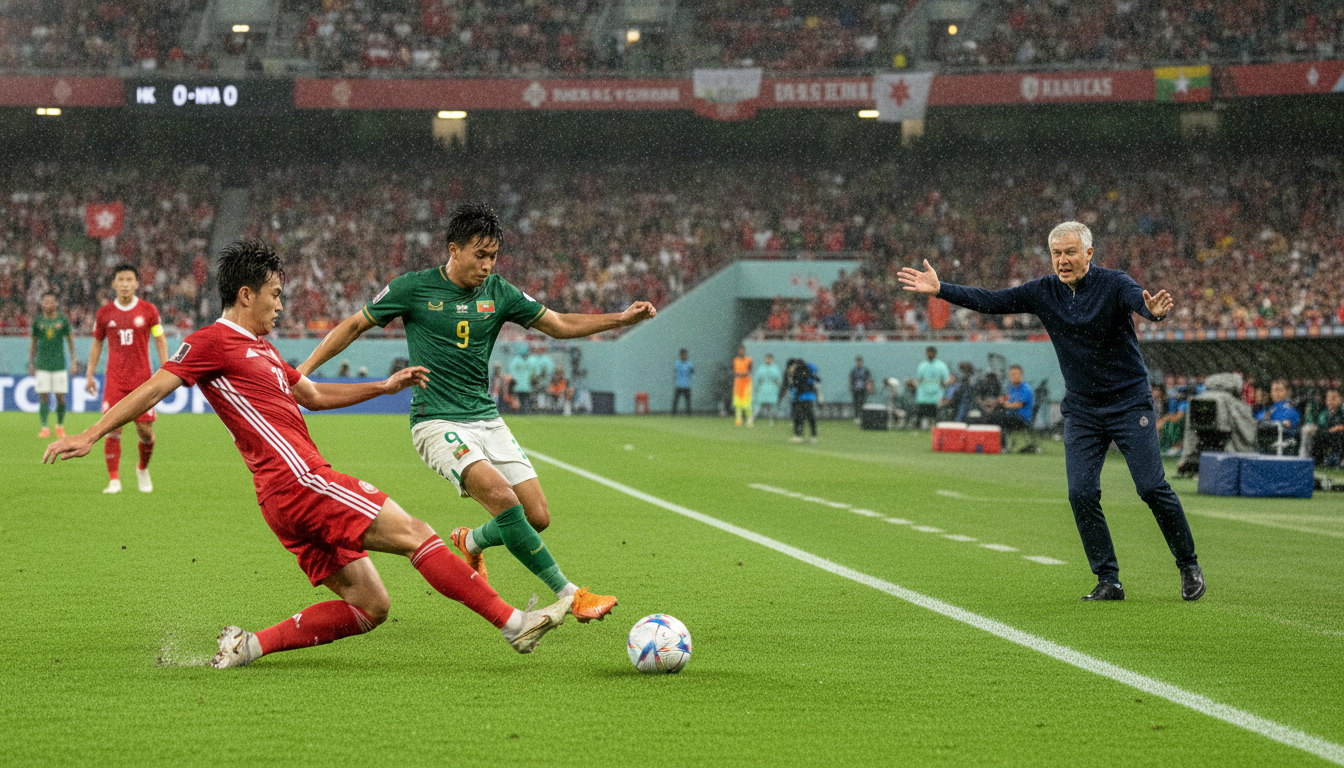
Hong Kong Asean Cup draw pairs city with Myanmar and Brunei as Andersen reunion set
Hong Kong drawn with Myanmar and Brunei in the Challenge Division of the inaugural FIFA Asean Cup (Sept 24–Oct 3). Andersen reunion looms for the Myanmar tie.


Hong Kong’s national team will meet former coach Jorn Andersen’s Myanmar side and Brunei after the Asean Cup draw placed the city in Group A of the tournament’s Challenge Division. The Hong Kong Asean Cup draw sets up a highly charged fixture list in a competition staged across an elongated FIFA window from September 24 to October 3. The group winners will move into a one-off final against the top side from Group B, while runners-up will contest a third-place playoff.
Hong Kong drawn with Myanmar and Brunei in Challenge Division
The draw confirmed Hong Kong’s immediate path to qualification for the Challenge Division final hinges on results against Myanmar and Brunei. Only the Group A winner advances to play the Group B champion in a single-match final, elevating the importance of every group game. With each match carrying heavy stakes, the Hong Kong Asean Cup draw has sharpened attention on preparation, selection and tactical planning for the city’s coaching staff.
The immediate narrative will centre on the anticipated reunion with Jorn Andersen, who guided Hong Kong through its most successful recent qualification campaign. That storyline adds both sporting and emotional weight to the fixtures and elevates expectations among supporters and federation officials alike. Tactical matchups and psychological preparations will now form a large part of Hong Kong’s pre-tournament work.
Fixture dates, format and promotion stakes
The inaugural FIFA Asean Cup’s Challenge Division runs from September 24 to October 3, a window extended by FIFA to accommodate more national-team fixtures. The competition splits into two tiers, with Hong Kong competing as an invited team in the second-tier Challenge Division. The format is straightforward: Group winners advance to the final, while second-place teams play off for third, making the group phase essentially a knockout in three-match form.
For Hong Kong, this compressed calendar increases the premium on squad rotation and match-day decisions. Teams will have limited recovery time between games, so depth and conditioning will be as important as tactics. Federation planners will need to balance domestic league commitments and player availability against the objective of topping the group.
Roberto Losada’s early tenure and recent results
Roberto Losada, who took permanent charge of Hong Kong earlier in June 2026, has already experienced contrasting results in his opening fixtures. Losada began his full-time reign with a 2-0 victory over Mongolia but suffered a chastening 2-0 loss to Cambodia just four days later. Those early outcomes underline questions over consistency that Hong Kong must resolve before the Asean Cup begins.
Match selection, defensive cohesion and attacking variety are likely to be focal points for Losada in the run-up to September. The managerial staff will also be scrutinising how quickly new tactical ideas can be embedded and whether the current squad can sustain a demanding schedule. Performance against Myanmar and Brunei will function as a practical litmus test for the coach’s short-term project.
Jorn Andersen’s appointment with Myanmar and potential impact
Jorn Andersen, praised for leading Hong Kong to the 2023 Asian Cup and for the side’s run at the 2022 Asian Games, has been installed as Myanmar’s head coach in June 2026. His return to the region means Hong Kong will face a coach intimately familiar with the city’s strengths and vulnerabilities. Andersen’s knowledge of Hong Kong players, structures and strategic tendencies could give Myanmar an analytical edge heading into their group meeting.
Andersen’s track record in qualification campaigns and major regional tournaments suggests he will prepare Myanmar with clarity of role and pragmatism. Opposing coaches often study past lineups and tactical choices made under a coach’s previous tenure; that familiarity may lead Losada to adjust his approach. Both teams can be expected to study recent formations and personnel decisions closely ahead of the encounter.
Tournament field, invited teams and replacement of China by Pakistan
The Asean Cup’s structure includes a Premier Division hosted in Indonesia, featuring eight teams, and the Challenge Division where Hong Kong will compete as an invited side. Notably, Pakistan — currently ranked outside the top 150 globally — has been confirmed as a replacement guest in the Premier Division after China withdrew to pursue alternative warm-up matches ahead of the AFC Asian Cup. The inclusion of emergent and guest nations reflects the organisers’ intent to broaden competitive exposure across the region.
For national associations, participating in the Asean Cup presents both competitive and logistical choices about player releases, travel and match prioritisation. Hong Kong’s role as an invited Challenge Division team offers valuable match practice against regional opponents with differing tactical profiles. The tournament also provides a short, intense competitive environment to test mid-term development plans against teams that prioritise different styles and personnel.
Tactical implications and squad considerations for Hong Kong
Preparation for the Asean Cup will force Hong Kong’s coaching staff to make decisive tactical choices regarding formation, pressing triggers and set-piece routines. Matches against Myanmar and Brunei will demand adaptable game plans, as both opponents bring contrasting styles that could expose defensive gaps or restrict build-up play. Losada must assess whether to prioritise ball retention through midfield control or to exploit quick transitions using the team’s wider players.
Squad depth is another critical concern given the compressed schedule. Hong Kong will need reliable cover in full-back and central midfield positions, where fatigue and tactical mismatches can quickly alter a match’s course. The federation’s medical and fitness teams will be tested in keeping key personnel available and in peak condition throughout the tournament window.
What a Group A title would mean for Hong Kong football
Claiming top spot in Group A would deliver immediate reward: a place in the Challenge Division final and a chance to lift the competition’s second-tier trophy. Beyond silverware, winning the group would provide practical momentum and a confidence boost ahead of future qualifiers and regional assignments. For Losada, a successful Asean Cup result would strengthen his position and validate early tactical choices made since his appointment.
A strong showing would also signal progress to supporters and stakeholders, reinforcing the federation’s international scheduling strategy. Conversely, failing to advance would create pressure for course correction and could prompt debate over selection policy and the integration of domestic-based players. The stakes, therefore, extend from immediate tournament outcomes to broader questions about squad building and long-term development.
Hong Kong’s immediate focus will be on building a compact, resilient unit capable of handling two contrasting opponents in Group A and the added narrative of facing a coach who knows the squad well. The Asean Cup draw has created a concentrated set of challenges and opportunities across September and early October. How Losada and his players respond in the weeks ahead will determine whether Hong Kong turns this draw into a platform for progress or another short-term test to learn from.