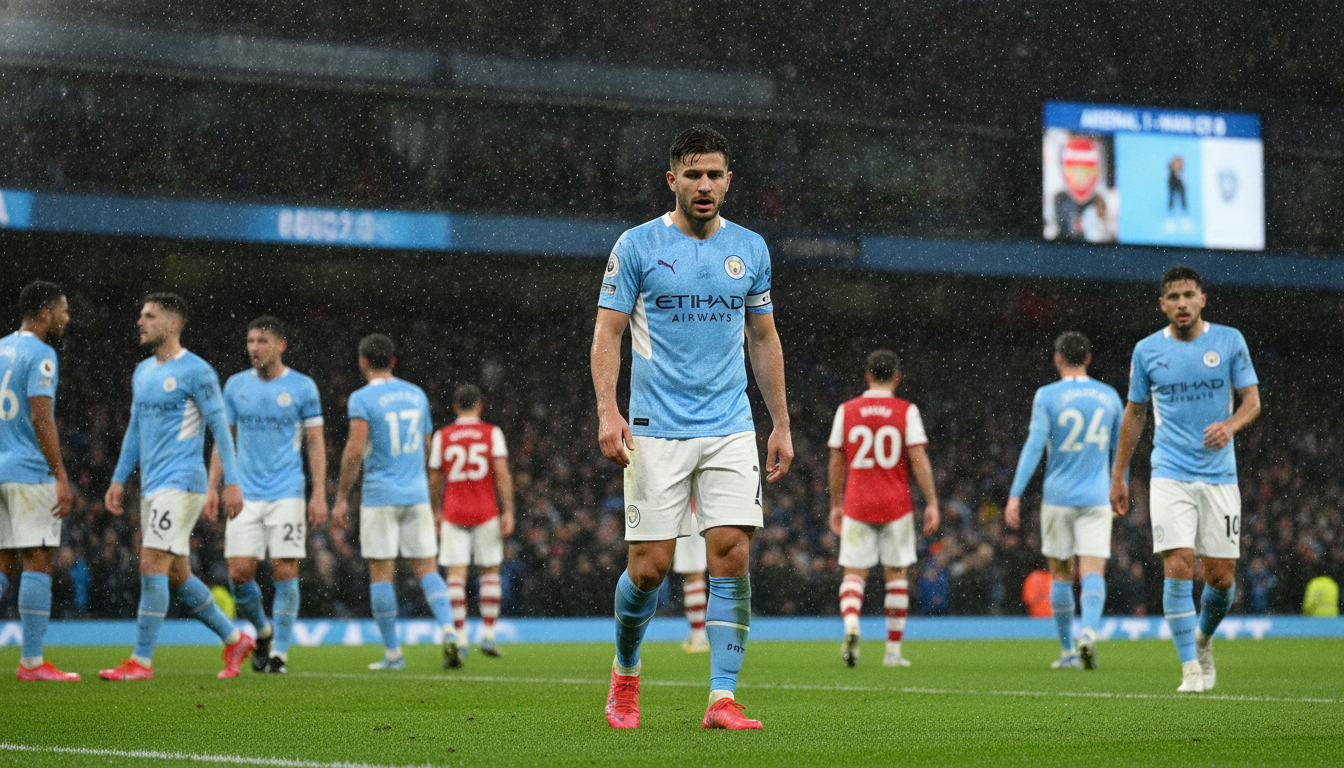
Mateo Kovacic says Manchester City under pressure to reclaim Premier League title
Mateo Kovacic says Manchester City face pressure to reclaim the Premier League amid heavy summer spending and uncertainty around a post‑Guardiola era.


Mateo Kovacic acknowledged on Wednesday that Manchester City enter the new season under heightened scrutiny as the club looks to regain the Premier League title they last held two years ago. The Croatian midfielder stressed the expectation that comes with representing a top club and pointed to rivals’ summer activity, including heavy investment by Chelsea and ongoing recruitment at Arsenal. Kovacic also conceded he could not guarantee his own availability for what has been described as the first campaign of the post‑Pep Guardiola era. His comments underline a wider sense of flux at the summit of English football ahead of 2026–27.
Kovacic warns City face renewed pressure to reclaim title
Mateo Kovacic framed the challenge bluntly: the pressure to win is universal at elite clubs, but particularly acute at Manchester City. He noted that City have not taken the Premier League in the past two seasons, a run that has invited scrutiny from both supporters and rivals. Kovacic’s assessment reflects the club’s recent slide from four consecutive championships to being chased by Liverpool and Arsenal. The midfielder’s public acknowledgement of that expectation sets a clear benchmark for City as they prepare for the upcoming campaign.
Mateo Kovacic emphasized the day‑to‑day reality inside the squad, saying that success breeds expectation and that the club’s stature demands continuous improvement. He described the current transfer window activity around the league as another factor intensifying the race for the title. Those comments underline how the psychological burden of defending or regaining a crown becomes a tactical consideration before a ball is kicked. For City, managing that pressure will be as important as any tactical adjustment.
Uncertainty over Guardiola succession clouds opening campaign
Kovacic referenced the notion of a post‑Pep Guardiola era and admitted he could not promise he would be part of City’s squad when that period begins. The remark drew attention to a looming managerial transition and the questions it raises about continuity at the Etihad. While Guardiola’s tenure has defined City’s identity, the prospect of change introduces new variables into the club’s planning. That uncertainty complicates both the club’s short‑term objectives and the individual futures of players.
Club hierarchies elsewhere often view managerial transitions as a moment of opportunity, and rivals may sense that vulnerability. For players like Kovacic, the arrival or departure of a manager can alter roles, minutes and long‑term prospects. City’s sporting directors and recruitment team will be acutely aware that the next coach will inherit expectations for almost immediate success. How the club communicates its succession plan will therefore influence the stability of a squad already under competitive strain.
Chelsea and Arsenal ramp up spending to close the gap
Kovacic singled out Chelsea as a club that has spent heavily in the summer transfer window, and he acknowledged that their activity raises the stakes for City. Chelsea’s recruitment drive follows a multi‑year ambition to reassert itself among the title contenders. Arsenal’s manager, Mikel Arteta, has also publicly described his club as “very active” in efforts to evolve and improve, and that type of reinforcement across the top six reshapes the competitive landscape. The net effect is a transfer market that has tightened margins and increased the need for immediate returns on investment.
Players moving between clubs or emerging through academies contribute to a more unpredictable title race, with squad depth becoming a decisive factor across a long season. Kovacic’s observation that “big clubs are about winning” reflects the zero‑sum view many elite teams now adopt. With several contenders bolstering their rosters, City will have to balance short‑term expectations with longer strategic planning. That balancing act will influence training focus, rotation policies and in‑season recruitment.
City’s recent title run and the changing pecking order
Manchester City’s four‑title streak established a period of dominance that reshaped Premier League benchmarks and recruitment strategies elsewhere. The subsequent titles claimed by Liverpool and Arsenal in the following two seasons have reopened debate about competitive parity in England. That shift illustrates how quickly leadership in modern football can oscillate when rivals respond with targeted spending and tactical evolution. City’s response will therefore be scrutinized not just in terms of results but also in the way the squad adapts to new styles of play from opponents.
Kovacic’s comments implicitly acknowledge this new pecking order and the need for recalibration. If City are to reclaim the trophy, they must contend with teams that have learned from past defeats and invested accordingly. Statistical trends, squad rotation and injury management are likely to become focal points for analysts and managers alike. For supporters, the narrative is straightforward: the era of automatic domination has given way to heightened competition.
How Kovacic fits into Manchester City’s midfield plans
Since joining Manchester City in 2023 after five years at Chelsea, Mateo Kovacic has been viewed as an experienced option capable of linking phases and controlling tempo. His familiarity with the demands of top‑level English football and his adaptability across midfield roles make him a valuable piece for any tactical setup. Yet Kovacic’s own uncertainty about his future highlights the delicate nature of squad planning ahead of managerial and competitive transitions. The midfielder’s role will depend on the incoming manager’s philosophy and on the club’s wider recruitment choices.
Kovacic remains one of several experienced midfield options at City, pairing with younger talents and established starters who together form a rotation designed to navigate a congested fixture list. His ability to retain possession under pressure and to read opposition transitions is likely to remain an asset. However, minutes and responsibilities can shift quickly when a new coach arrives or when rivals change their approach. Kovacic’s candidness about not guaranteeing his long‑term presence reflects a professional realism about those possibilities.
Transfer activity reshapes the 2026–27 title race
The pattern of summer spending across the Premier League suggests a season in which margins may be narrower and surprises more likely. Clubs that have strengthened smartly can disrupt established hierarchies, while those that invest without coherent integration risk underperforming. Kovacic’s remarks about clubs being “very active” underscore a wider truth: recruitment is no longer a supporting act but the principal mechanism for altering competitive dynamics. The distribution of new signings across key positions will be a major talking point as the campaign commences.
Analysts will monitor how quickly new arrivals adapt to managerial systems and how injuries and rotation influence outcomes across a long calendar. For Manchester City, the pressure described by Kovacic will materialize in specific demands: immediate cohesion, tactical clarity and the mental resilience to respond to setbacks. With rivals closing the gap through expenditure and strategic signings, the Premier League title race looks set to be contested on multiple fronts. The coming months will reveal whether City’s collective experience and existing structure can withstand the renewed challenge.
Looking ahead, Kovacic’s comments offer a snapshot of a club at a crossroads: expected to challenge at the top, yet navigating managerial uncertainty and escalating competition. As the season unfolds, City’s ability to manage internal transitions while responding to aggressive moves by Chelsea, Arsenal and others will determine whether they can reclaim the Premier League throne.