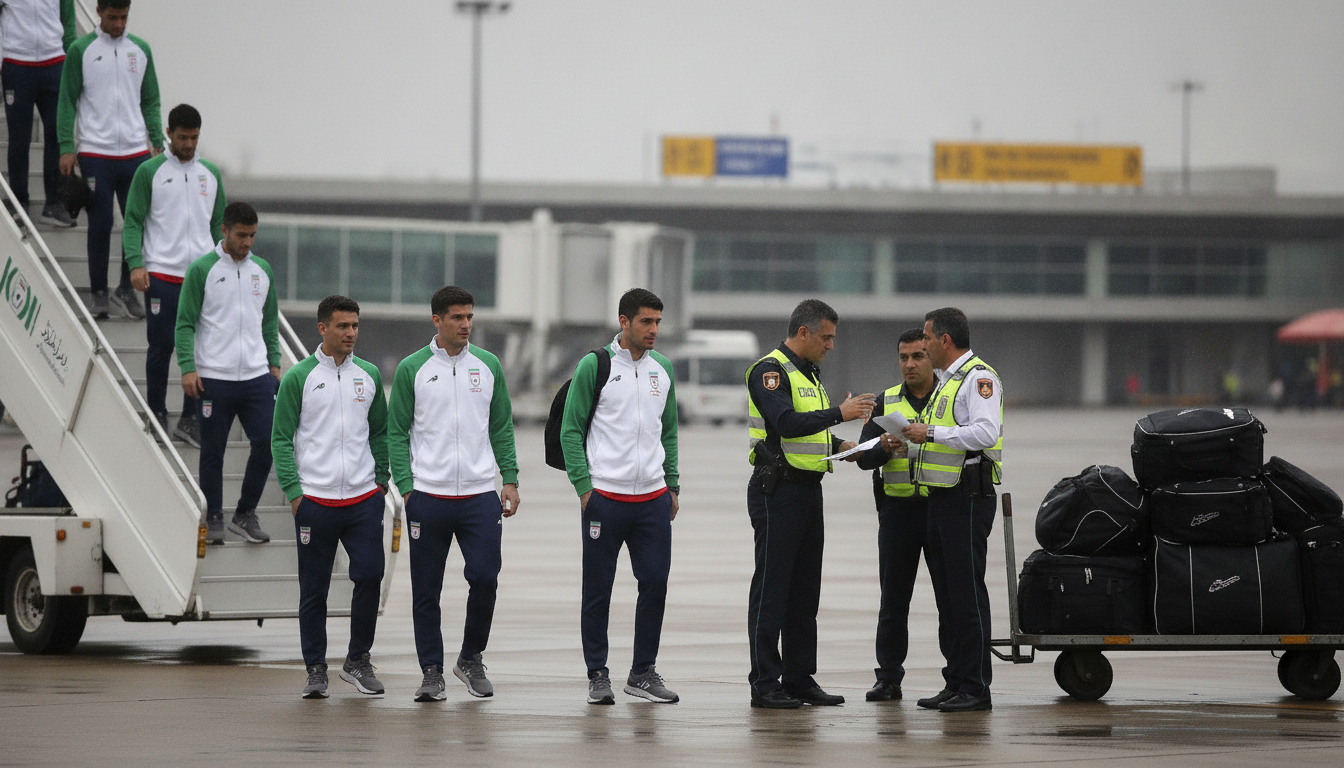
Iran World Cup squad arrives in Tijuana amid U.S. visa dispute for support staff
Iran World Cup squad lands in Tijuana amid U.S. visa refusals for support staff, deepening diplomatic row days before the tournament’s June 11, 2026 kickoff.


Opening arrival and diplomatic backdrop
The Iran World Cup squad arrived in Tijuana early Sunday after departing their training base in Turkey, officials said, touching down under the cloud of a diplomatic dispute with the United States. The arrival follows the U.S. refusal to issue visas to several members of Iran’s support staff, a move that ignited a public row just days before the tournament begins on Thursday, June 11, 2026. Iranian television and team intermediaries confirmed the relocation and arrival, while organizers continued to manage logistics for the tournament’s opening matches.
The squad moved its operational base from Tucson, Arizona to Tijuana in late May, a change that became permanent ahead of the group stage. By basing in Mexico, Iran’s team avoids some immediate visa limitations while remaining close to the venues where it is scheduled to play its three group matches on U.S. soil. Team officials said the group would use facilities in Tijuana for training and preparation throughout the group phase.
Visa refusals and the ensuing diplomatic clash
The dispute centered on U.S. authorities denying visas to unspecified members of Iran’s technical and support delegation, according to statements from Iranian state media and those close to the team. That denial prompted sharp comments from Tehran and raised questions about how the absence of key support personnel might affect the squad’s preparations. Iranian officials described the decision as politically motivated and inappropriate given the sporting context.
U.S. officials cited administrative and diplomatic considerations in brief public remarks, while tournament organizers emphasized their commitment to ensuring teams can compete. The refusal occurred very close to the tournament kickoff, increasing pressure on organizers and the affected federation to find alternative arrangements. The incident highlights how international relations can spill into the operational details of global sporting events.
Tijuana base and logistical adjustments
Tijuana, a Mexican border city in the northwest, will serve as Iran’s operational hub during the initial phase of the World Cup, with the team flying across the border to play group fixtures on American soil. The move from Tucson to Tijuana was completed in late May after the team trained in Turkey, officials confirmed. Organizers and the Iranian delegation arranged accommodations, training grounds, and transport links that aim to minimize disruption to the players’ routine.
Travel patterns for matchdays will involve short international transfers across the U.S.-Mexico boundary, increasing coordination needs between local authorities and tournament planners. The team’s support staff present in Mexico will handle day-to-day logistics, but the absence of additional personnel who were denied U.S. visas could limit technical resources available to the squad. Coaches and federations are adapting schedules to maintain training continuity and minimize fatigue from cross-border transfers.
FIFA, local organizers and political sensitivity
FIFA and tournament organizers were approached for comment on the visa dispute and the team’s relocation, and official spokespeople indicated they were monitoring the situation closely. Public statements emphasized the organization’s longstanding position that sport should be insulated from political conflicts, while practical arrangements have been focused on ensuring all scheduled games proceed as planned. Local Mexican authorities have also coordinated security and venue access given the cross-border nature of Iran’s base.
Organizers face the dual challenge of safeguarding the tournament’s logistical integrity and addressing concerns raised by the affected federation. Contingency planning has included alternative staffing arrangements and expedited processing where possible, although visa decisions for the United States remain subject to sovereign government procedures. Tournament officials have reiterated that match scheduling and venue assignments will not be altered as a result of the dispute.
Impact on team preparations and matchday operations
Iran are scheduled to play three group matches on U.S. soil during the early rounds of the tournament, which places practical emphasis on smooth cross-border operations and complete support crews. The loss of some support staff could have technical implications, particularly in areas such as equipment management, medical coverage and analytics. Team leaders have emphasized internal resilience and the ability to adapt, but acknowledged that full staffing is preferable for optimal performance.
Security arrangements have been amplified around training venues and transit routes, reflecting both standard tournament protocols and sensitivity to the diplomatic spotlight. Host cities and local law enforcement agencies have coordinated with the Iranian delegation and tournament organizers to ensure safe movement of players and staff. For opponents and broadcasters, the situation has introduced an added element to matchday preparations, though sporting authorities continue to stress that the integrity of competition must be preserved.
Broader implications for sport and diplomacy
The incident underscores how major sporting events can become forums where broader geopolitical tensions play out, placing federations and organizers in difficult positions. While sport often provides a neutral ground for engagement, visa and travel decisions are governed by national immigration and security policies that can override sporting considerations. Federations, meanwhile, must balance diplomatic protest with the practical necessity of ensuring their teams are able to compete.
For fans and stakeholders, the immediate concern remains the quality of competition on the field and the safety of everyone involved. The Iran World Cup squad’s relocation to Tijuana removes some immediate obstacles to participation, but unresolved issues around staffing and diplomatic relations could reverberate during the group stage. Observers say the episode may prompt post-tournament discussions on how international sport can better insulate operational personnel from political disputes.
The Iran World Cup squad has arrived in Tijuana and will begin final preparations for its group fixtures while organizers and federations work to address the consequences of the U.S. visa refusals. The team’s presence in Mexico ensures it will participate in the tournament’s opening rounds, even as the diplomatic dispute remains a live issue for officials and supporters alike.