Laos women’s national team steps up training ahead of AFF Women’s Cup 2026
Laos women’s national team intensifies preparations for AFF Women’s Cup 2026 in Kuala Lumpur, using friendlies with Saudi Arabia to sharpen tactics and fitness. (160 characters)


Laos women’s national team have escalated their preparations with focused sessions in Vientiane as the squad counts down to the AFF Women’s Cup 2026. Training work intensified following two friendlies against Saudi Arabia earlier in June, and the team are targeting improved competitiveness when the tournament opens on 10 July 2026. The second edition of the AFF Women’s Cup will run until 22 July 2026 at the Kuala Lumpur Football Stadium, where Laos have been drawn into Group A alongside hosts Malaysia and Singapore.
Laos intensify final training in Vientiane
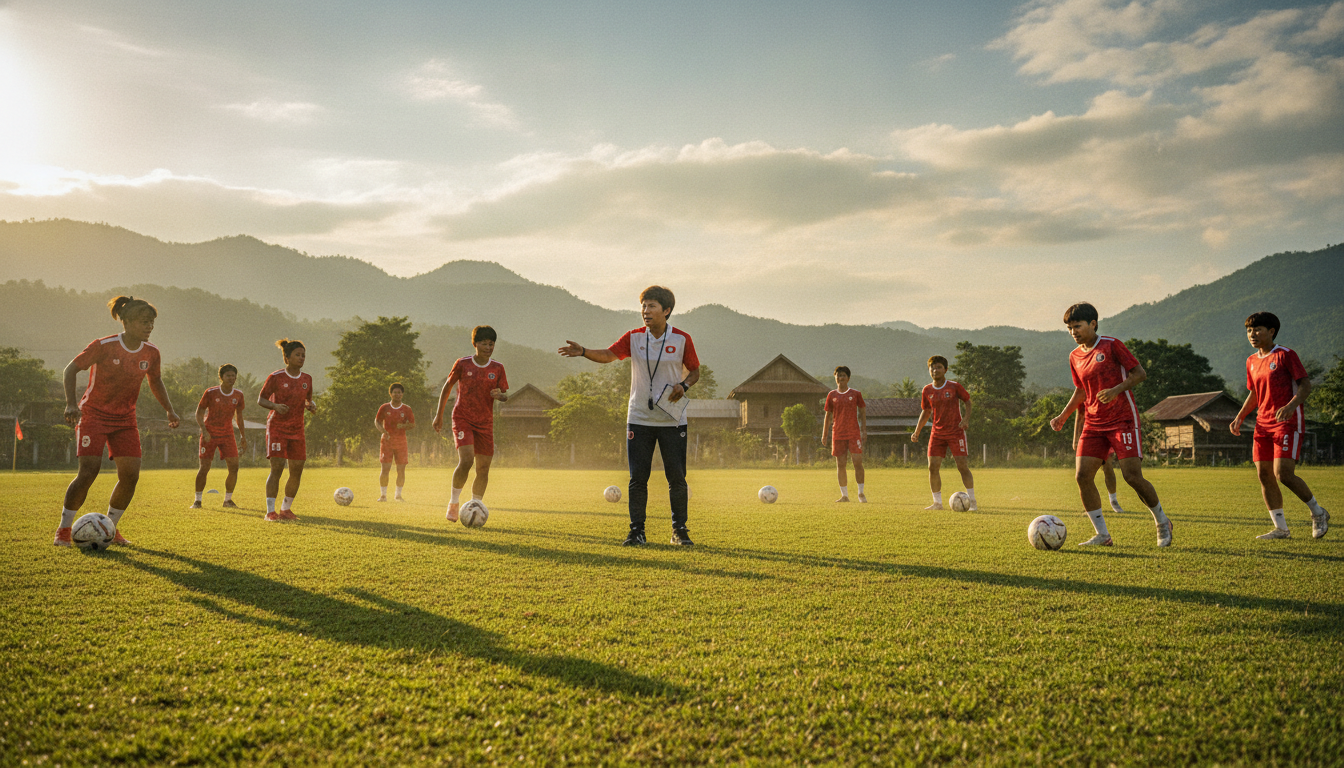
The squad’s training in Vientiane this week has emphasized sharpness and match tempo as players recover from the recent international friendlies. Sessions have been conducted across technical drills, progressive possession exercises and fast-paced small-sided games aimed at simulating the match conditions they will face in Kuala Lumpur.
Coaching staff have increased the volume of high-intensity work while managing recovery to avoid fatigue ahead of travel and tournament fixtures. The balance between physical conditioning and tactical rehearsals has been a central theme as the team seeks to translate lessons from its June fixtures into consistent performance.
Friendlies with Saudi Arabia provide practical lessons
Laos’ two fixtures against Saudi Arabia earlier in June have been described by team officials as valuable learning opportunities, exposing the squad to different tactical approaches and higher tempo play. Those matches allowed coaches to assess player readiness under international pressure and to trial formations that could be used during the AFF Women’s Cup.
The friendlies also highlighted areas for improvement, notably defensive transitions and transitional attacking patterns, which have since been prioritised in training. Staff are using video review and targeted drills to correct recurring issues and to reinforce positive patterns that produced chances during the Saudi Arabia encounters.
Fitness, cohesion and tactical focus in camp
Physical conditioning has been paired with deliberate work on team cohesion, with emphasis placed on off-ball movement and coordinated pressing triggers. Conditioning sessions have been scheduled to build match endurance while minimizing risk of injury, using monitored workloads and recovery modalities such as controlled recovery runs and physiotherapy time.
Tactical rehearsals have concentrated on set-piece organisation and finishing sequences in the final third, reflecting the coaching staff’s assessment of where small margins can decide group-stage outcomes. Players are being rotated in practice to build versatility and tactical awareness across multiple roles, giving the coaching team more options for matchday selection.
Squad selection pressures and preparation challenges
Selection decisions have been tested by competition for places and by the need to blend experience with emerging talent from domestic leagues. Coaching staff face the task of finalising a balanced 23-player roster that can withstand the tournament’s compressed schedule while offering tactical flexibility against different opponents.
Logistical considerations — including travel, accommodation and acclimatisation to Kuala Lumpur’s climate — have been factored into final preparations to reduce off-field disruption. Support staff are coordinating nutrition, medical checks and rest schedules to ensure players are physically and mentally prepared for the demands of tournament play.
Group A draw presents immediate tests against Malaysia and Singapore
Laos will open their AFF Women’s Cup campaign in Group A against host Malaysia and Singapore, two teams with contrasting strengths that will demand varied tactical responses. Malaysia, as the host nation, will arrive with home support and familiarity with the Kuala Lumpur Football Stadium, while Singapore are known for disciplined structure and counterattacking transitions.
The coaching team has prepared multiple game plans to address these distinct challenges, balancing a compact defensive shape against Malaysia’s expected home-driven momentum and a more proactive pressing approach to unsettle Singapore’s organisation. Match-by-match analysis will determine starting lineups and tactical tweaks as the group stage unfolds between 10 and 22 July 2026.
Tournament logistics and what to expect in Kuala Lumpur
The AFF Women’s Cup 2026 will take place at the Kuala Lumpur Football Stadium, where teams will have limited time to adapt to pitch conditions and local weather patterns. Organisers have scheduled group fixtures to allow minimal recovery between games, increasing the premium on squad depth and efficient rotation management.
Laos’ preparatory itinerary includes a brief period of acclimatisation on arrival, planned training at competition venues where possible, and further tactical sessions focused on opponent-specific strategies. The team’s leadership has stressed the importance of mental resilience and composure as determinants of results in a compact tournament setting.
Laos arrives at the AFF Women’s Cup having used recent international fixtures as a testing ground for systems and personnel, and the final days in Vientiane have been dedicated to turning those insights into match-ready performance. Photos from the training camp have been circulated courtesy of the Laos Football Federation (LFF), documenting the intensity and focus at the heart of the squad’s build-up.
The upcoming matches in Kuala Lumpur will test whether the adjustments made in training translate into competitive results, and Laos will be aiming to show progress and resilience as they face Group A opposition. The squad’s preparation, shaped by recent friendlies and targeted training work, sets the stage for a measuring-stick tournament run when the AFF Women’s Cup kicks off on 10 July 2026.