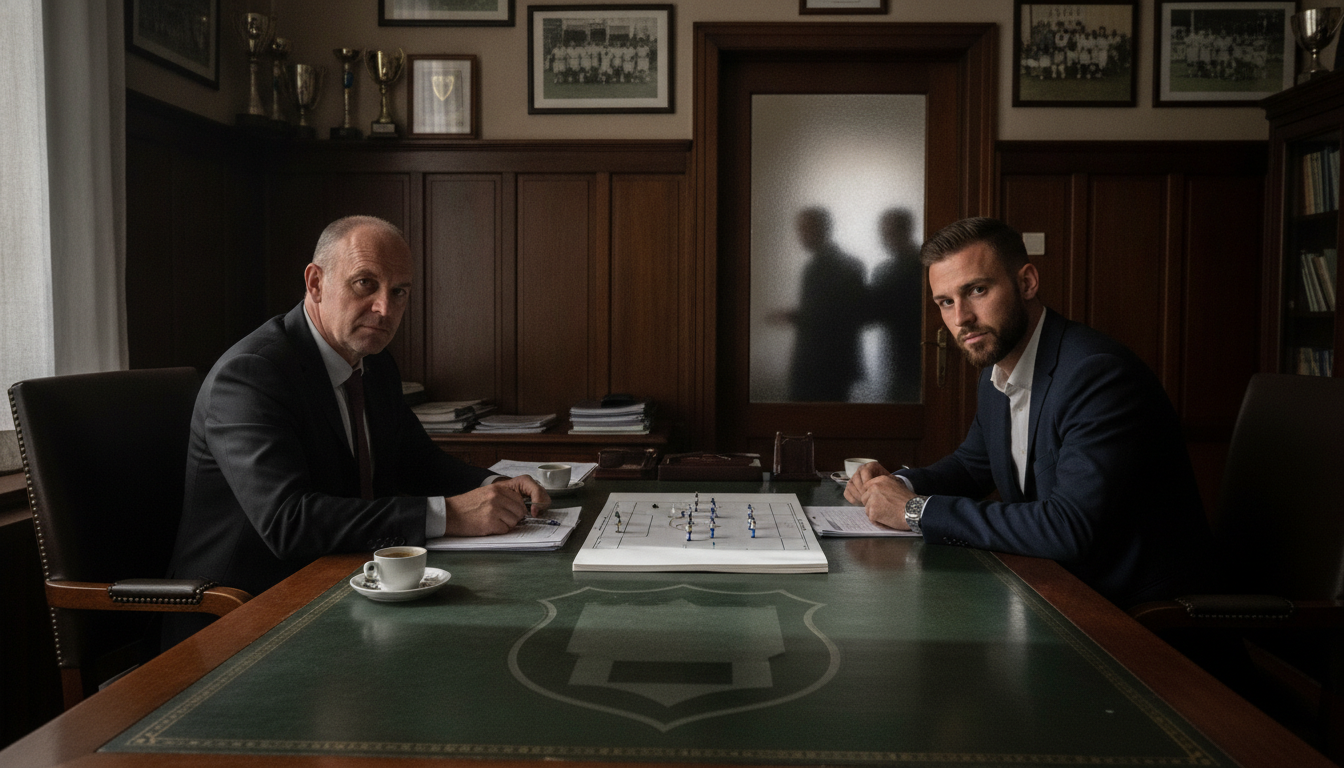
Police FC name eighth coach in 16 years as club search for stability continues
Police FC name eighth coach since 2013 after Ben Moussa’s exit, exposing instability, erratic recruitment and the absence of a consistent long-term football plan.


Police FC have begun a new managerial cycle after parting ways with Ben Moussa, marking the club’s eighth head-coach appointment in 16 years and underscoring a pattern of short tenures that has prevented a sustained title challenge. The decision to replace Moussa follows a sixth-place finish in the 2025/26 season, and the club now confronts longstanding structural issues that managerial turnover alone has failed to fix. This revolving-door approach to coaching has hampered continuity, disrupted player development, and left Police FC without the institutional framework required to compete consistently with Rwanda’s leading clubs.
Eighth coach in 16 years highlights chronic turnover
Since 2013 Police FC have moved through a succession of managers, including names such as Goran Kuponovic, André Casa Mbungo, Innocent Seninga, Frank Nuttall, Vincent Mashami, Francis Haringingo and most recently Ben Moussa. Each appointment brought fresh hope but rarely the time or resources necessary to build a lasting project, and the average spell for a head coach has been under two seasons. That pattern—sacking or replacing coaches after brief windows—has left the club perpetually in reset mode and unable to consolidate tactical frameworks or a core squad.
Club officials have repeatedly cited the need for immediate results, a demand that accelerates dismissals when short-term targets are missed. For Police FC, the consequence has been a serial instability that affects every level of the club, from recruitment and training routines to match-day leadership and youth integration. The instability is not merely cosmetic; it has demonstrable effects on performance across league campaigns and in continental competitions where consistency is a competitive advantage.
Lack of a coherent football identity undermines progress
A persistent weakness at Police FC has been the absence of a clearly defined playing philosophy that survives managerial change. Each incoming coach has introduced new tactical priorities, training methods and recruitment criteria, leaving players to adapt repeatedly rather than refine a single club identity. This tactical churn disrupts cohesion and prevents the establishment of a recognizable style that can be taught at all levels and sustained through transitions.
By contrast, clubs that achieve sustained success typically operate beneath the surface with a long-term football blueprint that guides appointments and player development. Police FC’s frequent tactical reversals have made it difficult to build a systemized approach to match preparation and talent cultivation. Without a shared vision that transcends individual coaches, the club remains vulnerable to the short-term calculus that drives repeated managerial changes.
Recruitment shifts and squad turnover erode team chemistry
Police FC’s recruitment strategy has mirrored its managerial instability, with waves of incoming and outgoing players corresponding to coaching changes. Season after season the squad has been reshaped, often releasing experienced figures and signing replacements without clear succession plans. Departures of established players such as Lague Byiringiro, Ani Elijah and Allan Kateregga have left gaps in leadership and on-field experience that were not consistently filled by planned acquisitions.
This stop-start rebuilding undermines dressing-room continuity and complicates the emergence of a reliable spine—an experienced group of players around whom a team can be structured. The absence of a productive academy or a settled pipeline into the first team has compounded the problem, forcing the club into short-term fixes rather than strategic long-range recruitment. As a result, the squad often lacks the cohesion and shared understanding required to close out tight matches and sustain title bids.
Resource and structural gaps with top domestic rivals
Police FC’s ambition to match the achievements of APR FC and Rayon Sports has repeatedly highlighted structural disparities between the clubs. Both APR and Rayon benefit from deeper squads, larger fanbases that influence momentum at key moments and institutional continuity that cushions managerial transitions. Those advantages translate into better resilience over full campaigns and a stronger platform for success in CAF competitions.
Attempting to replicate rivals’ success without similar financial depth or structural stability has put unrealistic pressure on Police FC coaches to deliver immediate outcomes. That urgency often triggers premature dismissals when short-term objectives are unmet, creating a feedback loop that reinforces instability. Closing this gap will require sustained investment in infrastructure, scouting, and administrative continuity as much as it will require changes on the touchline.
Psychological lapses and missed opportunities on the pitch
Beyond tactics and administrative shortcomings, Police FC have shown a concerning pattern of dropping points against lower-ranked opposition—results that typically determine title races. These lapses point to issues of mentality, leadership and match management that evolve slowly and demand time and trust to remedy. Players exposed to continuous managerial turnover can struggle to internalize expectations and develop the composure needed in decisive fixtures.
Addressing psychological vulnerabilities entails more than coaching changes; it demands a stable environment in which leaders can emerge, roles can be clarified and performance standards can be reinforced over multiple seasons. Without that consistency, Police FC risk repeating the same late-season inconsistencies that have undermined past campaigns.
Clear steps required for a sustainable turnaround
For Police FC to move beyond short-term fixes, the club will need to adopt a multi-year plan focused on continuity and structural reform. Establishing a technical director role to oversee recruitment, youth development and playing philosophy would create institutional memory independent of any single head coach. Longer contracts and realistic performance benchmarks would give managers the runway needed to implement tactical systems and develop young talent.
Investment in the academy and a concerted scouting program would reduce reliance on stop-gap signings and foster a pipeline of players acclimated to a club style. Clear succession planning for senior roles and transparent communication with supporters and players would also help remove the panic-driven decisions that have defined recent seasons. These measures require patience and discipline, but they are essential to transform the cycle of short-term reaction into a stable growth trajectory.
Police FC now face a pivotal moment: appoint a coach and repeat a familiar pattern, or use the change as an opportunity to adopt a long-term blueprint that can deliver sustained success. The choices made in the coming months will determine whether the club continues to chase short-term fixes or begins the harder work of building a competitive, resilient organization.