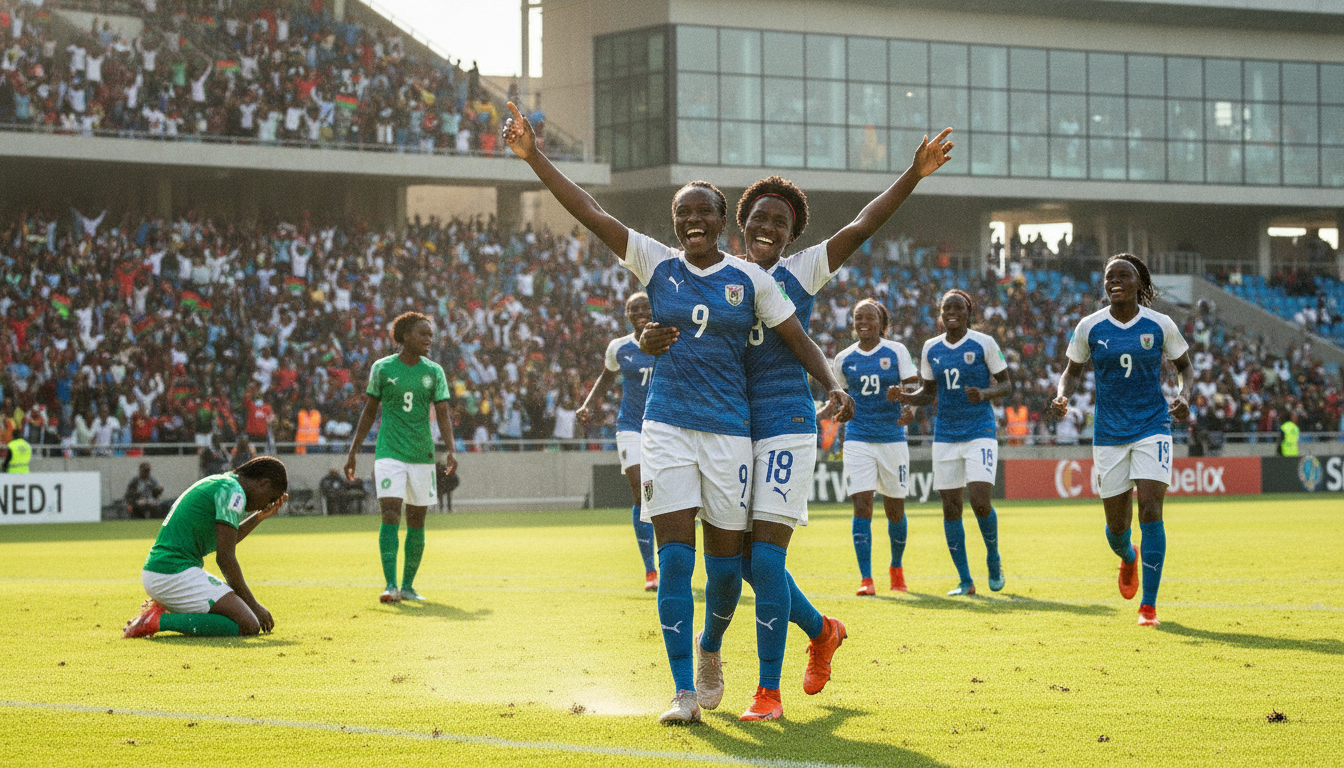
Malawi vs Nigeria: Debutants stun Super Falcons 3-2 in Rabat as Chawinga sisters shine
Malawi beat Nigeria 3-2 in Rabat as the Chawinga sisters starred, giving debutants a historic WAFCON win and leaving Nigeria’s title defence in doubt now.


The Malawi vs Nigeria clash at Al Madina Stadium ended in a seismic 3-2 upset as debutants Malawi defeated ten-time champions Nigeria in their opening WAFCON match. Temwa Chawinga opened the scoring before sister Tabitha added a second, and a late stoppage-time flurry produced a dramatic finish that ultimately favoured the Scorchers. Nigeria’s late penalties and substitutions could not overturn a night in which defensive lapses and tactical missteps cost the Super Falcons dearly. The result immediately reshapes Group C dynamics and places heavy pressure on Nigeria heading into their next fixture.
Chawinga sisters decisive in Rabat
The match was defined by the clinical finishing of Temwa and Tabitha Chawinga, who repeatedly exposed gaps behind Nigeria’s defence with direct, pace-driven attacks. Temwa struck first in the 69th minute, converting a swift transition into a composed finish that punished a stretched backline. Tabitha followed five minutes later, finishing a move that amplified Malawi’s momentum and put the Super Falcons on the back foot. Temwa’s second, deep in stoppage time, capped a devastating night for Nigeria and underlined how lethal Malawi’s front pairing could be when given space.
Malawi’s game plan centred on compact defending and lightning counters aimed at the Chawinga sisters’ strengths. The Scorchers absorbed extended periods of Nigerian possession, then launched early long balls and quick passes to release their forwards in transition. Rose Alufandika and the Malawian defensive unit maintained discipline and shape, while the forwards finished their chances with clinical efficiency. That balance of structure and speed made Malawi a formidable and unexpected challenger in Rabat.
Defensive frailties cost the Super Falcons
Nigeria’s defensive structure repeatedly showed vulnerabilities as full-backs pushed high and central defenders were isolated in one-on-one situations. The Super Falcons frequently committed numbers forward in search of an early breakthrough, leaving large channels behind the midfield that Malawi exploited. The absence of a recognised sitting defensive midfielder in key moments meant loose transitions were often catastrophic for Nigeria. Temwa Chawinga’s two goals both arrived after turnovers that left the Nigerian backline exposed and scrambling.
The decision to field veteran Osinachi Ohale against the pace of the Chawinga sisters invited scrutiny when the tempo of the game increased. Central defenders found themselves stretched and lacked consistent midfield protection to shield them from direct attacks. Nigeria’s inability to quickly recover into a compact shape after losing possession was a recurring theme. Those structural problems will require urgent attention before the Super Falcons’ next group match.
Possession without cutting edge
Statistically dominant for long spells, Nigeria struggled to convert territorial control into clear-cut scoring opportunities throughout the first half. The Super Falcons circulated the ball across wide areas and delivered numerous crosses, but movement inside the penalty area and the final pass often lacked conviction. Deliveries from wide positions and set-piece routines failed to trouble Malawi’s disciplined defensive block on a regular basis. As a result, possession became possession for its own sake rather than a sustained threat to the opposition goal.
Malawi’s aggressive pressing forced hurried clearances and long balls that neutralised Nigeria’s buildup. The Scorchers were comfortable defending crosses and managed to limit high-quality chances inside the box despite ceding much of the pitch. When Nigeria did create openings, the finishing or the decision-making in the final third did not match their territorial superiority. That mismatch between control and effectiveness ultimately cost the defending champions dearly.
Tactical choices and substitutions questioned
Head coach Justin Madugu’s selections and in-game decisions drew immediate criticism following the result, particularly around personnel and timing of changes. Several players were deployed out of their preferred positions, creating imbalances across the backline and in attack. Michelle Alozie was shifted to left-back, while Sukurat Oladipo operated on the right flank despite being more accustomed to central roles, and that reshuffling disrupted Nigeria’s defensive cohesion. Leaving natural left-back Rofiat Imuran on the bench was an early talking point among analysts.
Substitution timing also proved consequential. Six-time African Women’s Player of the Year Asisat Oshoala was introduced late, in the 83rd minute, when Malawi had already retreated into a compact block and space to exploit was limited. Other potential defensive changes that could have added recovery pace were not implemented early enough to blunt Malawi’s direct approach. The selection and substitution patterns raised questions about whether alternative formations or personnel could have reduced the exposure to quick counters.
Preparation and cohesion concerns exposed
Beyond tactics, the contest highlighted broader preparation issues that appeared to affect Nigeria’s cohesion and match sharpness. Several players joined the national camp at different stages ahead of the tournament, restricting time for collective training and understanding to develop. That lack of synchronized preparation was visible in dropped passes, mistimed overlapping runs, and inconsistent connections between defence, midfield and attack. Championship-calibre teams often rely on fine margins and cohesion; the Super Falcons’ disjointed performance suggested that those margins are currently narrow for this squad.
The midfield struggled to find rhythm and was regularly bypassed by Malawi’s early long balls. Jennifer Echegini, still regaining full fitness, did not settle into a consistent role, while captain Rasheedat Ajibade found it difficult to impose her influence for long stretches. Those midfield deficiencies made it harder for Nigeria to control transitions and protect a backline under repeated pressure. The preparation deficits now shift focus to immediate tactical fixes and intensified training before the next group fixture.
Players out of position and attacking imbalance
Positioning choices further compounded Nigeria’s difficulties, particularly in attack where several players were used in unfamiliar roles. Esther Okoronkwo started as a central striker despite often being more effective from a deeper position, while Esther Ohezuo was shifted to the left wing and struggled to impact proceedings. That reshuffle limited Nigeria’s fluidity and made their forward movements more predictable. Only after Uchenna Kanu’s introduction did one flank begin to pose consistent problems for the Malawian defence.
The reshuffled backline similarly disrupted balance, with right and left sides operating under different defensive expectations. The resulting mismatch between player strengths and positional demands allowed Malawi to isolate defenders and exploit one-on-one situations. These tactical compromises underline how critical role clarity and natural positional deployment are at tournament level, especially when facing opponents who rely on speed and directness.
Historic debut for Malawi and Group C implications
For Malawi, the victory represents a landmark moment: a debut at WAFCON that culminated in defeating the continent’s most decorated side. Before this match, Nigeria had never lost to a nation making its first appearance at the Women’s Africa Cup of Nations, a record that now ends in Rabat. The Scorchers’ disciplined defending, energetic pressing and ruthless counterattacks showcased a team capable of challenging established powers when its game plan is executed precisely.
The result reshuffles Group C dynamics and places Malawi firmly in contention for a knockout spot, while forcing Nigeria into a precarious position where margin for error has drastically narrowed. Friday’s encounter with Zambia has become effectively a must-win for the Super Falcons if they are to preserve any realistic path to retain the continental crown. For Malawi, the win provides confidence and a platform to build from as the tournament progresses.
As the teams depart the pitch, coaches and technical staffs will turn to adjustments, recovery and tactical planning for forthcoming matches. The match in Rabat will be dissected for its defensive lessons, substitution timing and the importance of positional clarity. For Nigeria, the priority will be to restore defensive stability and regain the clinical edge that has defined their past WAFCON campaigns. For Malawi, a historic result opens new possibilities and a belief that the group stage is theirs to contest.
The shock result in Rabat will reverberate across the tournament and reshape expectations for both sides as they prepare for the next round of fixtures.