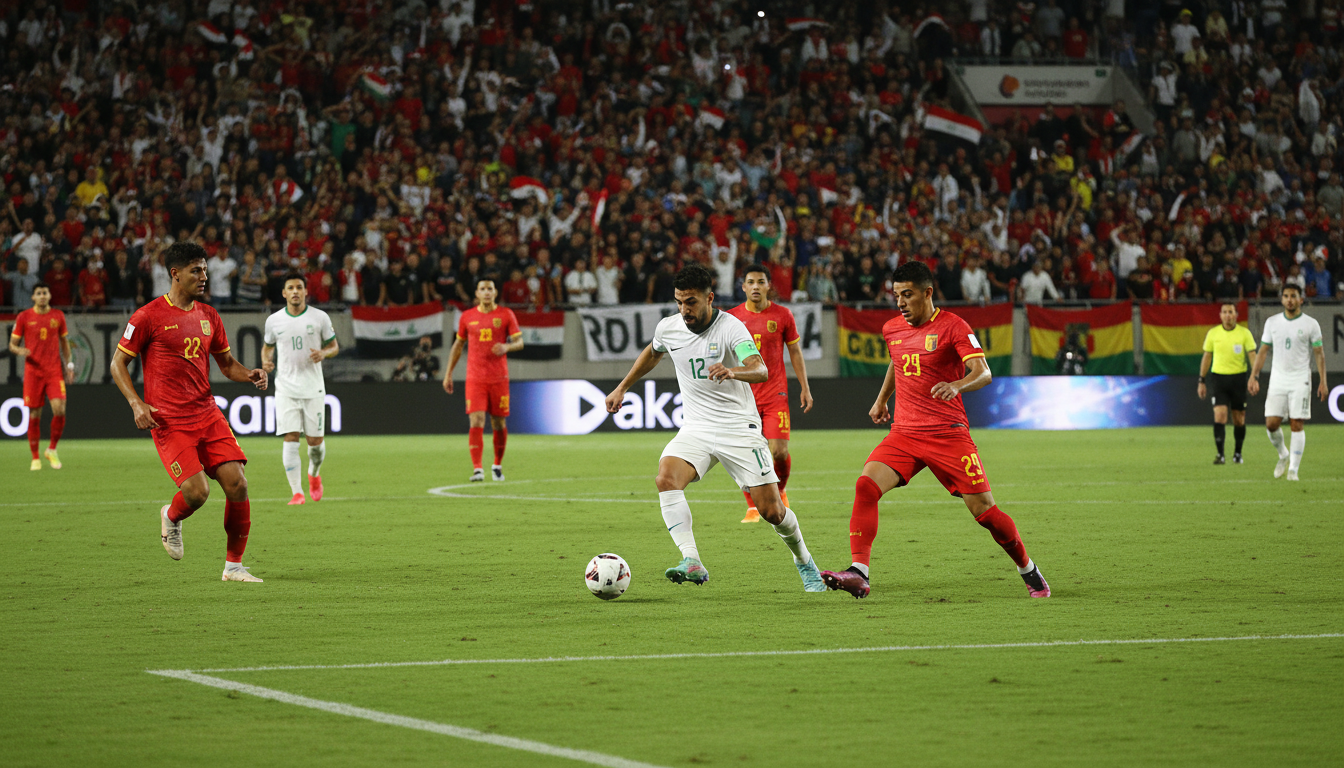
Iraq World Cup play-off: Arnold leads side into decisive clash with Bolivia in Monterrey
Iraq World Cup play-off: Graham Arnold’s team meet Bolivia in Monterrey as Iraq seek a first World Cup appearance in 40 years amid conflict and difficult travel.


Iraq’s national team arrive in Monterrey for the intercontinental fixture knowing Tuesday’s match is the final step in a long, uncertain journey to the 2026 World Cup. The Iraq World Cup play-off has taken on extra significance after coach Graham Arnold and members of the delegation were temporarily stranded in Fujairah because of the Middle East war. Victory would end a 40-year absence from football’s global finals and place Iraq among the expanding 48-team field in June.
Arnold stranded in Fujairah as regional conflict disrupted travel
Earlier this month the Iraq camp found itself stuck on the eastern coast of the United Arab Emirates when escalating conflict in the region interrupted flights and travel plans. Graham Arnold described those hours away from the squad as difficult and said he worked to shield his players from the wider turmoil. He declined to dwell on the episode in full, saying the focus had to remain on preparation for the single-match play-off. The disruption added a precarious logistical chapter to a qualifying run already defined by long travel and intense scrutiny.
Long route to Monterrey and intercontinental logistics
Iraq’s path to northern Mexico was not straightforward, with charter flights, visa arrangements and last-minute itinerary changes characterising the journey. The team’s arrival in Monterrey completes a travel plan that required coordination between several football authorities and local organisers. The play-off is a one-off fixture decided on neutral ground in Mexico, amplifying the significance of every training session and administrative detail. For a squad that has been kept on the move, settling into a reliable routine ahead of kickoff has been a priority.
Historical stakes: first World Cup in four decades at risk
The match carries historical weight: Iraq have not appeared at a World Cup since the 1980s, and a win would return them to the global stage after a 40-year absence. Qualification would place Iraq alongside the eight Asian teams already confirmed for the 2026 tournament, expanding the continent’s presence at the finals. The broader context of the expanded 48-team World Cup adds a fresh opportunity for teams that previously faced tighter qualification windows. For Iraq’s players and supporters, Tuesday’s fixture represents both national pride and the chance to rewrite a long-standing chapter in the country’s football history.
Squad readiness and Arnold’s mental approach
Arnold has emphasised the psychological preparation of his players as much as their tactical readiness, framing the contest as a test of mental resilience. “Representing 46 million people is a unique experience,” he said, underscoring the national expectations that accompany the squad. The coach has repeatedly referenced the need to clear the dressing room of external anxieties so players can perform in a high-pressure environment. Training sessions in Monterrey have focused on set pieces, transitional play and maintaining concentration in a match where a single mistake could determine qualification.
Regional context and human cost back home
The build-up to the play-off has been overshadowed by violence in Iraq and the wider Middle East, with reports attributing at least 101 deaths in Iraq since the conflict began on February 28. That tally, tracked by AFP, was raised by officials and media as the team prepared abroad, underscoring the tension between national sporting hopes and a fraught domestic reality. Arnold has consciously tried to keep news of the unrest from destabilising his squad while acknowledging the emotional burden his players carry. The juxtaposition of national grief and sporting aspiration has lent the qualification bid an added poignancy.
Implications for Asian representation and the World Cup field
If Iraq prevail, they will join Australia, Iran, Japan, Jordan, South Korea, Qatar, Saudi Arabia and Uzbekistan in the 48-team tournament scheduled across the United States, Mexico and Canada. That would increase the Asian confederation’s contingent and highlight the region’s growing footprint in global football. For Iraq, qualification would also mean increased attention on player development, federation administration and the potential for an uplift in domestic football investment. The result in Monterrey will therefore resonate beyond a single match, shaping conversations about the country’s footballing future.
Iraq enter the fixture acutely aware that margins will be tight in a neutral-stakes playoff between two nations with contrasting football cultures. Bolivia arrive with their own motivations and a belief that a single high-level performance can secure passage to a World Cup. For Iraq, the narrative has been dominated by adversity — travel disruptions, security concerns and weighty national expectation — but also by the opportunity to convert resilience into a historic return to football’s biggest stage. The outcome in Monterrey will determine whether this campaign is remembered for triumph or for a near miss.