Netherlands vs Morocco: Paul Okoku Reflects on Rabat, Casablanca and a Full-Circle World Cup Reunion
Paul Okoku, a FIFA Legend and former Nigeria international, recalls his rare personal history with both nations ahead of the Netherlands vs Morocco Round of 32 meeting on June 29, 2026 in Monterrey. His memories of Rabat, Casablanca and Monterrey illuminate the stakes and the emotion surrounding this World Cup tie.


Match Details and Stakes
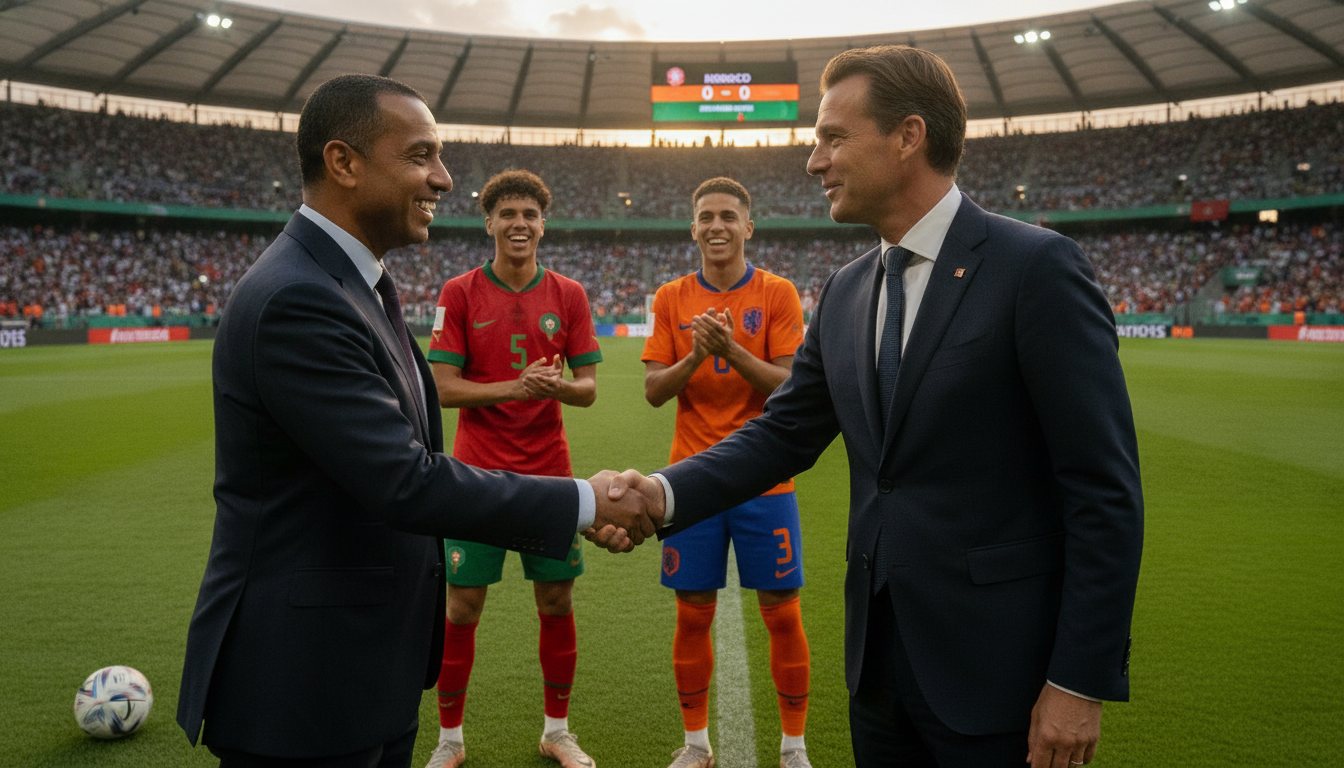
The Netherlands vs Morocco meeting took place on June 29, 2026 at Estadio BBVA in Monterrey, Mexico, as part of the 2026 FIFA World Cup Round of 32. The winner would progress to the Round of 16 to meet Canada after Canada’s victory over South Africa. For Paul Okoku, who watched several matches as a FIFA Legend, the fixture was not just another knockout game but the latest chapter in a career that intersected with both nations more than forty years earlier.
Okoku attended the tournament through FIFA’s hospitality program and described the fixture as a heavyweight draw, pitting Dutch tactical tradition against Moroccan organisation and confidence. The match encapsulated more than tournament progression; for many African observers it represented continued evidence of the continent’s rising profile on football’s biggest stage.
Rabat and the Penalty That Secured a Cup Place
In August 1983 Paul Okoku and two teammates were summoned from the youth setup to join Nigeria’s senior squad for a decisive Africa Cup of Nations qualifier in Rabat. With several senior players unavailable, the coach entrusted three Flying Eagles with a game that ultimately ran 120 intense minutes. The contest against Morocco ended level and was decided by penalties, where Nigeria held its nerve and secured qualification for the 1984 Africa Cup of Nations.
Okoku remembers Morocco’s side as one of Africa’s most accomplished at the time, led by accomplished professionals and the dangerous striker Abdelkrim “Krimau” Merry. The tactical discipline and technical quality displayed in Rabat left a lasting impression and, in Okoku’s view, established a continuity that can be seen in Morocco’s modern teams. That victory in Rabat became one of the defining moments of his international career and a formative memory he brought back to Monterrey.
Monterrey and Youth Tournament Encounters with the Dutch
Only weeks before the Rabat tie, Okoku had stood on an international stage in Monterrey as part of the 1983 FIFA World Youth Championship. Nigeria’s Flying Eagles marked a milestone in the competition when Tarila Okorowanta scored against the Soviet Union, registering Nigeria’s first goal in a FIFA-organised World Cup event. The tournament also produced a meeting with the Netherlands that ended in a goalless draw, a match Okoku recalls for its quality rather than its scoreline.
That youth tournament assembled an extraordinary pool of future stars, including players who would go on to win the World Cup, the Ballon d’Or and continental titles. For the young Nigerian players, however, the focus remained on the immediate demands of each match. Okoku frames Monterrey as part of a generation-defining experience that linked his early career to the wider arc of global football history.
Casablanca and an Administrative Mistake with Olympic Consequences
Six months after Rabat, Okoku faced one of modern football’s cruellest moments in Casablanca during the final qualifying round for the 1984 Olympic Games. With Nigeria’s squad listed under his baptismal name, Paul Okoku, but his passport bearing his birth name, Lucky Okoku, Moroccan officials lodged an immediate protest. Despite there being no doubt about his identity, Nigeria’s coach chose to avoid any administrative risk and left Okoku out of the match.
The decision meant Okoku sat on the bench fully dressed while Morocco prevailed in another penalty shootout to secure Olympic qualification. For Okoku the memory is a powerful lesson about how factors off the pitch can alter sporting destinies. He has since reflected on the what-ifs of that day but recognises that many defining moments in sport are shaped as much by circumstance as by ability.
From Player to FIFA Legend and a Return to World Cup Stages
Decades later Okoku returned to the World Cup environment not as a competitor but as a FIFA Legend attending matches and engaging with the tournament through official hospitality programs. One highlight he cites was watching Morocco’s 4-2 victory over Haiti at Mercedes-Benz Stadium in Atlanta, a match staged before more than 68,000 fans. The performance in Atlanta, he said, combined attacking verve with tactical maturity and reinforced his longstanding respect for Moroccan football.
That return to the World Cup setting felt like a full-circle moment for Okoku, who had once faced both nations on the pitch and later watched them again as an honoured guest. He described arriving back in Monterrey with memories of youth tournaments and qualifiers layered over the present spectacle, seeing how past encounters continue to shape contemporary narratives.
Tactical Match-up and the Decisive Midfield Battle
From a tactical perspective Okoku emphasised the midfield as the key battleground in the Netherlands vs Morocco fixture. He argued that while both teams possess technical quality and organisational discipline, the side that controls possession, manages transitions and maintains composure will gain the decisive edge. In knockout football he noted that tactical nuance and psychological resilience often determine outcomes as much as individual skill.
Okoku flagged Morocco’s defensive organisation and collective belief as distinguishing strengths, while acknowledging the Netherlands’ deep tactical tradition and technical excellence. He suggested the match could be decided by fine margins — a single turnover, a set-piece moment, or the pressure of a penalty shootout. His experience in two penalty-decided qualifiers leaves him alert to the role of nerves and small margins when careers and tournament runs hang in the balance.
The Wider Context of African Football Progress
Okoku framed his support for Morocco as part of a broader commitment to African football’s advancement rather than a detraction from his Nigerian identity. He argued that strong performances by African nations at the World Cup lift the continent’s reputation, help build cases for expanded representation and inspire young players from Lagos to Rabat. The 2026 tournament’s expansion, he noted, enabled unprecedented African participation and visibility on football’s biggest stage.
That context, Okoku said, is vital to understanding why he watches and supports African teams beyond Nigeria’s involvement. He credits generations of players, coaches and administrators for building the platform that has allowed multiple African nations to compete at high levels. For him, Morocco’s progress is part of a continuum that benefits the continent and helps create opportunities for future generations.
Football connects personal memory to national narrative, and Okoku’s story illustrates that link vividly. His recollections of Rabat, Monterrey and Casablanca supply a human dimension to the Netherlands vs Morocco fixture, framing the match as more than a tactical contest. It becomes a meeting point for competing histories, administrative lessons and the enduring hope that carries players and fans alike from one tournament to the next.
As the tournament unfolded, Okoku expressed a measured optimism for both sides and a particular pride in seeing African teams compete with conviction on the world stage. He hopes the match will be remembered for its quality and for the way it continues to write new chapters in long-running football stories that once began on distant pitches decades ago.