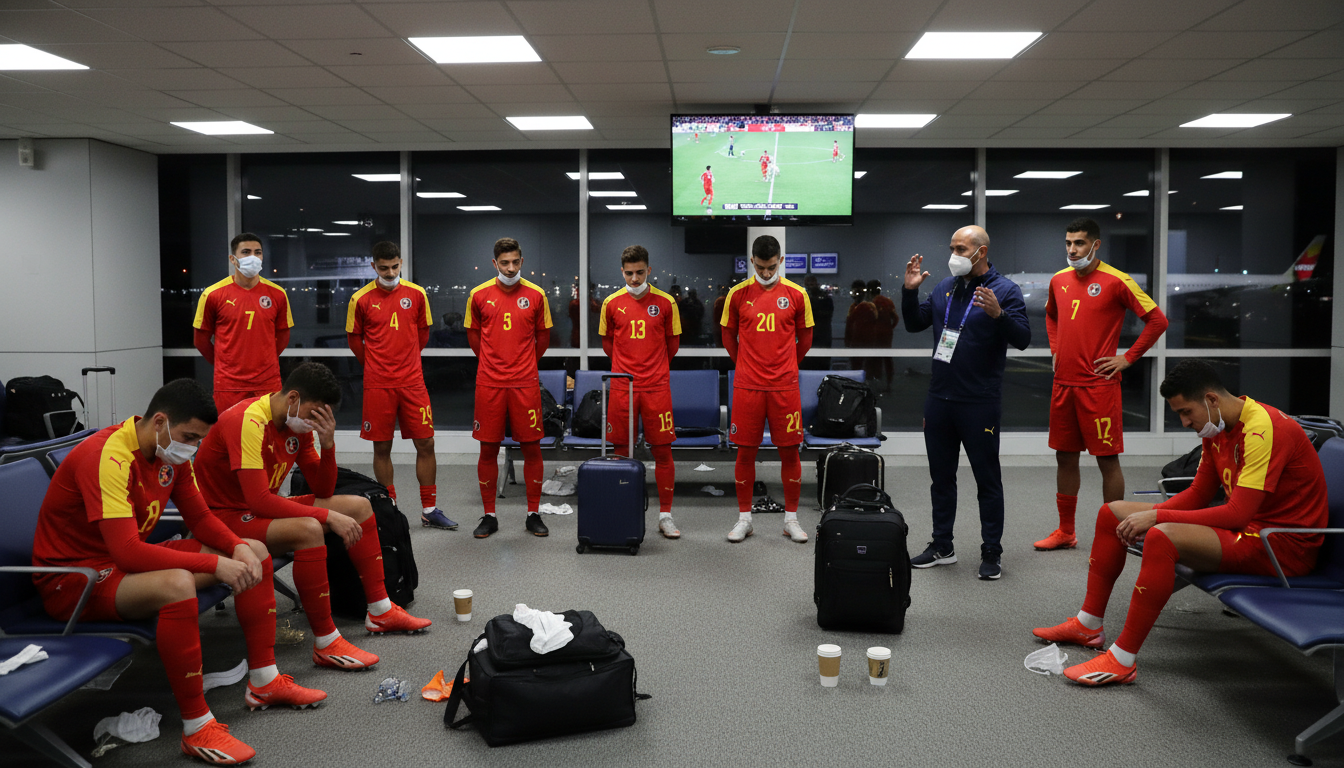
Venezuela Copa America exit capped by COVID chaos and tactical gamble
Venezuela’s Copa America campaign collapsed after a cascade of injuries and positive COVID-19 tests, leaving the team reassembled at the last minute and eliminated despite having a route to the quarter-finals.


A campaign derailed before kick-off
Venezuela arrived for Copa America already depleted by a series of injuries to key players, only to be hit again when multiple squad members returned positive COVID-19 results on arrival in Brazil.
Those health and fitness setbacks forced the head coach to piece together an emergency roster that included several domestic-league standouts and late call-ups from abroad.
What began as a plausible run at the knockout phase — aided by a tournament format that advances four of five teams from each group — instead became a story of contingency management and lost opportunity.
Squad upheaval and emergency reinforcements
A wave of absences left the squad thin at virtually every position, prompting the federation to summon a large group of replacements within days of the opening match.
Veteran names such as Salomón Rondón and Tomás Rincón were missing from the list, while a raft of newcomers and fringe internationals were rushed into camp, some arriving within 24 hours of Venezuela’s first fixture.
Five players earned their full international debuts during the tournament, and the last-minute roster juggling required the coaching staff to blend different styles, levels of experience and fitness in short order.
Early matches showed fight despite limitations
Venezuela’s opener ended in a heavy defeat against the tournament hosts, but the team recovered to produce two competitive displays that suggested resilience.
A compact defensive performance earned a goalless draw with Colombia, and a late equaliser rescued a 2-2 draw with Ecuador, demonstrating a spirit and work-rate that belied the disrupted preparation.
Those results left Venezuela with a clear path to the last eight: a win in the final group game would have sufficed, provided certain other results went in their favour.
Decisive selection changes and tactical risks
For the final match the coach reshuffled the side heavily, making six changes that left just three players from the Brazil line-up retained in the starting eleven.
The manager also stuck with a five-man defensive unit but altered much of its personnel, a decision that altered the team’s balance at a critical moment.
The changes were intended to reintroduce returning players and sharpen an attack, yet they created a side that struggled to find a coherent identity under pressure in the decisive game.
Peru defeat and the fine margins of elimination
A single well-executed set piece proved decisive as Venezuela fell to a narrow 1-0 defeat to Peru, while Ecuador held Brazil to a draw in the other group fixture.
Those two outcomes conspired to consign Venezuela to the bottom of their group despite earlier signs that progression was attainable.
It marked the first time the national team had gone through a Copa America without a victory since the 2004 edition, an outcome that underscored how marginal differences and off-field disruption shaped the outcome.
Public reaction and the narrative of resilience
Throughout the tournament, Venezuelan supporters — many following from abroad or from online communities due to restricted stadium attendance — rallied behind an underdog image that the makeshift squad projected.
Domestic-league players, MLS contributors and bit-part Europeans were cast by fans as embodiments of national perseverance after weeks of adversity.
That groundswell of support amplified the sense of what the eliminated side had achieved in spirit, even as the results failed to reflect the optimism generated by those performances.
What the exit means for the coach and federation
The failure to advance will prompt scrutiny of selection decisions and the federation’s contingency planning for player availability in pandemic-era tournaments.
Questions will centre on whether different personnel choices in the final match might have preserved the team’s defensive cohesion and whether alternate preparations could have mitigated the effects of late arrivals.
For the coaching staff, the episode is likely to be judged in the context of extraordinary circumstances rather than as a straightforward tactical shortcoming.
Broader lessons from a disrupted tournament run
Venezuela’s experience at this Copa America is a case study in how external factors can overwhelm sporting plans, and how national teams must adapt quickly when squads are compromised.
The campaign highlighted the need for deeper domestic pathways and broader contingency pools so that sudden absences do not leave cohesive lines of play unraveled.
It also illustrated how a team’s identity can shift rapidly when personnel changes force a different tactical approach without adequate time to instil it.
Despite the early exit, the performances against Colombia and Ecuador offered positives to build on, particularly the defensive organisation and the work ethic of the newcomers.
Those elements can be foundational for an interim rebuilding phase if the federation and coach use the post-tournament period to integrate lessons and plan targeted training and player scouting.
The elimination will be a hard pill for supporters and players, but the resilience shown in the face of injuries and COVID disruption could yet become a reference point for how this generation of Venezuelan players approaches future competitions.