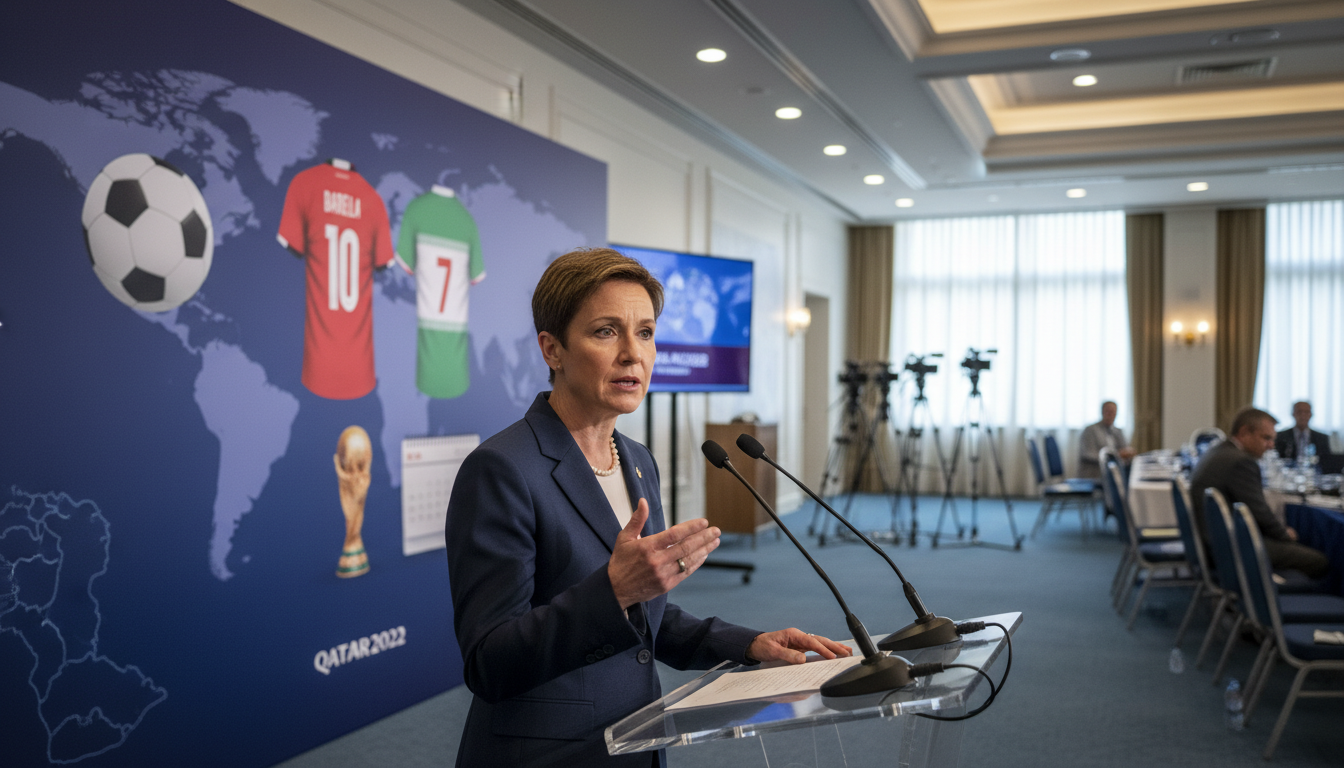
Italy Replace Iran at World Cup? US Envoy Urges FIFA and Trump to Consider Azzurri Inclusion
US special envoy proposes Italy replace Iran at the World Cup, a move tied to diplomatic aims between Washington and Rome amid recent political tensions.


The proposal that Italy replace Iran at the coming World Cup was put forward by a U.S. special envoy to President Donald Trump, who said he raised the idea with both the president and FIFA leadership. The suggestion, framed as an effort to see four-time champions the Azzurri compete on U.S. soil, arrives against the backdrop of a recent diplomatic strain between the United States and Italy.
The suggestion was described as a calculated attempt to repair relations between the two governments after a public falling-out tied to comments surrounding the Pope and the conflict in Iran. The envoy, an Italian-born U.S. representative, characterized the inclusion of Italy as both symbolic and sporting, citing the national team’s World Cup pedigree.
Officials at FIFA, the Italian Football Federation and Iran’s football federation were contacted for comment but did not immediately respond. The White House likewise did not issue an immediate response when asked about the private overture.
Proposal Delivered to Trump and FIFA Leadership
A U.S. special representative reportedly communicated the idea directly to President Trump and to FIFA president Gianni Infantino, urging that Italy take Iran’s place in the tournament. The envoy framed the move as feasible on sporting and diplomatic grounds, arguing Italy’s four World Cup titles justify their inclusion.
The approach was presented as a bilateral confidence-building measure intended to mend frayed ties between Washington and Rome. Sources described the outreach as informal and primarily diplomatic rather than a formal legal petition to the sport’s governing body.
Any action to replace a qualified national team would require formal steps through FIFA’s governance structures and likely engagement with the national federations involved. FIFA’s leadership would have to weigh regulatory, sporting and legal implications before considering such an unprecedented change.
Diplomatic Motive: Mending Ties with Rome
The overture was framed by its backers as aimed at repairing relations between President Trump and Italy’s prime minister after a dispute tied to the U.S. president’s public comments regarding the Pope and the Iran conflict. Advocates of the plan pitched the football proposal as a high-visibility gesture that could reset the bilateral relationship.
For Rome, an invitation to participate in a World Cup staged largely on U.S. soil would carry strong symbolic value and public appeal. For Washington, facilitating Italy’s presence could be cast as a diplomatic olive branch with immediate, popular resonance.
Observers note that tying a national sporting outcome to a diplomatic rapprochement raises complex questions about the appropriate channels for resolving state-level disputes. Sporting inclusion driven by political aims can provoke backlash from fans, federations and legal actors who prioritize sporting merit.
Football Governance and Legal Hurdles
Under FIFA statutes, qualification and replacement of teams involve clear procedures that prioritize sporting integrity and competition rules. Replacing a qualified nation would be an extraordinary step, one that would likely invite legal challenges from affected parties and scrutiny from independent judicial bodies.
Any move to substitute a team would have to navigate statutes on eligibility, automatic qualification and the rights of national associations. A formal request would trigger consultation with FIFA’s governance organs, and possibly with the associations representing the nations concerned.
Experts in sports law caution that unilateral political pressure alone is unlikely to change the composition of a World Cup field without documented, rule-based grounds. Even if political actors press FIFA, the organization would be obliged to consider precedent, contractual obligations and the tournament’s competitive integrity.
Reactions and Silence from Stakeholders
Key institutions named in connection with the proposal did not immediately offer public responses to inquiries. FIFA and the federations for Italy and Iran were reported as unreachable for comment in the immediate aftermath of the approach, and the White House did not issue an immediate statement confirming or denying the outreach.
Within Italy, reactions are likely to split between governing officials, who may welcome a diplomatic overture, and sporting bodies that must defend the principle of qualification. For Iran, the notion of being removed from a qualifying position for political reasons would be deeply contentious and could prompt formal protest.
Analysts say silence from major stakeholders at the outset is typical in matters that blend diplomacy and sport, as organizations assess legal exposure and political repercussions before commenting publicly.
Sporting and Political Precedents
While sports and diplomacy have long intersected, direct replacement of a qualified team for diplomatic reasons would represent a novel escalation. Past instances of political interference have led to suspensions, sanctions and diplomatic rows, but rarely to the reallocation of tournament slots in the absence of clear sporting or regulatory violations.
Historical cases where teams were excluded have typically involved breaches of competition rules, ineligibility, or sanctions imposed by governing bodies. A decision motivated primarily by bilateral politics would therefore face intense scrutiny and likely prompt debate about the independence of sporting institutions.
Any precedent created by a successful substitution would have ripple effects for future tournaments, inviting other governments to press for politically motivated exceptions. That prospect raises concerns among organizers and independent observers about the long-term protection of sporting merit.
Potential Consequences for World Cup Integrity
If FIFA were to entertain the proposal formally, the organization would need to balance diplomatic pressures against its public mandate to protect the integrity and fairness of the competition. The governing body’s decisions in such a case would be watched by sponsors, broadcasters and national associations worldwide.
Beyond legal challenges, the optics of substituting one national team for another could undermine public confidence in the tournament’s legitimacy. Supporters and pundits would likely debate whether political expediency should outweigh the results achieved on the pitch through the qualification process.
Conversely, proponents argue that exceptional geopolitical conditions sometimes require creative solutions and that sport can serve as a diplomatic bridge. Any resolution, however, would need to be carefully designed to preserve competitive credibility and to withstand judicial and public scrutiny.
The proposal to have Italy replace Iran at the World Cup has brought sport and statecraft into a sharper intersection, raising immediate questions about governance, precedent and the relationship between international diplomacy and global sporting events. As stakeholders consider the idea, the underlying tensions between political calculation and sporting fairness will determine whether the suggestion remains a private diplomatic overture or evolves into a formal, contested proposal.