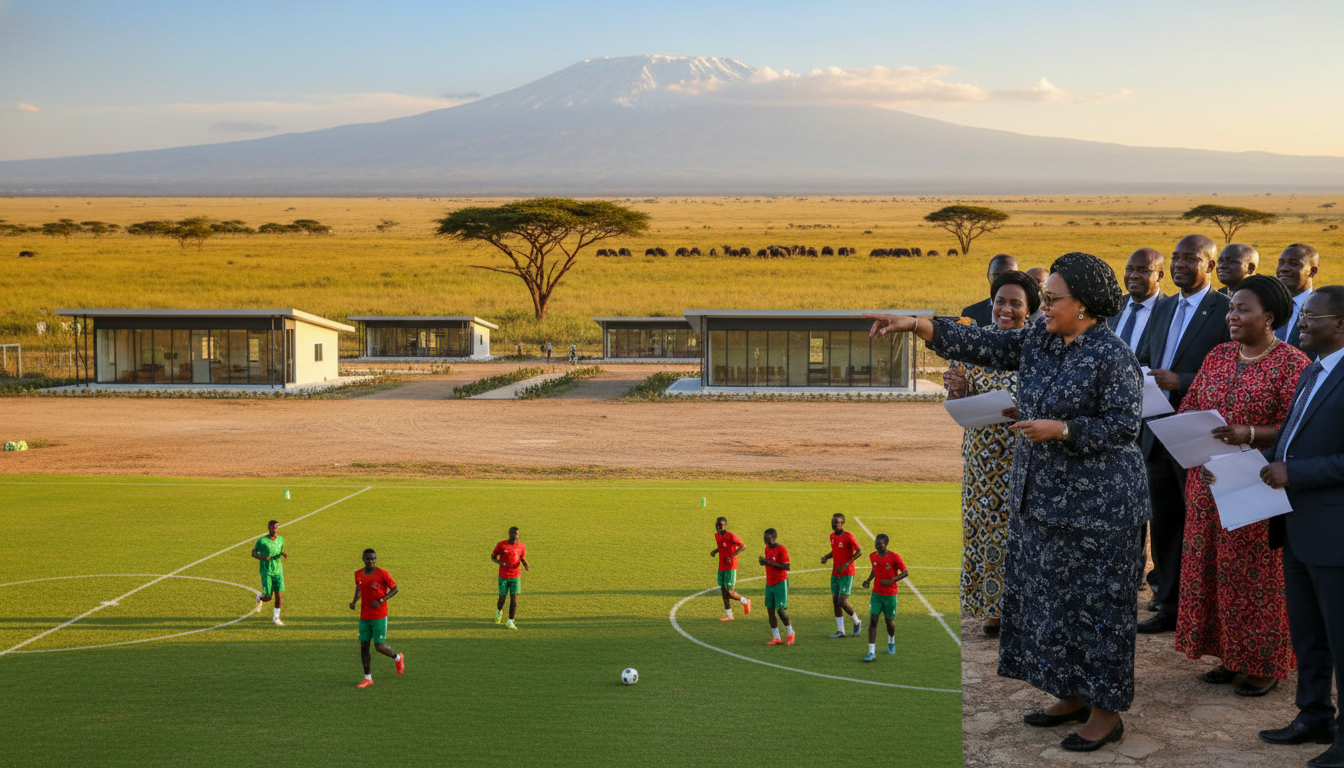
Tanzania to build AFCON training facilities inside national parks ahead of 2027 tournament
Tanzania plans to create AFCON training facilities inside select national parks, blending professional football infrastructure with wildlife tourism ahead of the 2027 tournament.


Tanzania has announced plans to develop AFCON training facilities in selected national parks as part of its preparations to co-host the 2027 Africa Cup of Nations. Prime Minister Dr Mwigulu Nchemba told parliament the government aims to offer visiting teams world-class training pitches set against Tanzania’s natural landscapes. The programme is explicitly pitched as a tourism and sporting showcase designed to boost revenues and provide a unique experience for players and supporters.
Government confirms park-based training plan
Prime Minister Dr Mwigulu Nchemba confirmed in parliament that the government is finalising a blueprint to integrate training infrastructure into national parks for the 2027 AFCON. He said the initiative will allow teams to train in secure, professionally equipped environments while surrounded by the country’s iconic wildlife and scenery. The announcement followed a question from Amani MP Abdul Yussuf Maalim (CCM) about measures to raise tourist numbers and maximise revenue during the competition.
Officials indicated the parks chosen will be those without dangerous wildlife concentrations, and that safety and conservation standards will govern site selection and construction. The move is intended to ensure the wellbeing of players, officials and support staff while preserving ecological integrity at the same time.
Safety and conservation to guide site selection
Government ministers stressed that any park-based training grounds will only be developed where risks to participants can be effectively managed. Dr Nchemba emphasised that sites will be limited to areas that do not host dangerous animals and that "all necessary safety measures will be observed." Park authorities and conservation agencies will be engaged to vet locations and advise on mitigation measures.
Environmental safeguards will be built into the design and operation of the facilities, according to officials, who said conservation commitments will not be sacrificed for sporting ambitions. Measures under discussion include perimeter security, controlled access routes, minimal permanent infrastructure in sensitive zones, and monitoring to ensure no adverse impacts on wildlife habitats.
Integrated tourism packages linking matches and parks
As part of the AFCON preparations, the government is assembling an integrated tourism package that pairs match attendance with visits to destinations such as Arusha National Park, Ngorongoro Conservation Area and Serengeti National Park. Ministers said this digital and embassy-led marketing push will outline travel times and cost options so supporters can move easily from stadiums to nearby attractions.
Officials highlighted that Arusha provides rapid access to several key conservation areas — for example, visitors attending matches in the city could reach a national park within roughly 20–30 minutes and Ngorongoro within 40–60 minutes. The strategy is designed to encourage fans to combine football with safari and beach itineraries, including onward trips to the Serengeti and the beaches of Zanzibar.
Logistics and infrastructure upgrades for fans and teams
Government planners said the AFCON preparations will include upgrades to roads, lighting and access to training sites, with particular attention to connectivity between urban venues and conservation areas. The plan also references rail-linked destinations such as Mikumi National Park, which has become more accessible via Standard Gauge Railway (SGR) services, as part of an effort to broaden tourist options.
Authorities are prioritising secure, 24-hour trading zones near stadiums and training grounds to support spectator services and match-day commerce. Improvements under consideration also include enhanced signage, shuttles between tournament sites and tourist attractions, and streamlined customs and transport procedures to ease movement for international visitors.
Economic opportunities for local communities and businesses
The AFCON strategy aims to leverage the tournament to create economic opportunities for young people and small enterprises, the Prime Minister said. Plans include designated commercial booths, improved access for vendors, and initiatives to promote local products — both traditional crafts and contemporary goods — to the influx of visitors during the competition.
Officials expect the combination of sport and tourism to deliver returns across multiple sectors, from hospitality and transport to handicrafts and guided safaris. A national inter-sectoral committee of experts has been tasked with ensuring that benefits flow to local communities and that youth employment and small business participation are central to the tournament legacy.
Coordination across ministries and international promotion
Tanzania’s Ministry of Natural Resources and Tourism, the Ministry of Industry and Trade, and other sectors have been named as partners in crafting the integrated offer for AFCON guests. The coordination effort aims to align conservation, commerce and sporting preparations so the tournament showcases Tanzania’s assets in a coherent package.
Authorities plan to market the combined football-and-wildlife experience through digital channels and diplomatic missions abroad to attract broader international attendance. The government is also exploring partnerships with private operators to deliver packaged itineraries that include match tickets, transfers, and park visits.
Tanzania has framed the initiative as a way of delivering an AFCON experience that cannot be found elsewhere, combining professional sports infrastructure with some of the continent’s most famous natural attractions. Organisers say the concept will drive tourist numbers, diversify visitor itineraries and raise the economic impact of hosting the continental championship.
Preparations will require careful balancing of public safety, heritage protection and the logistical demands of an international sports event. Planners must reconcile the need for secure, FIFA-standard training venues with conservation rules and community interests around the parks.
The success of the programme will hinge on detailed environmental assessments, timely infrastructure works and clear operating procedures for match delegates and fans. Ensuring that stadium and training schedules dovetail with tourism flows will be critical to delivering the promised combination of football and wildlife without overwhelming local services.
Officials acknowledged that creating training grounds within park boundaries is an ambitious undertaking and said tight timelines will require accelerated coordination across government and the private sector. The inter-sectoral committee is expected to publish a more detailed plan as work progresses toward the 2027 tournament.
Tour operators and local businesses are watching closely, with many anticipating a surge in bookings if the integrated packages deliver on convenience and value. Small enterprises around stadiums and parks will likely play an important role in the visitor experience, provided they receive timely access to trading areas and infrastructure improvements.
While the concept leverages Tanzania’s natural strengths, it will also be judged on practical measures such as transport reliability, security arrangements and the quality of training facilities provided to participating teams. Success will require that the AFCON training facilities meet international standards while offering the distinctive backdrop Tanzania promises.
If implemented as described, the initiative could redefine how a major football tournament is staged by linking elite sporting preparation with destination tourism. The coming months will test the government’s ability to finalize locations, secure funding and complete works in time for teams and fans arriving in 2027.
The government has stressed that all steps will be taken to ensure both player safety and conservation of Tanzania’s protected areas while maximising the economic benefits of co-hosting AFCON.