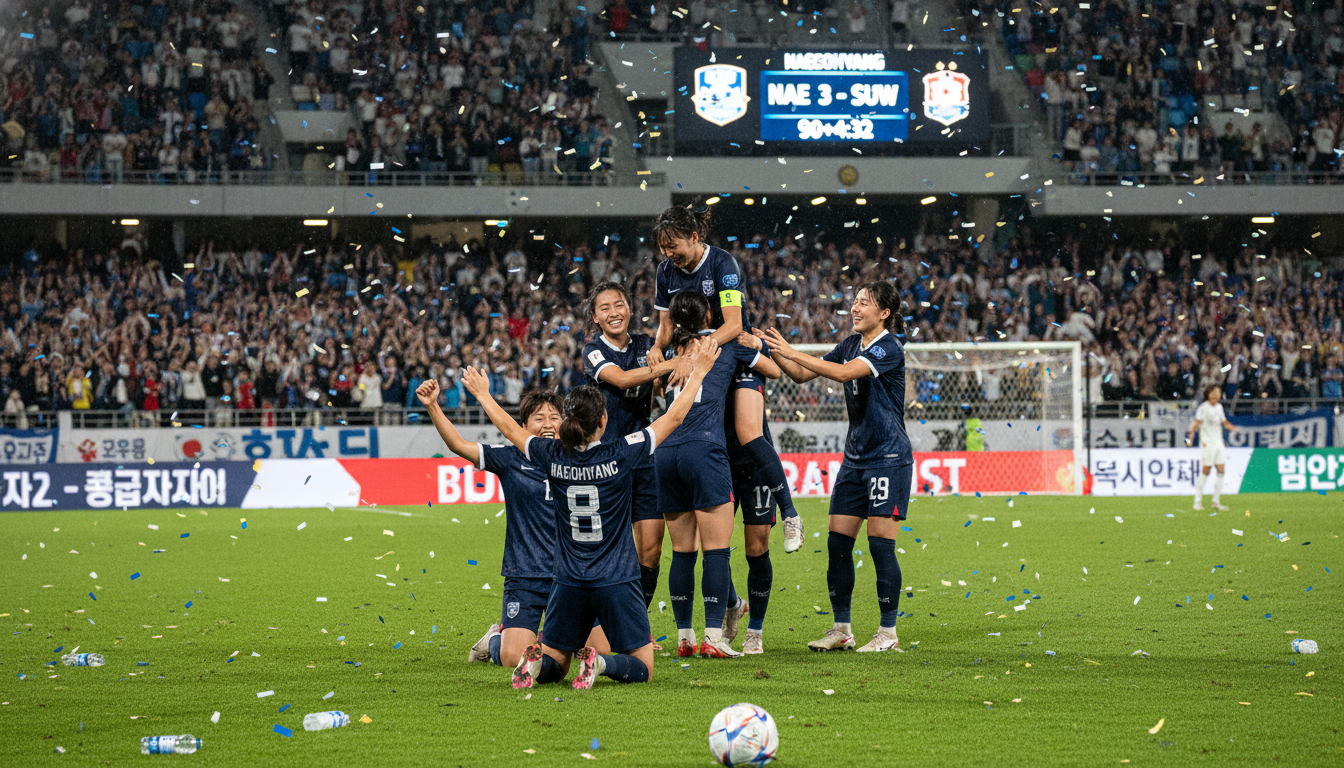
Naegohyang Women’s FC reach Asian Women’s Champions League final after 2-1 comeback win over Suwon
Naegohyang Women’s FC came from behind to beat Suwon FC Women 2-1 in a rain-hit Asian Women’s Champions League semi in Suwon and will face Tokyo Verdy Beleza.


Naegohyang’s comeback stuns Suwon in storm-hit semi
Naegohyang Women’s FC overturned an early deficit to win 2-1 in a semi final played under torrential rain at the Suwon stadium. Suwon opened the scoring but the North Korean side produced a spirited second half to secure a place in the final. The victory marked a rare sporting moment between the two Koreas and capped a tense, competitive contest on the pitch.
The match began with Suwon taking an early lead when Haruhi Suzuki found the net and celebrated in front of the home support. Naegohyang gradually asserted themselves despite the downpour and shifted the tempo with sharper passing and more direct runs. Their resilience paid off as they converted opportunities and protected a slim advantage against mounting pressure.
Refereeing decisions were accepted without incident and the game proceeded in a sporting manner from start to finish. Players from both teams showed physical commitment and tactical discipline, producing a hard fought encounter rather than a confrontation. The result sent the visiting North Korean side through to Saturday’s final at the same venue.
Missed penalty from Ji So-yun a turning point in closing stages
Suwon captain Ji So-yun, one of South Korea’s most experienced internationals, had the chance to alter the outcome when awarded a penalty with just over ten minutes remaining. The opportunity to level the match or swing momentum back to the home side was clear, but the spot kick was missed. That moment proved pivotal as Naegohyang held on to their lead and closed out the victory.
The miss was a dramatic twist late in a tightly contested match and underscored the fine margins in knockout competition. Ji’s reputation and leadership on the field were evident throughout the game, yet football’s unpredictability defined the closing stages. After the penalty, Suwon pressed forward but could not find the decisive finish that would have forced extra time.
Coaches and players from both sides acknowledged the importance of composure in such moments and praised the intensity of the contest. The penalty episode will be examined by Suwon as they reflect on missed chances and what changes might be required moving forward. For Naegohyang it reinforced the value of defensive focus under pressure.
Historic North Korean visit draws unusually intense public interest
The semi final carried significance beyond the result because Naegohyang represented the first North Korean sports delegation to visit the South in eight years. That historical context drew heightened attention to the fixture and contributed to brisk ticket sales. Organizers reported that 7,087 general admission tickets were sold out within hours after going on sale last week.
Spectators described a unique atmosphere as curiosity about the North Korean team combined with traditional club loyalty. A local woman who gave her surname as Lee said she attended hoping to catch a glimpse of the visiting players and to witness a rare inter Korean sporting moment. The crowd comprised long standing Suwon supporters alongside neutral fans who turned out to see a match with broader cultural resonance.
Authorities prepared for the game as a high profile sporting event and emphasised that security measures were designed to enable a peaceful match day. The swift sellout of tickets and the presence of fans from different backgrounds reflected the public appetite for occasions that blend sport and cross border engagement. Attendance and interest underlined how football can create moments of shared attention despite political differences.
Final set as Naegohyang prepare to face Tokyo Verdy Beleza
With the semifinal win Naegohyang will remain in Suwon to contest the final against Japan’s Tokyo Verdy Beleza later this week at the same stadium. The fixture pits regional powers against each other and promises another showcase of technical quality and tactical planning. Both sides will have a short turnaround to prepare, with recovery and match day management becoming immediate priorities.
Tokyo Verdy Beleza arrive as a well known force in Japanese women’s football and bring a contrasting style that will test Naegohyang’s organisation. Coaches from both teams will analyse strengths and vulnerabilities from the semis as they shape their game plans for the final. The holding of the final in Suwon ensures a neutral but familiar setting for the North Korean squad after their recent arrival.
The match will carry competitive incentives as well as symbolic interest given the international composition of the tournament. For Naegohyang, the opportunity to lift the Asian Women’s Champions League trophy would be both a sporting triumph and a significant achievement for their club. For Tokyo Verdy Beleza, prevailing would continue a tradition of success and underline the depth of Japanese club football.
Match atmosphere and pitch conditions shaped the contest
Torrential rain dominated the match environment and influenced both teams’ tactical choices and execution. Wet conditions slowed the ball at times, encouraged more direct play and made footing at the edges of the pitch precarious. Despite the weather, the fixture proceeded under standard competition protocols and match officials maintained control without major interruptions.
Coaches adjusted formations and personnel to contend with the surface and the elements, prioritising balance and minimising risky passes across the sodden turf. Players adapted with shortened touches and greater emphasis on second balls, which ultimately shaped where and how chances developed. The resilience of both squads to sustain intensity through adverse weather was noted by observers in the stands and on the touchlines.
Medical and support staff were also active in managing the demands of a physically taxing game under difficult conditions. Substitutions reflected tactical recalibration and attention to player safety, as managers sought to maintain energy levels and defensive cohesion. The final stages of the match became a test of concentration and fitness as much as technical ability.
Sporting and diplomatic implications of the fixture
Beyond the immediate sporting outcome the semi final has been framed by commentators as an example of sport enabling rare cross border engagement. The visit of a North Korean club and their participation in a high profile tournament in the South brought a layer of diplomatic significance to routine competition. Organisers and officials presented the match as an opportunity for constructive interaction through football.
Players on both sides contributed to an on field display that emphasised competitive fairness rather than antagonism, a fact noted by local commentators and by neutral observers. Such encounters do not erase broader political differences but they do create moments of contact and visibility that can influence public perception. For many fans the match offered a chance to focus on athletic performance and shared appreciation for the women’s game.
Club representatives on match day stressed the importance of sporting values and the potential of tournaments to foster mutual respect across national lines. The coming final between a North Korean club and a Japanese club in South Korea further underscores the transnational nature of contemporary club competitions. How that match unfolds will likely attract similar attention to this semi final did.
The teams will now turn their attention to the final and to preparations for recovery and tactical refinement. Coaches will shape their training plans around player fitness and opponent analysis, while organisers finalise event arrangements for a high profile conclusion to the tournament. Fans who attended the semi final and those watching from afar will expect another competitive display as the Asian Women’s Champions League reaches its decisive match.