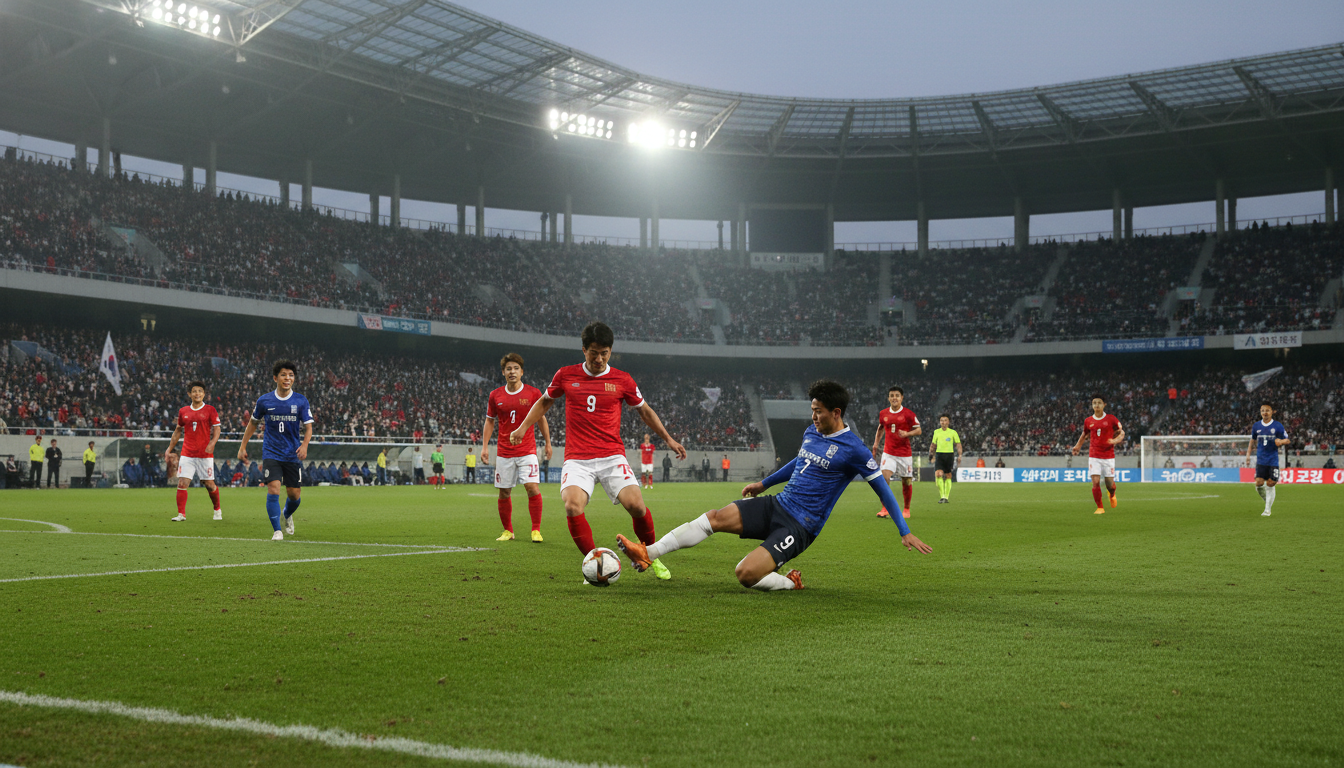
North Korean Women’s Football Team Visits South Korea for Rare Asian Women’s Champions League Semi-final
North Korean women’s football team visit draws intense interest as Naegohyang Women’s FC arrives in Incheon to face Suwon FC Women in the Asian Women’s Champions League semi-final.


The North Korean women’s football team visit to Seoul has captured widespread attention ahead of Wednesday’s Asian Women’s Champions League semi-final. Naegohyang Women’s FC landed at Incheon International Airport on Sunday amid heavy media attention and a wave of welcome signs from curious supporters. The visit marks the first time a North Korean sports delegation has traveled to the South in eight years, turning a routine club fixture into a politically charged spectacle. Organizers and officials have stressed that the football match will be conducted under strict protocols, with the teams focused on competition.
Naegohyang Touches Down in Incheon Ahead of Semi-final
Naegohyang’s arrival at Incheon saw players and officials surrounded by reporters and members of the public who gathered spontaneously at the terminal. Photographers and supporters pressed close as the squad moved through the airport, reflecting the rarity of a North Korean delegation traveling to South Korea. Local volunteers and civic groups were visible among the crowd, holding signs and attempting to keep the atmosphere cordial and calm.
The club’s presence in South Korea has required coordination between tournament hosts, security services and civic organizers. Delegation handlers escorted the team onto buses bound for their accommodation, while tournament staff worked to ensure media access remained orderly. Tournament officials described the arrival as smooth, even as interest from domestic and international outlets grew.
High Demand: Tickets Sell Out Within Hours
Interest in the North v South matchup translated quickly into ticket sales, with 7,087 general admission tickets reportedly selling out within hours of release. The speed of the sell-out underlined public curiosity and the draw of a cross-border sporting encounter that is otherwise rare in the peninsula’s modern sporting calendar. Local fans, neutral observers and international visitors all sought seats for what many see as a culturally and politically meaningful fixture.
In addition to general attendees, about 3,000 spectators affiliated with civic organizations supported by Seoul’s unification ministry are expected to attend and cheer for both sides. Those groups plan to promote a spirit of sportsmanship rather than partisan support, according to organizers, who emphasized that there will be no official away supporters because North Korean citizens generally cannot travel freely into the South. The resulting crowd composition is likely to produce a mixed atmosphere that blends competition with diplomatic symbolism.
Coach Ri Reiterates Focus on Football
Naegohyang head coach Ri Yu Il made a point of deflecting questions about fan allegiances during a pre-match press conference on Tuesday. When asked how he felt about the prospect of South Koreans cheering for his side, Ri replied simply: “We are here solely to play football.” His remarks underscored a deliberate attempt to keep attention on the sporting contest rather than the political overtones of the visit.
Ri’s remarks were delivered with measured restraint, and he declined to be drawn into broader commentary on relations between the two Koreas. The coach focused instead on preparations, player fitness and tactical planning for the semi-final against Suwon FC Women. Tournament staff and both clubs have expressed a shared desire to let the match be decided on the pitch, with respect maintained for players and officials alike.
Security, Protocols and Fan Management
Staging a high-profile inter-Korean fixture required meticulous security planning and clear protocols to manage movement, media access and spectator behavior. Authorities coordinated with tournament organizers to set boundaries for journalists and to ensure that the North Korean delegation’s travel and accommodation adhered to agreed measures. Access points at the stadium were designated, and stewards were briefed to handle the unusual crowd dynamics.
Because North Korean nationals face restrictions on travel into South Korea, there will be no formal away contingent within the stands. That fact shaped the decision to invite civic groups and other observers to occupy a substantial portion of the attendance, a move intended to avoid empty sections while maintaining public order. Local police and event security are positioned to respond to disruptions, but organizers expect the match to proceed without incident given the emphasis on sportsmanship and neutrality.
Historic Context and Diplomatic Significance
The visit carries symbolic weight as the first sporting delegation from the North to set foot in the South in eight years, a gap that highlights the episodic nature of inter-Korean exchanges. Sporting ties between the two Koreas have long been used as a barometer of broader diplomatic currents, and this fixture will be seen by many as a small but meaningful confidence-building measure. Officials on both sides have framed the event as a chance to celebrate the women’s game and foster goodwill through competition.
Observers caution that while the match is significant, it should not be overread as a lasting shift in relations. Sporting diplomacy can open channels and create moments of shared experience, yet it rarely substitutes for formal negotiation on political or security issues. Still, for players, coaches and fans, the immediate priority remains the tournament, and the match will be judged primarily on the quality of play and the competitiveness of the two teams.
Match Outlook and Competitive Stakes
On the sporting front, the semi-final places Naegohyang against South Korea’s Suwon FC Women, with a place in the Asian Women’s Champions League final at stake. Tournament organizers have highlighted the quality of the regional competition and the opportunity for clubs to test themselves against diverse styles of play. For Naegohyang, competing away from home in a charged environment presents both a challenge and an opportunity to demonstrate resilience.
Suwon enters the fixture buoyed by home backing and familiarity with local conditions, while Naegohyang will rely on disciplined organization and tactical clarity. Analysts expect a keenly contested match with an emphasis on midfield control and set-piece opportunities. Beyond the immediate match result, strong performances can raise players’ profiles and contribute to the development of women’s club football across the region.
The match will be watched closely by football federations, civic actors and international observers for its sporting content and its wider resonance. Both clubs have expressed a commitment to letting the competition speak for itself, and players on both sides are reportedly focused on match preparation.
The arrival of Naegohyang Women’s FC and the staging of an Asian Women’s Champions League semi-final in the South has turned a club fixture into an event with cultural and diplomatic significance. While organizers and coaches have repeatedly stated that the visit is about football, the presence of the North Korean delegation in Seoul resonates beyond the pitch and offers a rare moment of cross-border engagement.